
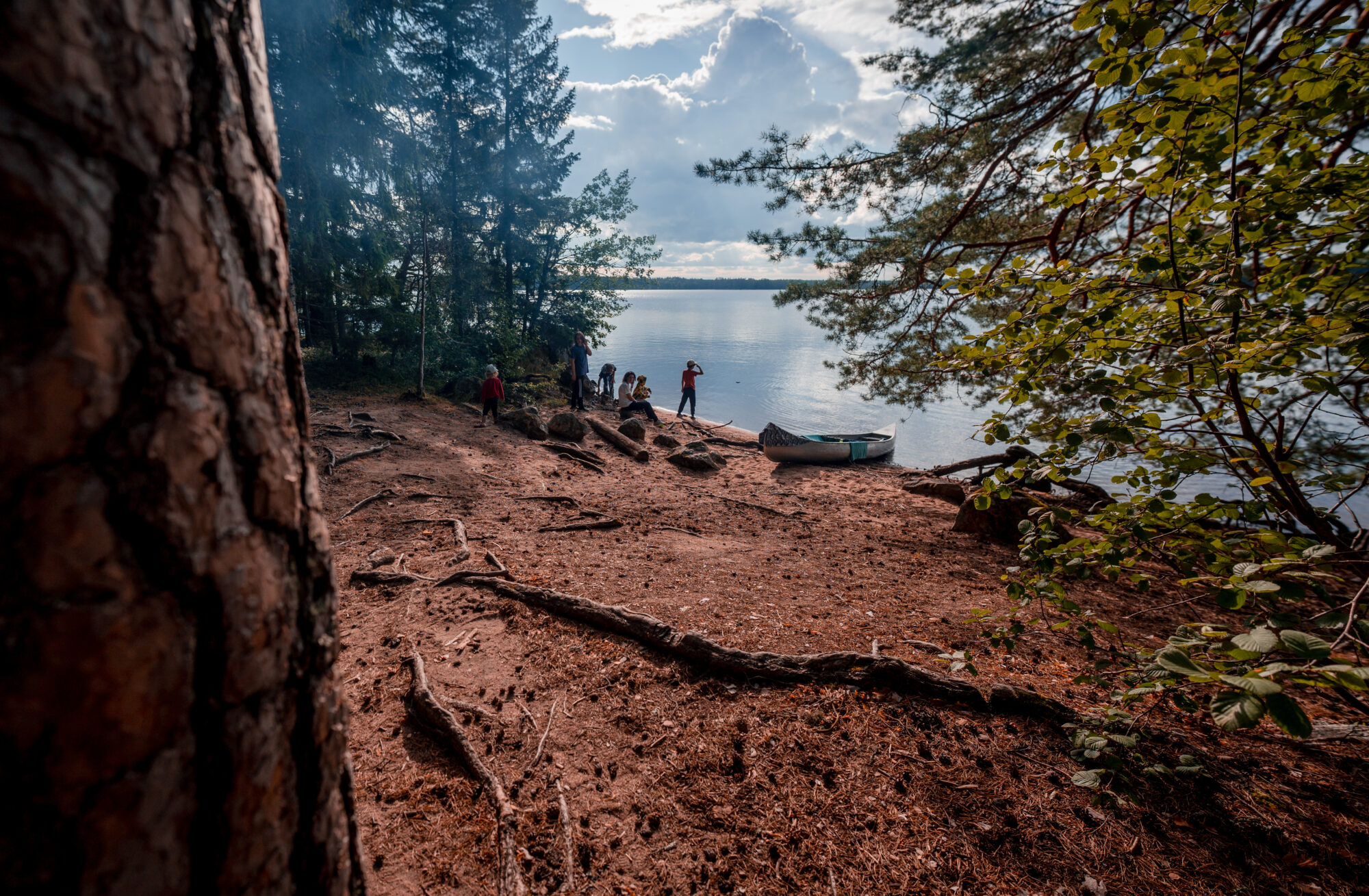
My visits to Färnebofjärden National Park have been many. Every summer for the last four years I have gone on Kayaking Trips with My Kids and Friends. Vi especially love Sandön, where we have set up Tent and BBQed.
Färnebofjärden National Park is one of the best places in central Sweden for photographers who want to combine landscapes, wildlife, birds, forests and water in the same trip.
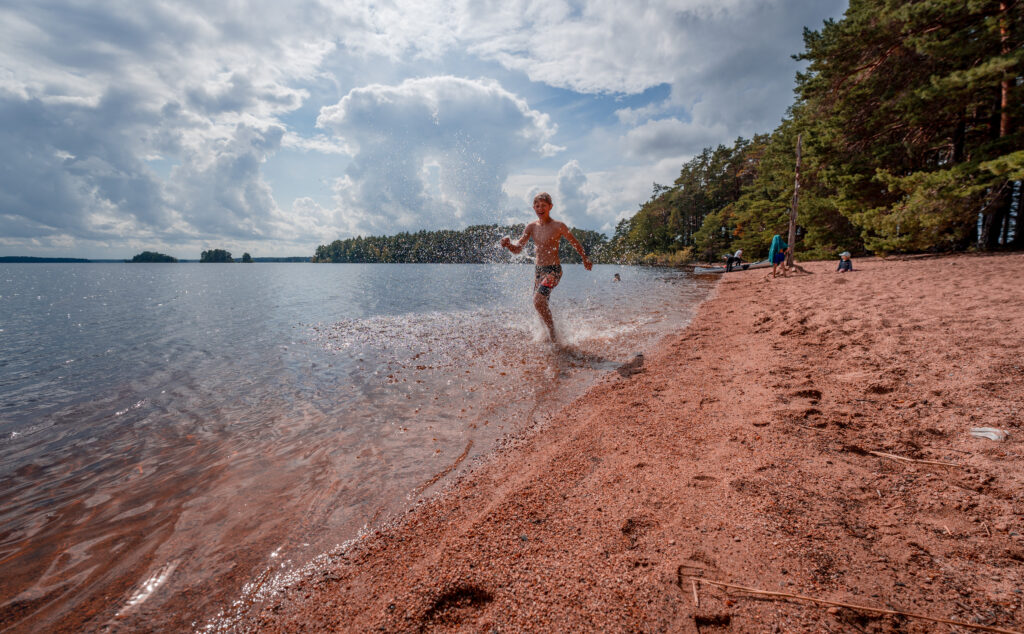
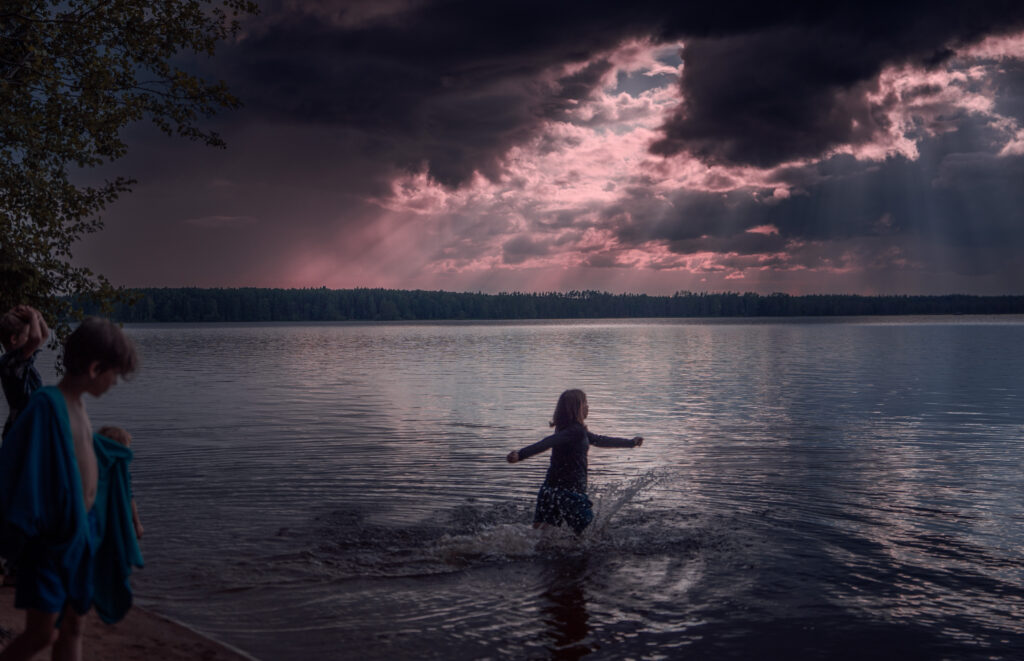

Located along the Lower Dalälven river, Färnebofjärden is not a conventional national park dominated by mountains or dramatic viewpoints. Instead, its beauty comes from the constantly changing river landscape: broad stretches of water, hundreds of islands, wetlands, floodplain forests, rapids, old pine trees, meadows and quiet forest lakes.
The national park protects an unusually diverse river landscape where northern and southern species meet. The area is also part of the biological boundary known as Limes Norrlandicus, making the region particularly interesting for wildlife and nature photographers. (Länsstyrelsen)
For photographers, one of the biggest advantages is the diversity of subjects. You can photograph rushing water at Gysinge or Tyttbo in the morning, spend the middle of the day photographing old forest and wetlands, and finish with a sunset over Färnebofjärden.
The park is also exceptionally good for bird photography. More than 100 bird species regularly breed in the national park, including species associated with forests and wetlands as well as northern and southern species. (Sveriges Nationalparker)
This guide covers the best photo spots in Färnebofjärden National Park, including Skekarsbo, Gysinge, Sevedskvarn, Balforsen, Tyttbo, Sandön, Hemön, Öberget and some of the best places to photograph the Dalälven landscape.
Why Färnebofjärden Is So Good for Photography
Färnebofjärden is fundamentally a water landscape.
The Dalälven spreads out into a maze of channels, islands, wetlands and fjärds, creating hundreds of possible compositions.
The national park contains more than 200 islands, and the official national park information recommends experiencing the area from the water whenever possible. (Sveriges Nationalparker)
This creates photographic opportunities that are difficult to find in many other Swedish national parks.
You can photograph:
- Wide river landscapes
- Islands
- Reflections
- Rapids
- Old pine forest
- Floodplain forests
- Wetlands
- Mist
- Birds
- Ospreys
- White-tailed eagles
- Cranes
- Woodpeckers
- Forest wildlife
- Sand beaches
- Canoes and kayaks
- Historic buildings
- Bridges
- Autumn colours
- Spring flooding
- Winter ice
The combination of water and forest is particularly important.
Instead of looking for a single spectacular viewpoint, look for relationships between water, trees, islands and sky.
That is where many of the strongest Färnebofjärden photographs come from.
Best Time to Photograph Färnebofjärden
Spring
Spring is one of the most interesting seasons for landscape photography.
Higher water levels can dramatically change the appearance of the Dalälven floodplain.
Look for:
- Reflections
- Flooded forests
- Mist
- Migrating birds
- Fresh green foliage
- Dramatic skies
- Rapids
Spring is also excellent for bird photography.
Summer
Summer provides lush green vegetation and long hours of daylight.
This is a particularly good season for exploring Färnebofjärden by kayak or canoe.
The official national park information describes the park as particularly well suited to experiencing by boat, with several boat-launch locations. (Sveriges Nationalparker)
Summer is also excellent for:
- Wildlife
- Birds
- Macro
- Kayaking photography
- Sunrise
- Sunset
- Long evenings
Autumn
Autumn is arguably the best season for landscape photography.
The combination of:
- Yellow birch
- Green spruce
- Pine forest
- Dark water
- Mist
- Low sunlight
creates beautiful Scandinavian compositions.
The broad river landscape also gives you much more colour than you might expect from a predominantly forested national park.
Winter
Winter can produce minimalist landscapes with:
- Snow
- Ice
- Frost
- Frozen shorelines
- Snow-covered trees
- Atmospheric light
Rapids can be particularly interesting when ice begins forming around the edges.
Be extremely careful around frozen water.
Best Time of Day for Photography
Sunrise
Sunrise is probably the most rewarding time of day at Färnebofjärden.
The combination of calm water, mist and low sunlight can produce spectacular conditions.
Prioritize:
- Skekarsbo
- Färnebofjärden shoreline
- Gysinge
- Sevedskvarn
- Sandön
- Hemön
Arrive early.
The best conditions may last only a few minutes.
Morning
Morning is ideal for wildlife and bird photography.
Birds are generally more active, and the low sunlight provides better modelling on feathers and foliage.
Midday
Use midday for forest photography, macro and exploring trails.
Overcast conditions can actually be excellent because the soft light reduces the contrast between dark forest and bright water.
Sunset
Sunset is excellent around the open water of Färnebofjärden.
Look for:
- Silhouetted islands
- Reflections
- Golden light on trees
- Clouds reflected in the water
- Kayakers
- Birds crossing the sky
Blue Hour
Stay after sunset.
The still water and dark forest silhouettes can produce very clean blue-hour compositions.
The Best Photo Spots in Färnebofjärden National Park
1. Skekarsbotornet
If you only visit one viewpoint in Färnebofjärden, make it Skekarsbotornet.
The tower is 20 metres high, and the top platform is 97 metres above sea level. From the top you can see almost the entire national park. (Sveriges Nationalparker)
This makes it one of the best locations for understanding and photographing the enormous scale of the river landscape.
The tower also offers opportunities to photograph white-tailed eagles and ospreys. (Sveriges Nationalparker)
What to photograph
From the top, look for:
- River channels
- Islands
- Forest
- Wetlands
- Distant villages
- Boats
- Birds
- Morning mist
- Autumn colours
A telephoto lens can be surprisingly useful here.
Instead of using a wide-angle lens to photograph the entire landscape, use 100–400mm or a similar focal length to compress islands and river channels.
This can produce much more graphic images.
Skekarsbo utsiktstorn
Skekarsbo utsiktstorn Web Address: 740 44 Tärnsjö, Sverige
Best time
Early morning is my first choice.
Fog sitting above the river can turn the view into a spectacular layered landscape.
2. Skekarsbo
The entire Skekarsbo entrance is worth exploring.
There is a small beach, jetty, rocks, picnic areas and access to trails. The official information describes Skekarsbo as one of the park’s main entrances and highlights the views across the fjärd. (Sveriges Nationalparker)
This makes it useful for both landscape and wildlife photography.
Best subjects
Look for:
- Reflections
- Shoreline compositions
- Boats
- Islands
- Forest silhouettes
- Birds
- Morning mist
The combination of rocks and water is particularly useful for foreground compositions.
3. Skekarsboslingan
The Skekarsboslingan is approximately 3 kilometres long and starts at the Skekarsbo entrance. (Sveriges Nationalparker)
For photographers, this is a useful short route because you can combine forest, river and wetland photography without committing to a long hike.
Look for changing perspectives as the trail moves between woodland and open water.
Photography strategy
Take your time.
A three-kilometre trail might take a photographer several hours.
Use a telephoto lens to isolate trees and birds, then switch to a wider lens when the landscape opens up.
4. Gysinge Rapids
Gysinge is one of the most photogenic areas around Färnebofjärden.
The river becomes a series of fast-flowing channels and rapids around the historic ironworks.
This creates a completely different photographic experience from the quiet fjärd.
Gysinge
Gysinge Address: 811 97 Gysinge, Sverige
What to photograph
Try:
- Rapids
- Rocks
- Old trees
- Bridges
- Reflections
- Water movement
- Historic buildings
- Birds
The official national park information identifies Gysinge as one of the principal places to experience the rapids and the cultural landscape around the river. (Sveriges Nationalparker)
Long-exposure photography
Bring a tripod.
Try shutter speeds from approximately 1/2 second to several seconds.
The exact exposure depends on water speed and light.
You can either freeze individual water details or create smooth flowing water.
5. Sevedskvarn and the Main Entrance
The main entrance is located on Mattön, approximately 2.5 kilometres southeast of Gysinge.
This area provides access to several trails and shorter loops. (Sveriges Nationalparker)
The landscape around Sevedskvarn is particularly good for photographing rushing water.
The official description specifically highlights the possibility of walking alongside the rapids in a varied natural landscape. (Sveriges Nationalparker)
Best subjects
Look for:
- Rapids
- Rocks
- Old trees
- Riverbanks
- Water reflections
- Forest paths
- Bridges
The area is also useful for sunrise photography because you can work with the river and trees rather than relying on a distant horizon.
6. Mattön
Mattön is one of the best areas for combining river photography with forest photography.
The Mattön rundt trail is approximately 7.5 kilometres and follows the river and passes through coniferous forest. (Sveriges Nationalparker)
This makes it particularly useful for photographers who want variety.
Look for
- River bends
- Pine forest
- Spruce
- Reflections
- Fallen trees
- Small beaches
- Wetlands
- Birds
Don’t simply walk the trail.
Stop whenever the forest opens towards the water.
These transitions are often where the strongest compositions appear.
7. The Old Railway Bridges near Gysinge
The old railway bridges provide an excellent combination of history and landscape.
The route from the northern entrance via the railway bridges to Gysinge and back along Mattön is approximately 9 kilometres. (Sveriges Nationalparker)
The bridges can be used as:
- Leading lines
- Framing elements
- Repeating patterns
- Environmental subjects
Try photographing them with the river or surrounding forest behind them.
A wide-angle lens works well for strong leading lines.
A telephoto lens can compress the bridge structure and surrounding vegetation.
8. Balforsen
Balforsen is one of the most interesting locations for photographing moving water.
The entrance is located along a narrow section of the Dalälven, surrounded by impressive pine trunks and river vegetation. There is also an outlook platform beside the river. (Sveriges Nationalparker)
Best photography
Try:
- Long exposures
- Waterfalls and rapids
- Pine trees
- River reflections
- Autumn foliage
- Wildlife
The river landscape here feels much more intimate than the broad open Färnebofjärden.
9. Härsingen–Stadarna Trail
This four-kilometre trail is one of the best choices if your main interest is photographing rapids.
The route follows the river and passes three rapids:
- Härsingen
- Balforsen
- Tyttboforsen
There are also four wind shelters along the route. (Sveriges Nationalparker)
This is an excellent photography walk.
Instead of visiting one viewpoint and leaving, you can photograph several different river environments during the same hike.
Best conditions
Overcast days are excellent for water photography.
After rain can also be interesting because the river may appear more powerful.
10. Tyttboforsen
Tyttbo is one of the most dramatic places in the national park for moving-water photography.
The area is known for its rapids and fishing environment.
The national park identifies Tyttbo as one of the locations where visitors can experience the river and rapids close up. (Sveriges Nationalparker)
Composition ideas
Use:
- Rocks in the foreground
- Flowing water as a leading line
- Trees framing the river
- Long exposures
- Telephoto compression
A 24–70mm lens is ideal for most compositions here.
11. Stadarna
Stadarna is another good location along the river.
The official visitor map identifies the area as one of the places where visitors can get close to the rapids, and there is a long pier extending over the water. (Länsstyrelsen)
The pier provides an excellent compositional element.
Try photographing:
- Pier leading towards the river
- Reflections
- Rapids
- Trees
- Sunset
- Mist
A wide-angle lens works particularly well from the pier.
12. Hemön
Hemön is one of the best places for broad landscape photography.
A sandy ridge leads out along Istahalvön towards Hemön, where the road ends beside the water.
The official information describes the long sandy beach and wide views over the broadest part of Färnebofjärden as one of the area’s major attractions. (Sveriges Nationalparker)
What to photograph
This is a good location for:
- Wide landscapes
- Sunset
- Sunrise
- Reflections
- Birds
- Boats
- Minimalist images
- Long exposures
The open landscape also gives you more opportunities to photograph dramatic skies.
13. Sandön
Sandön is one of the most photogenic islands in Färnebofjärden.
The national park describes it as a particularly beautiful sandy beach destination. (Sveriges Nationalparker)
The island is accessible by boat, making it an excellent destination for photographers with a kayak or canoe.
Photography subjects
Look for:
- Sandy beaches
- Clear water
- Pine trees
- Reflections
- Boats
- Islands
- Wildlife
The island’s beaches provide much cleaner foregrounds than the rocky shorelines found elsewhere in the park.
Important wildlife consideration
There is a bird-protection area south of Sandön where osprey normally nest.
Pay attention to the current restrictions and signs when approaching the island. (Sveriges Nationalparker)
14. Färnebofjärden from a Kayak
This isn’t one single photo spot.
It is a completely different way of experiencing the park.
The official national park information says Färnebofjärden may be experienced best from the water, and there are several launch locations for small boats. (Sveriges Nationalparker)
With a kayak you can photograph:
- Narrow channels
- Islands
- Reflections
- Forest shorelines
- Wetlands
- Birds
- Sunrise
- Sunset
This is one of the best ways to create photographs that don’t look like conventional national park images.
Best lens
A 24–70mm zoom is ideal.
Keep your setup simple.
You don’t want a large camera bag in a kayak.
15. Östa
Östa is an excellent starting point for exploring the national park by water.
There is a boat launch and several facilities, and it provides access to the water landscape in the southeastern part of the park. (Sveriges Nationalparker)
From a photographer’s perspective, the main attraction is access to the enormous network of water and islands.
Use Östa as a base for:
- Kayak photography
- Sunrise
- Wildlife
- Birds
- Island photography
16. Öberget and Tinåset
If you want something more remote, head towards Öberget.
The official national park information describes this as the wildest part of Färnebofjärden.
The area around Tinåset contains old forest and wetlands and is particularly interesting for birdwatchers. (Sveriges Nationalparker)
This is a better choice for photographers who enjoy wilderness and wildlife rather than easily accessible viewpoints.
Photography subjects
Look for:
- Old pine forest
- Wetlands
- Birds
- Wildlife
- Dead trees
- Forest details
- Mist
The area can require longer walks, so carry appropriate equipment.
17. Tinåset Wetlands
The wetlands around Tinåset are particularly interesting for wildlife photographers.
The combination of open water, marshes and old forest creates excellent habitat for birds.
Use a long telephoto lens and avoid getting too close.
Instead of trying to approach birds, find a good position and wait.
Early morning is ideal.
18. Naturum Färnebofjärden and Gysinge
Naturum is located in the historic Gysinge bruk environment.
The visitor centre is housed in the old stable building from 1814. (Sveriges Nationalparker)
Although this isn’t one of the wildest photography locations, it makes an excellent starting point for understanding the landscape.
Nearby Granön provides an accessible nature trail and additional opportunities for river and forest photography. Granön is technically located in the adjacent Gysinge nature reserve rather than inside the national park. (Sveriges Nationalparker)
19. Gysinge Bruk
Don’t overlook the cultural landscape.
The historic ironworks environment sits beside the rapids and provides a strong contrast to the wilderness.
Photograph:
- Historic buildings
- Bridges
- River
- Old trees
- Reflections
- Details of the industrial heritage
This is particularly useful when you want to create a photography story about the relationship between people and the Dalälven.
20. Floodplain Forests
Some of the best Färnebofjärden photographs won’t have an obvious landmark.
The floodplain forests are one of the defining characteristics of the park.
Look for trees growing close to water and areas where the river periodically floods the forest.
These locations are excellent for:
- Reflections
- Mist
- Minimalist compositions
- Backlit trees
- Autumn photography
Try a telephoto lens to simplify the scene.
21. River Bends
The Dalälven’s many bends create natural leading lines.
Look for locations where the river curves around an island or forest.
Then position yourself so the water leads through the frame.
This works particularly well with:
- Morning mist
- Autumn foliage
- Sunrise
- Overcast weather
A telephoto lens can compress the river bends and create much stronger graphic compositions than an ultra-wide lens.
Best Instagram Spots in Färnebofjärden
For the most visually distinctive photographs, prioritize:
- Skekarsbotornet
- Skekarsbo shoreline
- Gysinge rapids
- Sevedskvarn
- Old railway bridges
- Balforsen
- Tyttboforsen
- Stadarna pier
- Hemön beach
- Sandön
- Stora Dalälven river bends
- Tinåset wetlands
For Instagram, vertical compositions work especially well at Skekarsbotornet and along the forested riverbanks.
Best Sunrise Spots
My first choices would be:
Skekarsbo
The elevated tower gives you the greatest chance of photographing mist and layers.
Hemön
The open water gives you a much wider view of the sky.
Sandön
Excellent if you are camping or arriving by kayak.
Gysinge
Ideal if you prefer moving water and forest rather than a broad landscape.
Sevedskvarn
Good for intimate river compositions.
Best Sunset Spots
For sunset, prioritize open water.
The best choices are:
- Hemön
- Sandön
- Skekarsbo
- Stora Färnebofjärden
- Stadarna
- River shorelines
Use the last 30 minutes of daylight to photograph warm light on the trees.
Then stay for blue hour.
Best Autumn Photo Spots
Autumn is an excellent time to photograph Färnebofjärden.
Prioritize:
Skekarsbotornet
Use the elevated view to photograph the changing forest.
Skekarsbo
Colourful trees around the water create beautiful reflections.
Gysinge
Autumn foliage combined with the rapids and historic buildings creates a strong mixture of nature and culture.
Mattön
Excellent for intimate forest and river scenes.
Hemön
Use colourful trees as framing elements around the broad water landscape.
Balforsen
The combination of moving water, pine forest and autumn foliage works particularly well.
Best Bird Photography Spots
Färnebofjärden is one of the better bird photography destinations in central Sweden.
More than 100 species regularly breed in the national park, with both forest and wetland species represented. (Sveriges Nationalparker)
Good areas to explore include:
- Skekarsbo
- Öberget
- Tinåset
- Wetlands
- River edges
- Gysinge
- Sandön surroundings
Skekarsbotornet is particularly interesting because the official information specifically mentions opportunities to see white-tailed eagle and osprey from the tower. (Sveriges Nationalparker)
A 400mm or longer lens is extremely useful.
Wildlife Photography Tips
Färnebofjärden is a place where patience is more important than walking.
Find a good position.
Stay quiet.
Wait.
Use a telephoto lens and avoid chasing animals.
Early morning and late evening are usually the best periods.
The mixture of water and forest means you should also watch the sky.
Birds may suddenly appear above the river.
Macro Photography in Färnebofjärden
The park is not only about large landscapes.
Bring a macro lens for:
- Moss
- Lichens
- Fungi
- Flowers
- Insects
- Leaves
- Water droplets
- Bark
The transition between wetlands and forest creates particularly interesting macro habitats.
A rainy morning can be fantastic for this type of photography.
Best Photography Gear for Färnebofjärden
You can photograph the park with surprisingly little equipment.
24–70mm
This should be your main lens.
It is excellent for:
- River landscapes
- Forest
- Rapids
- Bridges
- Boats
- Environmental photography
Wide-angle lens
Useful for:
- Large skies
- Beaches
- Rapids
- Forest interiors
- Pier compositions
Telephoto lens
Extremely useful here.
Use it for:
- Birds
- Wildlife
- Islands
- River bends
- Distant trees
- Layered landscapes
Macro lens
Useful for:
- Moss
- Fungi
- Flowers
- Insects
- Small forest details
Tripod
Bring a lightweight tripod for:
- Long exposures
- Sunrise
- Sunset
- Blue hour
- Reflections
- Macro
Camera Settings for Färnebofjärden
Landscape
Start with:
- ISO 100
- f/8–f/11
- Aperture priority or manual
- Single-point or zone AF depending on subject
Rapids
For freezing water:
- 1/500 sec or faster
For some movement:
- 1/10–1/2 sec
For smooth long exposures:
- 1–10+ seconds
The right exposure depends heavily on the amount of light and speed of the water.
Birds
Start around:
- 1/1000 sec
- ISO Auto
- Wide-open aperture
- Continuous autofocus
- Animal/bird tracking
For birds in flight, faster shutter speeds can be useful.
Photography from a Kayak
A kayak opens up some of the best photography opportunities in Färnebofjärden.
But keep the setup simple.
Take:
- Camera
- One zoom
- Waterproof protection
- Lens cloth
- Small dry bag
Avoid changing lenses over the water.
A 24–70mm lens can handle a huge amount of the photography you encounter.
The official park information lists multiple launch points including Östa, Ista, Gysinge, Skekarsbo, Linsjön, Stadarna and Hemön. (Sveriges Nationalparker)
One-Day Färnebofjärden Photography Itinerary
If you only have one day, I would concentrate on the northern part of the park.
Sunrise
Start at Skekarsbotornet.
Photograph the landscape from above.
If there is mist, spend as long as necessary.
Morning
Explore Skekarsbo and walk Skekarsboslingan.
Look for birds, reflections and forest details.
Late morning
Drive towards Gysinge.
Photograph the rapids and historic environment.
Afternoon
Head towards Sevedskvarn and Mattön.
Photograph the river and forest.
Sunset
Finish at an open-water location such as Hemön or Skekarsbo.
Stay for blue hour.
Two-Day Färnebofjärden Photography Itinerary
Day 1 – Gysinge and Sevedskvarn
Start with sunrise around Gysinge or Skekarsbo.
Then photograph:
- Gysinge Bruk
- Gysinge rapids
- Granön
- Sevedskvarn
- Mattön
- Old railway bridges
Day 2 – Skekarsbo and Southern Färnebofjärden
Start at Skekarsbotornet.
Then explore:
- Skekarsbo
- Skekarsboslingan
- Hemön
- Sandön
- Balforsen
- Tyttbo
If you have a kayak, dedicate the second day to exploring the islands and waterways.
Three-Day Photography Trip
If you really want to explore Färnebofjärden photographically, three days gives you much more flexibility.
Day 1
Gysinge and Sevedskvarn.
Focus on:
- Rapids
- Historic buildings
- Forest
- River landscapes
Day 2
Skekarsbo and the northern fjärd.
Focus on:
- Skekarsbotornet
- Birds
- Wetlands
- River bends
- Reflections
Day 3
Tyttbo, Balforsen and the southern areas.
Focus on:
- Rapids
- Old forest
- Wildlife
- Wetlands
This is also the best option if you want to combine hiking and kayaking.
How to Get to Färnebofjärden National Park
Färnebofjärden is spread across a large area, so choosing the correct entrance is important.
The four main entrances are:
- Main entrance at Mattön/Sevedskvarn
- Skekarsbo
- Balforsen
- Öberget
The official information provides separate access information for each entrance. (Sveriges Nationalparker)
For photographers travelling by car, this is particularly important.
Don’t assume that all parts of the park are close together.
Choose your entrance based on what you want to photograph.
Google Maps Locations
Färnebofjärden National Park
Skekarsbo Utsiktstorn
Skekarsbo
Gysinge
Sevedskvarn
Balforsen
Tyttbo
Hemön
Öberget
Important Conditions Before Visiting
Färnebofjärden is a large and partly wild national park.
Trail conditions can change.
The current information from Länsstyrelsen warns that storm damage from Storm Johannes has left significant amounts of fallen forest in parts of the park. Some areas have been cleared, including trails around Gysinge, Tyttbo and Skekarsbo, while other areas may still be difficult or unsafe to access. Visitors are advised to take care and check conditions before hiking. (Länsstyrelsen)
This is particularly important if you are carrying expensive camera equipment.
Don’t assume that a trail shown on an older map is currently easy to walk.
Bird Protection and Photography Ethics
Färnebofjärden contains important bird habitats.
Some bird-protection areas have seasonal access restrictions.
The official rules state that certain bird-protection areas are closed to access from January 1 through July 31, including the surrounding water. Floating signs mark the affected areas. (Sveriges Nationalparker)
This is particularly important for photographers using kayaks.
Never enter a protected area simply because it appears to offer a better photograph.
Give nesting birds plenty of space.
Drones in Färnebofjärden
Färnebofjärden is a protected national park with sensitive wildlife habitats.
Before flying a drone, check the current rules and restrictions.
Even where drone operation may be technically possible, wildlife protection and national park regulations can affect where and when you can fly.
For most photographers, a telephoto lens from Skekarsbotornet provides a safer and simpler way to capture aerial-looking perspectives.
Best Photo Spots in Färnebofjärden – Quick List
If you want the shortlist, these are the places I would prioritize:
- Skekarsbotornet – best panoramic viewpoint
- Skekarsbo – water, forest and wildlife
- Gysinge rapids – dramatic moving water
- Sevedskvarn – river and forest
- Mattön – river landscapes and woodland
- Old railway bridges – architecture and leading lines
- Balforsen – intimate rapids
- Tyttboforsen – dramatic river photography
- Stadarna – pier and rapids
- Hemön – broad fjärd landscapes
- Sandön – sandy beaches and islands
- Öberget/Tinåset – wilderness and birds
- Gysinge Bruk – cultural landscape
- Floodplain forests – reflections and atmospheric woodland
- River bends – telephoto landscape photography
Frequently Asked Questions
Is Färnebofjärden National Park good for photography?
Yes. It is particularly good for landscape, bird, wildlife, forest and river photography.
What is the best photo spot in Färnebofjärden?
Skekarsbotornet is probably the best single location because its 20-metre height provides a panoramic view over much of the national park. (Sveriges Nationalparker)
Is Färnebofjärden good for bird photography?
Yes. More than 100 bird species regularly breed in the national park, and both forest and wetland species can be found here. (Sveriges Nationalparker)
Where can I photograph eagles?
Skekarsbotornet is one of the best-known locations because the official national park information specifically mentions opportunities to see white-tailed eagle and osprey from the tower. (Sveriges Nationalparker)
Is Färnebofjärden good for sunrise photography?
Yes. Calm water, mist and low morning light can produce excellent conditions, particularly around Skekarsbo, Hemön, Gysinge and Sevedskvarn.
Is Färnebofjärden good for autumn photography?
Very much so. The mixture of colourful deciduous trees, evergreen forest, wetlands and water produces excellent autumn compositions.
Can I photograph Färnebofjärden from a kayak?
Yes. The national park is particularly well suited to exploring by water, with several launch locations. (Sveriges Nationalparker)
Where should I kayak for photography?
Östa, Skekarsbo, Gysinge, Stadarna and Hemön are among the available launch areas. The best choice depends on which section of the river landscape you want to explore. (Sveriges Nationalparker)
Is Sandön worth visiting?
Yes. Sandön is known for its sandy beaches and is one of the most attractive island destinations in the park. (Sveriges Nationalparker)
How long should I spend in Färnebofjärden?
One day is enough for a first visit, but two or three days are much better for photographers. The park is large and the different entrances provide very different photographic experiences.
Can I camp in Färnebofjärden?
Camping and overnight stays are permitted in designated areas, but rules vary by location. Check the current official information before planning an overnight photography trip.
Can I bring a car?
Yes. There are parking areas at the park’s entrances, and the official information states that parking is free. Overnight parking in a car, motorhome or caravan is permitted for up to two nights at the park’s parking areas. (Sveriges Nationalparker)
Is Färnebofjärden difficult to hike?
Some areas are easy while others are considerably more remote. The main entrances provide accessible areas, while the southern parts can involve longer walks and more difficult terrain. (Sveriges Nationalparker)
Can I visit with children?
Yes. Several entrance areas have accessible surfaces and facilities, and there are shorter trails suitable for easier outings. (Sveriges Nationalparker)
Is a tripod useful?
Definitely. A tripod is particularly useful for photographing the rapids, reflections, sunrise, sunset and blue hour.
What lens should I bring?
A 24–70mm is the best general-purpose lens. Add a wide-angle lens for large landscapes and a telephoto lens for birds, wildlife and distant river landscapes.
Is a macro lens useful?
Yes. Moss, fungi, flowers, insects and wetland vegetation provide plenty of macro opportunities.
Related FrewaPhoto Guides
If you are planning a photography trip to Färnebofjärden, also read my existing:
Visiting Färnebofjärdens National Park: Photographer’s Guide
You can also combine Färnebofjärden with other nature destinations in the region in my guide:
Best Nature Destinations in Uppland Sweden
And for more Swedish forest photography inspiration:
The Ultimate Guide to Forests and Woodlands in East Sweden
Official Information
Before visiting, check the official Färnebofjärden National Park information for current trail conditions, regulations, access, bird-protection areas and facilities.
The official visitor information also provides current access information for the four entrances and details about parking, trails and facilities. (Sveriges Nationalparker)
Final Photography Tips
Färnebofjärden is not a national park where you should spend the entire day looking for one spectacular viewpoint.
Its strength is the combination of water, forest, wetlands and wildlife.
Slow down.
Watch the river.
Look for reflections.
Look for birds moving between islands.
Look for mist above the water.
Use a telephoto lens to compress distant islands.
Use a wide-angle lens when the sky becomes dramatic.
And bring a tripod when conditions are calm.
The most rewarding photographs may not be the obvious ones.
A simple bend in the Dalälven with morning mist can be more powerful than a complicated landscape.
A single pine tree reflected in still water can become a minimalist photograph.
A white-tailed eagle crossing a foggy river can tell the story of the entire national park in one frame.
For photographers, that is what makes Färnebofjärden so special.
It is not just a forest.
It is not just a river.
It is a huge, constantly changing landscape where water, wilderness, wildlife and light interact.
And if you visit at the right time, particularly around sunrise in spring or autumn, Färnebofjärden can produce some of the most atmospheric nature photographs you can make in central Sweden.