
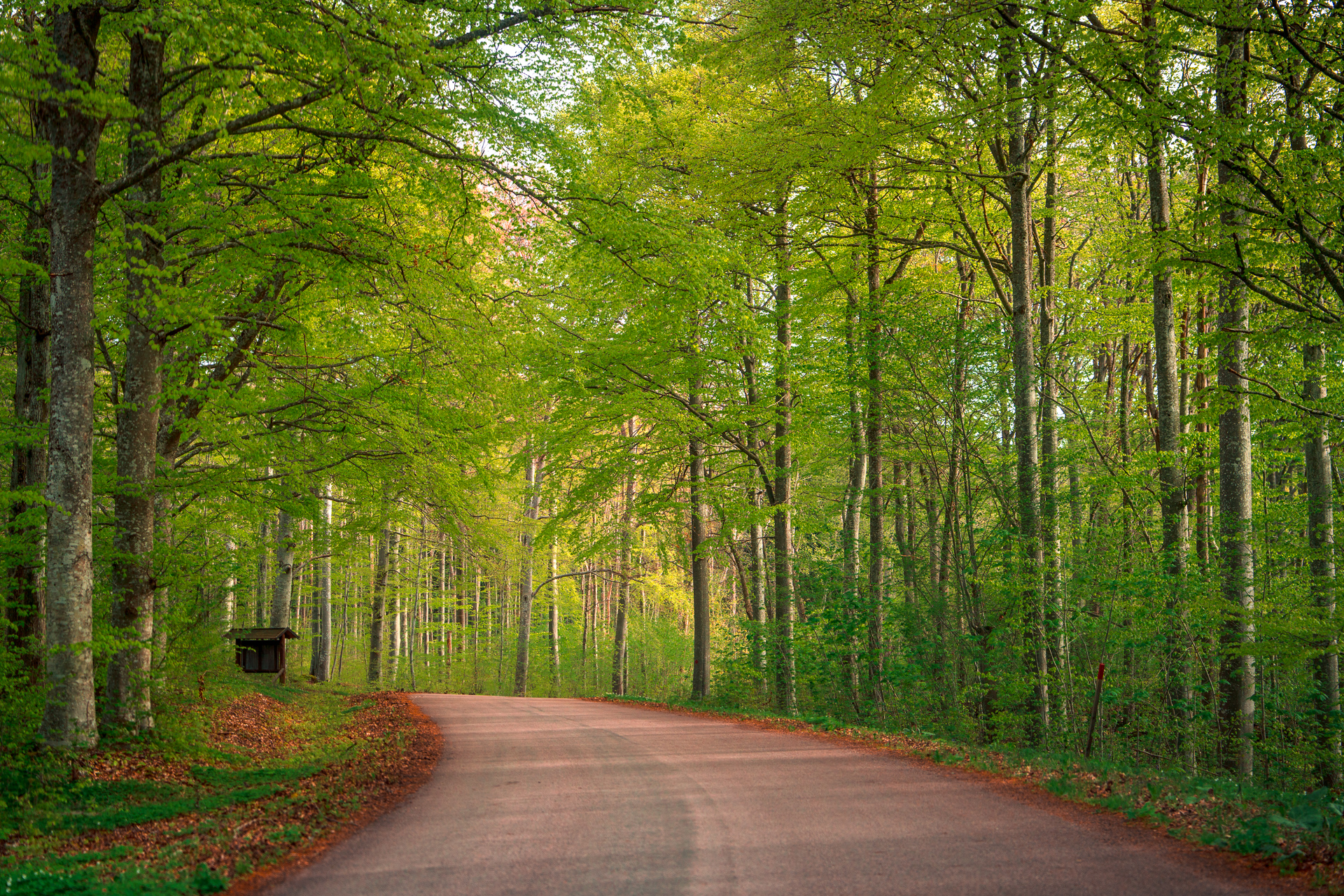
East Sweden offers some of the country’s most varied forests: deep pine wilderness, coastal cliffs, ancient oak groves, lakeside trails, and easy-to-reach national parks from Stockholm, Uppsala, and Norrköping. This guide focuses entirely on the eastern region, with essential visitor info, best photo locations, and when to go.
Tyresta National Park (Stockholm County)
Why visit: One of Sweden’s largest remaining primeval forests outside the north.
Landscape: Fire-scarred pines, still lakes, rocky ridges, wildlife.
Difficulty: Easy to moderate, many marked loops.
Best photo spot: Stensjön lake viewpoint — misty mornings are magical.
Best time to visit: Late spring–early autumn; September for warm light.
Bogesund Nature Reserve (Vaxholm, Stockholm Archipelago)
Why visit: Close to Stockholm but feels wild — coastal forest meets castle grounds.
Landscape: Ancient pine forests, oak meadows, sea views.
Best photo spot: Viewpoints from green “Roslagsleden” trail section.
Best time to visit: May for fresh green leaves and wildflowers.
Nackareservatet (Stockholm)
Why visit: Urban wilderness connected to excellent public transport.
Landscape: Spruce and pine forest around lakes.
Best photo spot: Lake Källtorpssjön cliffs during sunset.
Best time to visit: Year-round, winter for ice-skating photos.
Norra Kvill National Park (Småland / East region access)
Why visit: Fairytale-like moss forest and ancient pines.
Highlight: The 1,000-year-old oak “Kvilleken” is nearby.
Best photo spot: Lake Stora Idgölen reflecting twisted trees.
Best time to visit: October for rich autumn colors.
Kolmården Forest Region (Södermanland–Östergötland)
Why visit: One of the largest continuous forest areas in the south.
Landscape: Rolling highlands, Baltic Sea viewpoints.
Best photo spot: Marviken ridge overlooking narrow lakes.
Best time to visit: Summer golden hours and early fall hikes.
Tiveden National Park (Örebro County, east-center access)
Why visit: Dramatic, untouched forests with giant boulders.
Landscape: Rugged and mythical — excellent for adventure photos.
Best photo spot: Vitsand beach area with forested lakeshores.
Best time to visit: Summer evenings and late September.
Florarna Nature Reserve (Uppland)
Why visit: One of central Sweden’s biggest wetlands within forest landscape.
Landscape: Floating boardwalks through spruce swamp forest.
Best photo spot: Örskärsvägen boardwalk at sunrise.
Best time to visit: May–June for birdlife and early light.
Siggefora & Uppsala Forest Belt (Uppland)
Why visit: Lakes and forests perfect for hiking & camping near Uppsala.
Landscape: Pine ridges, sandy trails, calm lakes.
Best photo spot: Sunset at Siggeforasjön lakeshore.
Best time to visit: June & July for long golden evenings.
Tämnaren Wetlands & Forest Edges (Uppland)
Why visit: Birdwatching paradise and great fog photography spots.
Landscape: Lake surrounded by mysterious forests.
Best photo spot: Bird tower on the east side at dawn.
Best time to visit: Spring mornings.
Stendörren Nature Reserve (Sörmland Coast)
Why visit: Coastal forest with suspension bridges to islands.
Landscape: Pines on granite cliffs facing the sea.
Best photo spot: Bridge views toward the archipelago.
Best time to visit: Sunset in late summer.
Björnlandet National Park (Västerbotten — east access from coast)
Why visit: True boreal wilderness with old spruce & deep silence.
Landscape: Rocky plateaus, deadwood habitats.
Best photo spot: From Angsjön and the high viewpoints.
Best time to visit: September for moose encounters and color.
Österlen Hills & Beech Forests (Skåne — southern east route)
Why visit: Soft light, scenic farmland meets coastal forests.
Landscape: Beech, oak, cliffs, ravines.
Best photo spot: Stenshuvud National Park viewpoints.
Best time to visit: April–May for fresh bright green leaves.
Travel & Photography Tips
- Bring a polarizer to control shine on leaves and water
- Wide-angle lenses emphasize forest scale
- Use a person or log as a point of reference in photos
- Early mornings give best light, lower contrast
- Autumn and spring offer the most dramatic colors
Accessibility
| Destination | Public Transport | Family Friendly | Notes |
|---|---|---|---|
| Tyresta NP | Yes | Yes | Best marked trails |
| Bogesund | Yes | Yes | Coastal winds cooler |
| Nackareservatet | Yes | Yes | Urban wilderness |
| Norra Kvill | No | Moderate | Rocky terrain |
| Kolmården | Partial | Yes | Long routes |
| Tiveden | No | Moderate–Hard | Steep cliffs |
| Florarna | Limited | Yes | Wet/boardwalks |
| Siggefora | Limited | Yes | Great camping |
| Tämnaren | No | Easy | Birders area |
| Stendörren | Yes | Yes | Some steep rocks |
| Björnlandet | No | Hard | Remote trails |
| Österlen forests | Yes | Yes | Seasonal crowds |
FAQ: Visiting Forests in East Sweden
- How far are these destinations from Stockholm?
From 20 minutes (Nackareservatet) to 3–4 hours (Tiveden & Norra Kvill). - Which forest is best for families?
Tyresta, Bogesund, Nackareservatet and Stendörren are ideal. - Are national parks free to visit?
Yes, no entry fees in Sweden. - Can I camp in these forests?
Yes, under Allemansrätten — except where specifically restricted. - When do fall colors peak?
Early October near coast; late September inland. - Can I take forest photos in winter?
Yes — especially beautiful with snow and frost. - Do I need a car?
Not always — many near Stockholm are transit accessible. - Are there dangerous animals?
Moose can be unpredictable — keep distance; ticks in summer. - Can I make campfires?
Only in designated areas and without fire bans. - What should I pack?
Layers, waterproofs, bug spray in summer, tripod for low light. - Which place has best sea-forest scenery?
Stendörren and Bogesund stand out.
Pingback:Best Photo Spots in Tiveden National Park for Great Shots