
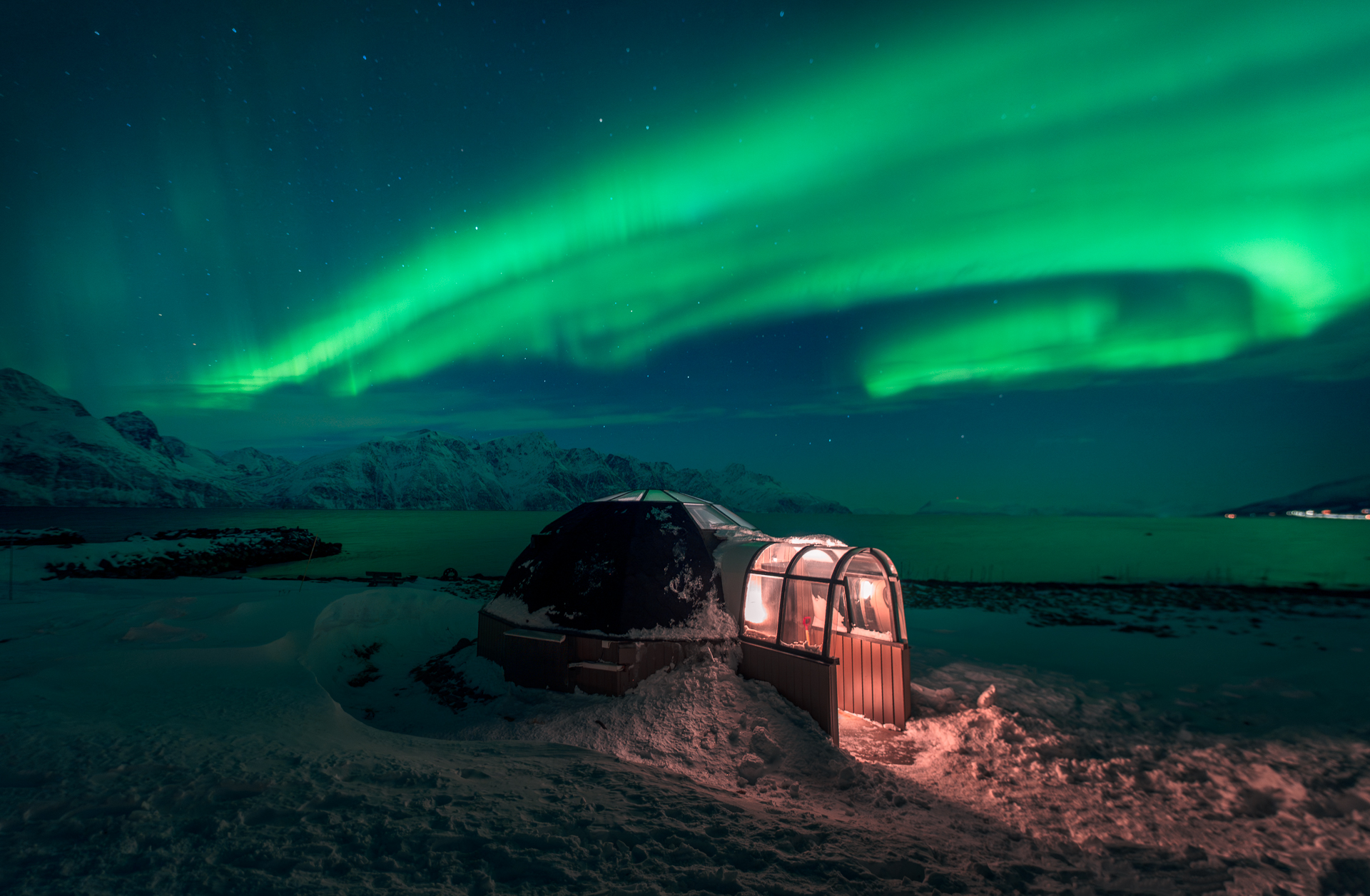
Tromsø is one of the world’s most iconic destinations for Northern Lights photography. Sitting well inside the auroral oval — where geomagnetic activity consistently produces spectacular auroras — it offers photographers quick access to dramatic fjords, dark skies, coastal horizons, and iconic Arctic landscapes. From the city’s outskirts to remote islands and towering mountains, there are many excellent places to photograph the aurora in winter (typically late September through early April). (EuropaAdventure)
This in-depth guide explores the best aurora photography spots near Tromsø, what makes each location special, how to get there, and specific tips to help you capture unforgettable images of dancing lights in the Arctic sky.
When and Why to Photograph the Northern Lights Near Tromsø
Best season: Late September – early April
The long, dark nights of Arctic winter create ideal darkness for aurora displays, while local fjords, snow-covered mountains, and reflective ice or water add powerful foregrounds. Clear skies combined with geomagnetic activity — measured by the KP index — are your best bet for vibrant auroras. (EuropaAdventure)
Peak aurora times:
• Between ~21:00 and 02:00 local time
• Conditions: high KP index, low cloud cover, and minimal light pollution
Photography is most successful when you pair aurora forecasts with cloud maps, and are flexible enough to chase clearer skies within an hour or two of Tromsø. (Hello Tromsø)
Aurora Photography Spots (with Google Maps Links)
Below you’ll find the most effective places to photograph the aurora near Tromsø, each with a Google Maps link and detailed info.
1. Ersfjordbotn — Dramatic Fjord Views
Distance: ~25 km, ~30–40 min drive from Tromsø
Why it’s amazing:
Ersfjordbotn is regularly listed among the best aurora spots near Tromsø due to its dramatic fjord setting, minimal light pollution, and mountain reflections in the water. The steep peaks create natural frames and symmetry in aurora photos. (Northern Lights Tracker)
Best for:
• Reflections in still water
• Long-exposure aurora
• Landscape compositions
Photography tips:
• Scout mirror calm spots along the fjord during the day
• Use a wide-angle lens (14–24mm) for sky + mountain scenes
• Combine water reflections with aurora arcs
2. Kvaløya Island – Numerous Aurora Points
Kvaløya (“Whale Island”) surrounds Tromsø and contains multiple aurora locations, many within a short drive of the city. Popular places include Skulsfjord, Grøtfjord, and Storelva — each offering wide horizons and dark skies. (Hello Tromsø)
Why it’s amazing:
• Easy access from Tromsø
• Less light pollution the further west you go
• Fjords, beaches, and mountain silhouettes
Best for:
• Photographers willing to explore several sites
• Aurora at sea level against snowy peaks
Photography tips:
• Destination hop based on cloud cover — local microclimates can vary
• Include snowy ridges or beaches as foreground elements
3. Prestvannet Lake – City-Adjacent but Dark
If you want aurora views without leaving Tromsø, Prestvannet Lake is one of the best spots on the island. It sits on a hill above the city with darker skies than downtown and can capture reflections in the frozen lake ice. (Sonyaz)
Why it’s amazing:
• No car needed — walk or bus
• Scenic lake with ice reflections
• Accessible throughout winter
Best for:
• Budget travelers
• Quick aurora test shots
• Photographers without a rental car
Photography tips:
• Bring a polarizing filter to manage shine off ice
• Use rocks or trees at the lake edge to frame your shot
4. Telegrafbukta Beach – Fjord & Aurora Together
This beach at the southern tip of Tromsøya Island has wide northern skies and coastal open space, making it ideal for aurora photography close to the main town. (Northern Lights Tracker)
Why it’s amazing:
• Easy to reach by bus or walk
• Low horizon line for sky emphasis
• Possibility of water foregrounds
Best for:
• Beginners
• Aurora with water reflections
Photography tips:
• Arrive before dark to pick a location
• Incorporate compositions with sea, breakwater, or driftwood
5. Grøtfjord – Wide Horizons and Snow Mountains
West of Tromsø on Kvaløya, Grøtfjord is a long, dramatic fjord with minimal light pollution and superb mountain backdrops. Photographers value it for strong aurora contrasts and clean, wide angles. (Hello Tromsø)
Why it’s amazing:
• Long fjord lines into dark skies
• Snow reflections enhance foreground
• More remote than some quick spots
Best for:
• Landscape aurora shots
• Multi-night photography trips
Photography tips:
• Use a tripod and cable release for long exposures
• Shift composition from water to mountain backs as aurora moves
6. Tromvik – Arctic Silence and Light Shows
Tromvik on the far western side of Kvaløya Island provides remote perspectives with minimal ambient glow and open Arctic sky. It’s one of those locations where you can feel truly immersed in nature. (Hello Tromsø)
Why it’s amazing:
• Remote and dark skies
• Ocean horizon + snowy cliffs
• Fewer tourists
Best for:
• Serious aurora chasers
• Photographers seeking solitude
Photography tips:
• Plan warms breaks — remote locations are cold
• Combine aurora with shoreline elements
7. Oldervik — North-Facing Auroral Views
Oldervik, northeast of Tromsø, faces toward the Barents Sea with broad northern exposure, meaning you have wide skies for aurora photography with dramatic fjord and mountain foregrounds. (Hello Tromsø)
Why it’s amazing:
• Faces true north
• Large sky expanses
• Snowy wilderness setting
Best for:
• Wide northern lights compositions
• Clean background shots
Photography tips:
• Use a low horizon for sky coverage
• Scout fjord in daylight for compositions
8. Lyngen Alps Region – Arctic Peaks & Aurora
Though a longer drive (often with a ferry involved), the Lyngen Alps offer some of the most dramatic aurora landscapes in the region. Snow-covered mountains, glacial valleys, and Arctic fjords give you compositions that range from breathtaking to cinematic. (Hello Tromsø)
Why it’s amazing:
• Snow peaks + aurora backdrop
• Alpine reflections in calm scenes
• Remote wilderness feel
Best for:
• Extended aurora trips
• Epic photography portfolios
Photography tips:
• Combine with winter activities like snowshoeing
• Bring a wide-angle lens to include mountain context
Photography Gear & Settings Tips
Essential Gear:
• Wide-angle lens (14–24mm) — to capture sky + landscape
• Fast aperture (f/2.8 or wider) — more light
• Sturdy tripod — long exposures
• Extra batteries — cold drains power
Suggested Camera Settings:
• Shutter: 8–20 secs (adjust based on aurora speed)
• ISO: 800–3200 (balance noise)
• Shoot RAW for best post-processing flexibility (Hello Tromsø)
Composition Strategies:
• Include foreground elements (mountains, water, cabins)
• Look for reflections in lakes or ice
• Aim for the aurora arc near the zenith (highest point)
Safety & Practical Tips
• Dress extremely warmly: Arctic winter nights are frigid
• Check road conditions: Snow and ice make driving tricky
• Use aurora forecast apps: combine geomagnetic and cloud maps (Hello Tromsø)
• Scout locations in daylight: Night navigation in snow is harder
• Mobile signal may be weak: plan offline maps
FAQ – Aurora Photography Near Tromsø
1. When is the best time to see the Northern Lights near Tromsø?
Winter (September–early April) is best, with long, dark nights and strong aurora activity. (EuropaAdventure)
2. Do I need a car for these spots?
Yes — many top locations like Ersfjordbotn, Grøtfjord, or Oldervik are best reached by rental car.
3. Can I see aurora from Tromsø city centre?
Yes — but light pollution is stronger. Prestvannet Lake and Telegrafbukta are good close options. (Hello Tromsø)
4. What apps are useful for aurora photography?
Aurora Forecast, Aurora Alerts, Windy.com, and YR.no for cloud cover are recommended. (Hello Tromsø)
5. Should I shoot in RAW?
Always — RAW gives you the most flexibility for low-light processing. (Hello Tromsø)
6. What’s a KP index?
It measures geomagnetic activity; higher numbers generally mean more intense auroras.
7. Are tours worth it?
Yes, guided tours can take you to clear skies faster and offer local insight.
8. Are there aurora shelters?
Yes — domes and camps near Tromsø offer warm shelter and alerts for clear skies. (Hello Tromsø)
9. Is aurora photography possible smartphone?
Yes, with tripod and manual settings, but dedicated cameras yield better results.
10. Can you guarantee sightings?
No — aurora depends on solar activity and cloud conditions.
Conclusion
Near Tromsø, the aurora isn’t just a bucket-list phenomenon — it’s an opportunity to capture incredible natural light shows paired with fjord panoramas, Arctic peaks, and reflective waters. Whether you stay close on Prestvannet Lake and Telegrafbukta or venture further to Ersfjordbotn, Grøtfjord, Tromvik, and the Lyngen Alps, you’ll find world-class compositions for your winter photography portfolio.
Plan to stay multiple nights, monitor cloud forecasts, and choose your foregrounds wisely — the Arctic skies are waiting. 🌌