
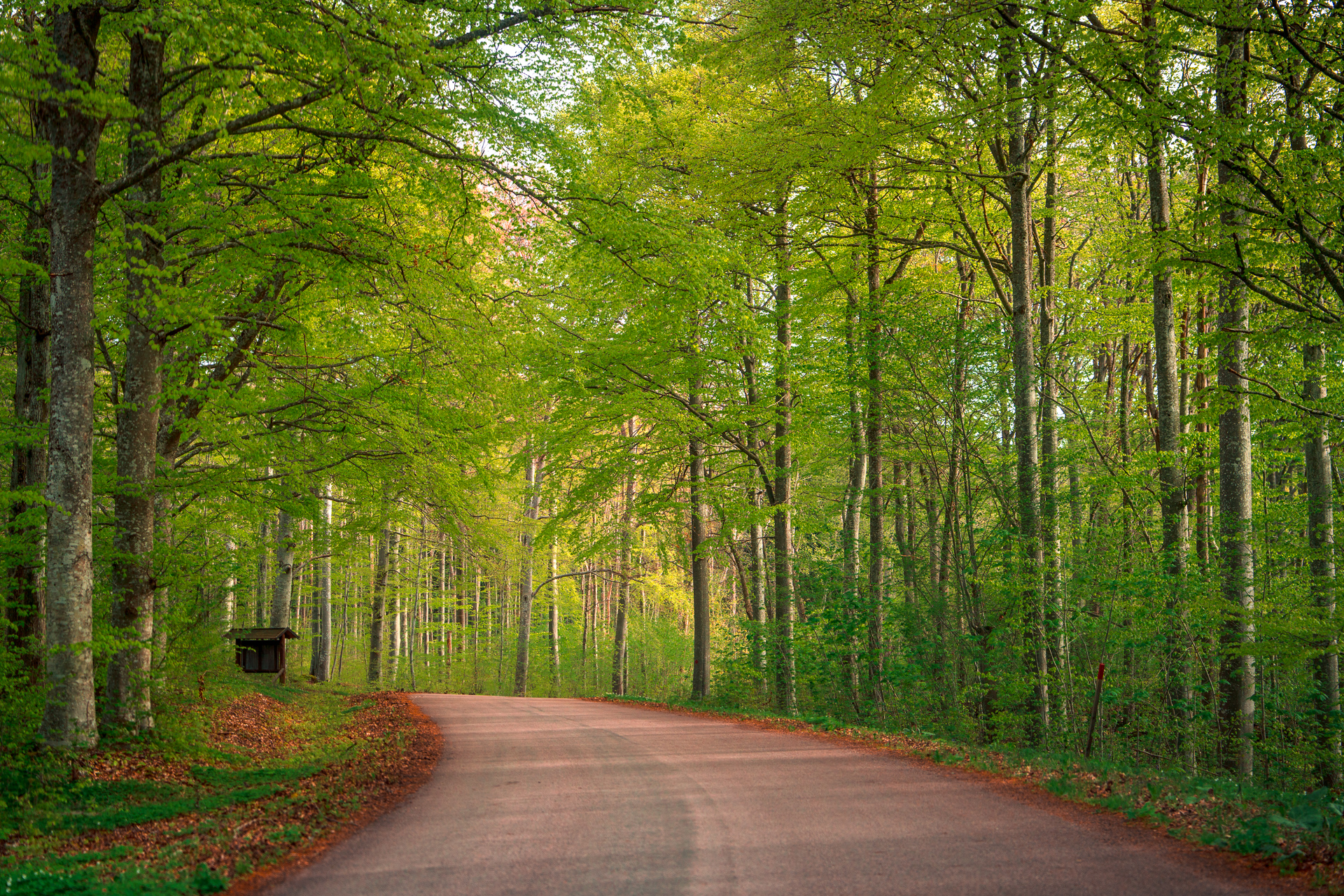
Spring is the most magical season for European beech forests. As fresh, translucent green leaves unfold, light filters through the canopy in a way that lasts only a few weeks. For photographers and nature lovers, this brief window offers some of the most beautiful woodland scenes Europe has to offer.
This guide covers the best beech forests in Europe to visit in spring, with exact timing tips, what makes each forest special, and what to photograph.
Why Beech Forests Are Best in Spring
Beech forests transform dramatically in spring:
• Leaves emerge bright, fresh green
• Forest floors bloom with wildflowers
• Light becomes soft and evenly diffused
• Trees still show strong structure
• Trails are quieter than summer
The key is timing — the “green-up” period often lasts only 2–4 weeks.
Best Beech Forests in Europe to Visit in Spring
Hallerbos – Belgium
Best time to visit:
Mid–April (bluebells), late April–early May (fresh beech leaves)
Hallerbos is one of Europe’s most famous spring forests, known for its vast carpets of bluebells beneath tall beech trees.
Why it’s special:
• Dense bluebell coverage
• Straight beech trunks
• Easy access from Brussels
What to photograph:
• Bluebells with vertical tree lines
• Backlit fresh leaves
• Forest paths at sunrise
Official site:
https://www.hallerbos.be
Buchenwald Grumsin – Germany (UNESCO)
Best time to visit:
Late April–early May
An ancient, untouched beech forest northeast of Berlin, Grumsin is part of the UNESCO Primeval Beech Forests of Europe.
Why it’s special:
• Old-growth beech ecosystem
• Minimal human intervention
• Natural forest structure
What to photograph:
• Twisted trunks
• Mossy forest floors
• Natural woodland layers
Official site:
https://www.schorfheide-chorin.de
Jasmund National Park – Germany
Best time to visit:
Late April–mid May
Beech forest meets dramatic white chalk cliffs on the Baltic Sea.
Why it’s special:
• Coastal beech forest
• Iconic Königsstuhl cliffs
• UNESCO World Heritage site
What to photograph:
• Fresh green leaves framing the sea
• Cliffs through beech branches
• Misty mornings
Official site:
https://www.nationalpark-jasmund.de
Soignes Forest (Forêt de Soignes) – Belgium
Best time to visit:
Late April–early May
A vast beech forest stretching into Brussels, famous for its cathedral-like tree structure.
Why it’s special:
• Extremely tall, straight beeches
• Clean forest floor
• Soft, even light
What to photograph:
• Vertical compositions
• Minimalist scenes
• Light filtering through leaves
Official site:
https://environnement.brussels
Uholka–Shyrokyi Luh – Ukraine (UNESCO)
Best time to visit:
Early–mid May
One of Europe’s largest untouched beech forests.
Why it’s special:
• True primeval forest
• Exceptional biodiversity
• Rare forest structure
What to photograph:
• Ancient trees
• Deadwood ecosystems
• Wild forest textures
Official site:
https://whc.unesco.org
Apennine Beech Forests – Italy (UNESCO)
Best time to visit:
Mid–May (later at higher elevations)
Spread across central and southern Italy, these forests green up later than northern Europe.
Why it’s special:
• Mountain beech forests
• Diverse landscapes
• Late spring foliage
What to photograph:
• Mountain light
• Rolling forested hills
• Isolated trees
Official site:
https://whc.unesco.org
Ordesa y Monte Perdido National Park – Spain
Best time to visit:
Late May–early June
High-altitude Pyrenean beech forests with dramatic scenery.
Why it’s special:
• Canyon landscapes
• Late leaf emergence
• Alpine-meets-forest environment
What to photograph:
• Fresh green canopies
• Waterfalls with forest backdrops
• Mountain light
Official site:
https://www.ordesamontperdido.gob.es
Hoia Forest – Romania
Best time to visit:
Early–mid May
Less known but atmospheric beech forests near Cluj-Napoca.
Why it’s special:
• Rolling terrain
• Dense woodland atmosphere
• Low tourism
What to photograph:
• Forest depth
• Misty mornings
• Curving trunks
Official site:
https://romaniatourism.com
Söderåsen National Park – Sweden
Best time to visit:
Early–mid May
One of southern Sweden’s best spring forests.
Why it’s special:
• Deep ravines
• Fresh Nordic spring greens
• Clean forest streams
What to photograph:
• Valley perspectives
• New leaves against dark trunks
• Spring wildflowers
Official site:
https://www.sverigesnationalparker.se
Carpathian Beech Forests – Slovakia & Romania (UNESCO)
Best time to visit:
Early–mid May
Part of Europe’s largest continuous beech forest system.
Why it’s special:
• Vast, wild landscapes
• Traditional mountain regions
• Strong seasonal contrast
What to photograph:
• Endless forest layers
• Mountain light
• Wildlife signs
Official site:
https://whc.unesco.org
Best Time Window for Beech Forest Spring Color (Europe)
• Southern Europe: Late April–May
• Central Europe: Late April–early May
• Northern Europe: Early–mid May
• Mountain regions: Mid May–June
Plan flexibly — weather shifts leaf emergence year to year.
Photography Tips for Spring Beech Forests
• Overcast days are ideal
• Shoot early morning for depth
• Use a polarizer to control leaf shine
• Wide-angle lenses emphasize canopy
• Vertical compositions work best
• Watch for trampling-sensitive areas
Related blog posts
• Best Nature Reserves to Visit in March in Europe
https://frewaphoto.com/nature-reserves-march-europe/
• Early Spring Garden Photography in Europe
https://frewaphoto.com/early-spring-garden-photography-europe/
• Nordic Light Photography Guide
https://frewaphoto.com/nordic-light-photography/
• Best Destinations to Visit in March
https://frewaphoto.com/best-destinations-march-photography/
FAQ — Beech Forests in Europe in Spring
1. When is the best time to see fresh beech leaves?
Late April to mid May, depending on latitude and elevation.
2. How long does peak green last?
Usually 2–4 weeks.
3. Are beech forests crowded in spring?
Famous ones can be — visit early mornings or weekdays.
4. Is spring better than autumn?
For light and freshness, yes; autumn offers color.
5. Are bluebells found in all beech forests?
Mostly in Western Europe, especially Belgium and the UK.
6. Can you hike during spring green-up?
Yes, but stick to trails to protect flora.
7. Is photography allowed?
Yes, but tripods may be restricted in protected areas.
8. What weather is best?
Bright overcast or light mist.
9. Are beech forests good for families?
Yes, many have accessible paths.
10. Do beech forests look good in rain?
Yes — rain enhances color and texture.
Conclusion
Beech forests in spring offer one of Europe’s most fleeting and beautiful natural experiences. For a few short weeks, light, color, and form align perfectly. Whether you visit famous forests like Hallerbos or remote UNESCO sites in the Carpathians, timing and patience are everything. Travel lightly, respect the forest floor, and let the light guide your compositions.