
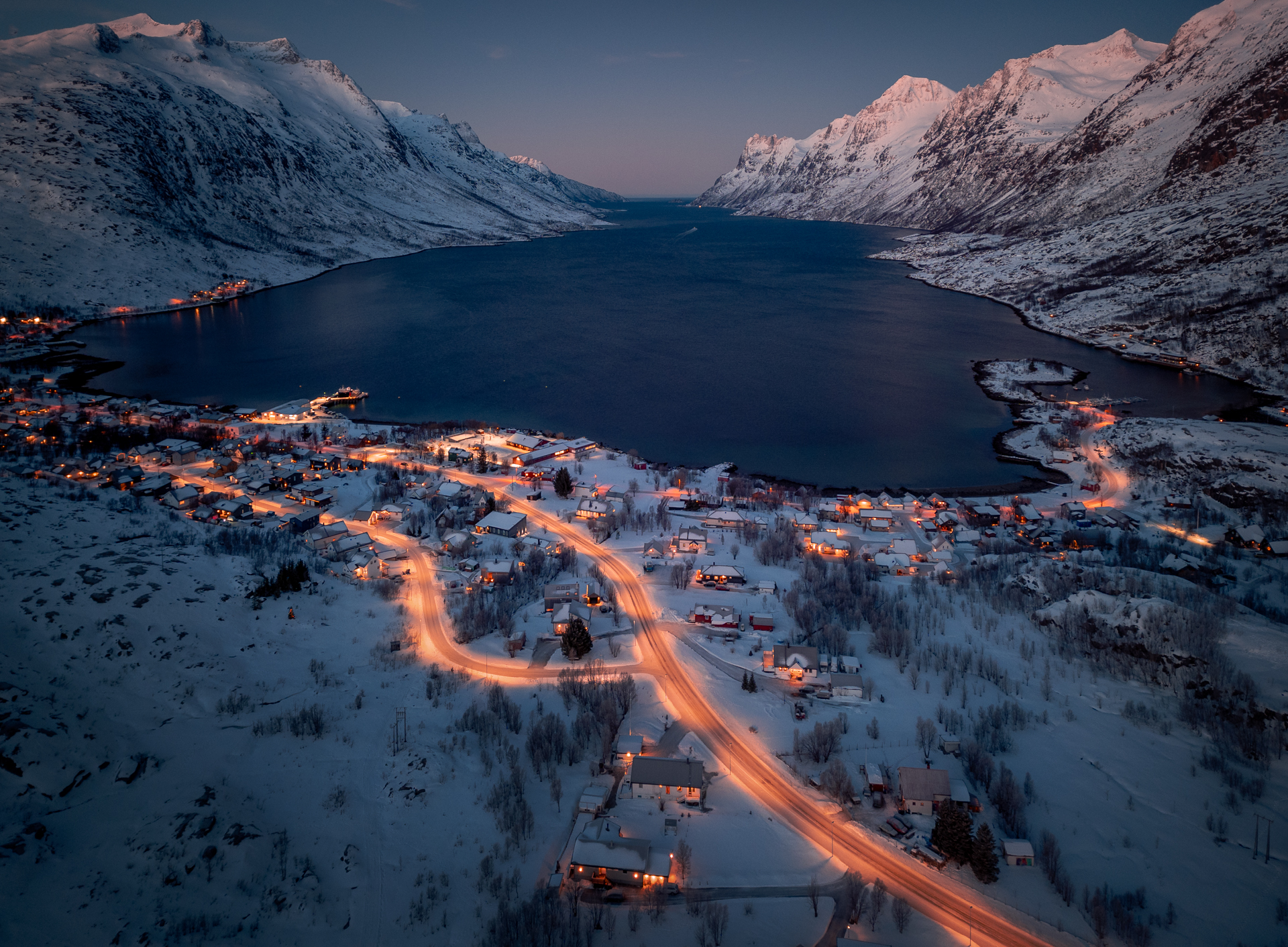
Below is a comprehensive guide to the best photo spots on Kvaløya and Sommarøy (near Tromsø, Norway).
1. Ersfjordbotn Fjord
📍 Map: https://maps.app.goo.gl/3sEYrpsvX85QjMAx5
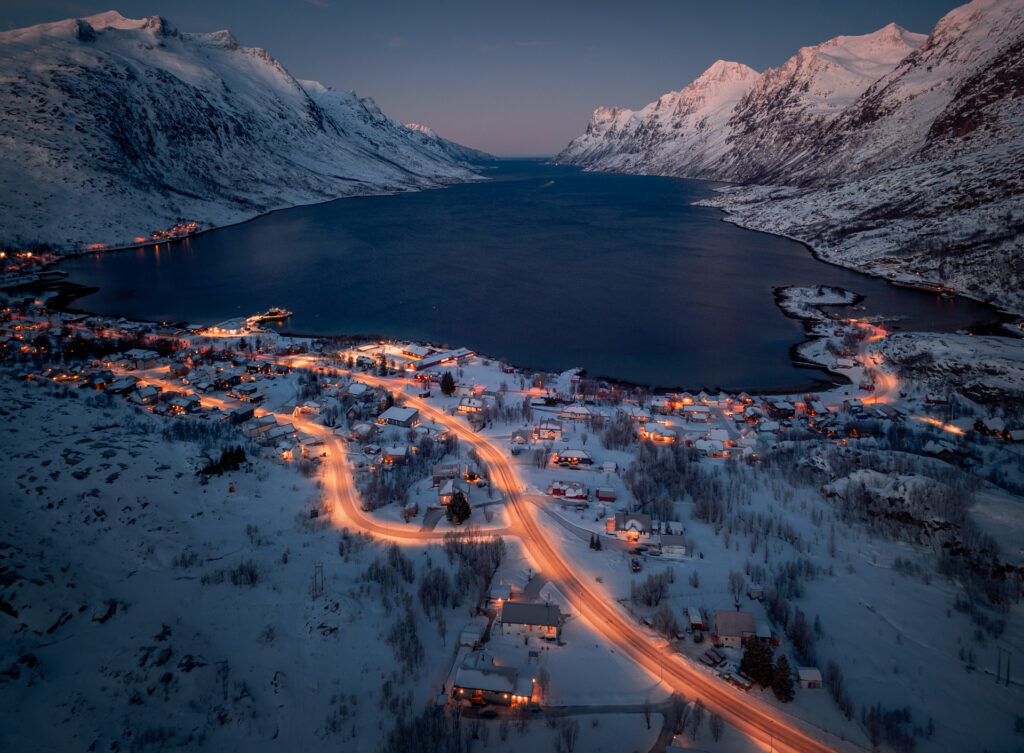
Ersfjordbotn is one of the classic “postcard” fjords on Kvaløya. Narrow waters are framed on both sides by steep, snow-topped mountains — a composition that works at sunrise, sunset, during aurora displays, and even in storms. (Norway Explained)
Why it’s great:
- Tight fjord framing creates dramatic depth
- Works year-round — snow in winter, lush greens in summer
- Easy roadside access with pull-ins for photographers
Best light:
Golden hour (sunrise/sunset) for warm side light or night for Northern Lights (clear skies away from city light pollution). (Norway Explained)
Photography tips:
• Capture reflections on calm days (especially in early morning).
• Use a telephoto lens to compress ridgelines if peaks are distant.
• In winter, combine with long exposures on slow water (tripod essential).
2. Grøtfjord Beach & Viewpoint
📍 Map: https://maps.app.goo.gl/eEMp7e2Mbd2mUwAq6
A wide sandy beach tucked into a fjord with mountains sweeping down to the shore. Grøtfjord presents a rare Arctic beach scene — especially photogenic in summer light or during lingering snow in early spring. (Norway Explained)
Why it’s great:
- Sweeping foreground lines
- Wide horizon for dramatic clouds
- Snow in winter juxtaposed with beach colors
Best light:
Sunset light on the mountains and beach, or dramatic early morning shadows.
Photography tips:
• Lead the eye with beach curving into fjord.
• Combine red cabins or fishing boats with rugged peaks.
• Winter offers unique contrasts between sand and snow.
3. Tromvik & West Coast Headlands
📍 Map: https://maps.app.goo.gl/4Y7JqRv6b4M1gzs56
Past Grøtfjord lies the rougher west coast with headlands, sea stacks, and open Atlantic views. The scenery becomes more expansive and wild here, with skies and sea taking center stage in your compositions. (Norway Explained)
Why it’s great:
- Rugged ocean views
- Great for storm and wave photography
- Dramatic horizons
Photography tips:
• Catch crashing waves with slow shutter speeds.
• Use headlands to frame sunset or aurora.
• Look for seabirds and coastal wildlife.
4. Straumsbukta & Straumen Gård
📍 Map: https://maps.app.goo.gl/jkLga5o7gT7WqFfa8
A lesser-known photo spot on Kvaløya’s coast, Straumen Gård (a historic shoreline farm) sits against water and mountain backdrops that evoke old Arctic fishing life. (meanderingwild.com)
Why it’s great:
- Historic timber buildings
- Rugged shoreline
- Great mood shots in overcast weather
Photography tips:
• Use weathered wood against dramatic clouds.
• Shoot during “golden hour” for warm contrast.
• Consider b&w for texture-focused images.
5. Tverrbotn & Nordfjord Views
📍 Map: https://maps.app.goo.gl/MmXxY9L3PM9h7JRJ6
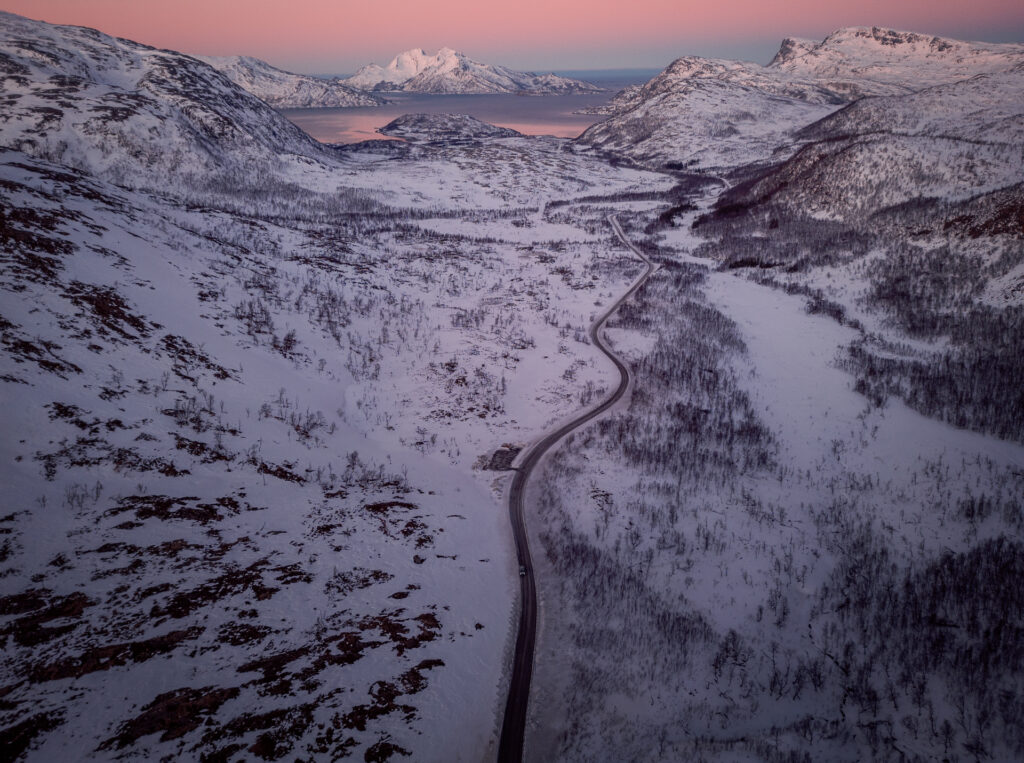
This roadside pull-in near the fjord gives quick access to photographic vistas with mountains, water, and contrasting winter light. It’s less famous than Ersfjordbotn, but its long alpine glows make it very rewarding. (meanderingwild.com)
Why it’s great:
- Beautiful alpenglow potential
- Minimal crowding
- Works well for Northern Lights too
Photography tips:
• Visit during late afternoon in winter for alpenglow.
• Frame lone trees or snowy banks for foreground interest.
• Use telephoto to compress peaks.
Best Photo Spots on Sommarøy (Sommarøya & Hillesøya)
Sommarøy — the “Summer Island” connected to Kvaløya by the Sommarøy Bridge — is a jewel of white sand beaches, turquoise shallows, and tiny islands perfect for wide, scenic shots. (Visit Tromso | Norway)
6. Sommarøy Bridge (Sommarøybrua)
📍 Map: https://maps.app.goo.gl/3JvM9M8Zz8kopWCcA
This long, sinuous bridge dramatically spans the strait between Kvaløya and Sommarøy and makes an excellent subject and foreground element for landscape compositions. (Kiladera)
Why it’s great:
- Strong architectural lines
- Offers views toward islands and sea
- Iconic shot with mountains and water
Best light:
Sunrise or sunset for warm glow; night for aurora framing across the water.
Photography tips:
• Use the bridge as a strong leading line into the image.
• Try aerial/drone frames (check local regulations).
• Capture lights reflecting in calm water.
7. White Sand Beaches (Sommarøy)
📍 Map: https://maps.app.goo.gl/bmSTtSh8qA4Qu1rUA
Sommarøy’s beaches are among the most distinctive in Northern Norway — turquoise shallows and tropical tones that contrast beautifully with Arctic mountains. (Visit Tromso | Norway)
Why it’s great:
- Unique Arctic “tropical” colors
- Minimal human impact
- Wide open horizons
Best light:
Blue hour, sunrise, and sunset for enhanced tones.
Photography tips:
• Compose with low angle to accentuate foreground textures.
• Combine mountain backdrops with beach waves.
• Include sky reflections in shallow pools.
8. Reina Beach & Views to Håja
📍 Map: https://maps.app.goo.gl/vG5kY8XbpMxE1zKf9
Reina Beach is a scenic sandscape near Sommarøy Camping with wide vistas facing the island of Håja — perfect for expansive scenic photos. (Never Ending Voyage)
Why it’s great:
- Clean horizon lines
- Mountain backdrop over water
- Long exposures with smooth seas
- Works for aurora and daylight
Photography tips:
• Sunset tones on Håja island make for dramatic compositions.
• Neutral density filters help for long daytime exposures.
• Include foreground sand textures.
9. Hillesøya (Views & Mini Treks)
📍 Map: https://maps.app.goo.gl/H2eaMEM9nk8C9sPG6
Connected to Sommarøy, Hillesøya has a mix of shallow beaches and rugged low ridges (Hillesøy toppen) that can be explored for wider panoramic shots. (Wikipedia)
Why it’s great:
- Panoramas over Sommarøy waters
- Village houses and Arctic life scenes
- Elevated viewpoints above small hills
Photography tips:
• Short hikes for elevated panoramas.
• Include village in lower third of frame for scale.
• Capture contrasting textures — grass, rocks, water.
Seasonal & Sky Photography Opportunities
Northern Lights on Kvaløya & Sommarøy
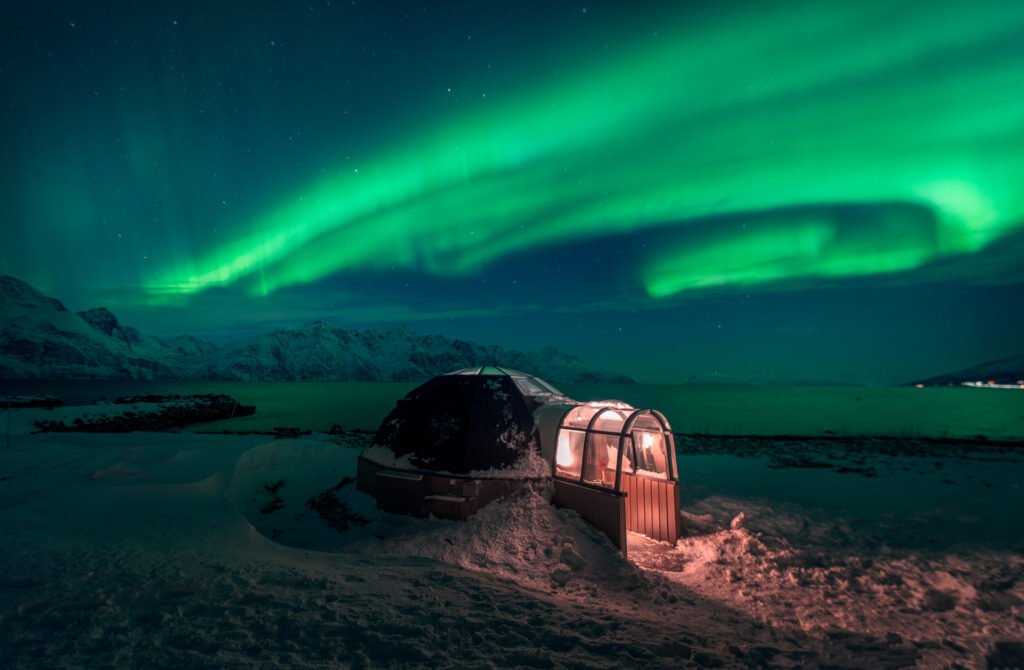
Both islands are excellent for aurora photography because they are far from Tromsø’s light pollution and have open north–northwest horizons. (Norway Explained)
Best locations for aurora:
- Ersfjordbotn fjord
- Sommarøy beaches and bridge
- Grøtfjord wide views
- Hillesøya shoreline
Tips:
• Wide-angle lens (14–24mm)
• Tripod for long exposures
• Shoot RAW and bracket exposures
Practical Tips for Photographing These Areas
- Car is essential: Most spots are roadside or short walks.
- Scout in daylight: Especially for aurora framing later.
- Weather changes fast: Arctic storms can produce dramatic skies.
- Respect nature: Stay off private property and fragile tundra.
- Multiple visits pay off: Light and conditions vary dramatically day to day.
Internal Links (frewaphoto.com)
— Norway Travel Photography Guide
https://frewaphoto.com/norway-travel-photography-guide/
— Best Aurora Photography Spots near Tromsø
https://frewaphoto.com/best-aurora-spots-tromso/
— Ultimate Guide to Visit Senja (complementary island)
https://frewaphoto.com/ultimate-guide-visit-senja/
FAQ – Kvaløya & Sommarøy Photo Spots
Where are the best beaches?
Sommarøy’s white sand beaches like the ones near Sommarøy Camping are top choices. (Visit Tromso | Norway)
Can I see the Northern Lights here?
Yes — both islands provide dark skies and open horizons ideal for aurora photography. (Norway Explained)
Is it possible without a car?
Public transport is limited; renting a car gives you much better access. (Reddit)
Are these spots good year-round?
Yes — winter for aurora and snow, summer for beaches and hikes. (Visit Tromso | Norway)
Is drone photography allowed?
Generally yes in open areas, but stay under local regulations and avoid flying over people or private property.
Conclusion
Kvaløya and Sommarøy offer some of Northern Norway’s most striking landscapes just minutes from Tromsø. From the towering fjords of Ersfjordbotn and sweeping white beaches of Sommarøy to architectural highlights like the Sommarøy Bridge and quiet coastal hamlets on Hillesøya, these locations deliver diverse and unforgettable photo opportunities. With careful scouting and seasonal planning, both islands can provide spectacular imagery year-round — from vibrant summer light to serene winter auroras.