
A Complete Guide to Photographing Madeira’s Wild Nature
Madeira is one of Europe’s most rewarding destinations for nature and landscape photography. Few places offer such a dense concentration of visual variety: jagged volcanic peaks, cloud-filled valleys, ancient laurel forests, dramatic waterfalls, and a rugged Atlantic coastline — all within short driving distances.
What makes Madeira special for photographers isn’t just the scenery, but how dynamic it is. Weather, light, and clouds are constantly shifting, creating new compositions every hour. This is not a destination where you shoot once and move on — Madeira rewards photographers who return to locations, adapt to conditions, and embrace imperfection.
In this Madeira nature photography guide, I’ll cover mountains, forests, waterfalls, levadas, coastlines, gardens, seasons, gear, and planning tips — everything you need to create strong, varied images on the island.
Why Madeira Is a Dream Destination for Nature Photography
Madeira sits isolated in the Atlantic Ocean, which creates a unique interaction between oceanic weather systems and steep volcanic terrain. This combination results in:
- Rapidly changing weather
- Frequent cloud inversions
- Soft, diffused light
- Lush vegetation year-round
- Dramatic elevation changes
For photographers, this means endless variation. You can shoot sunrise above the clouds, photograph waterfalls in deep forests by midday, and capture rugged coastlines at sunset — all in one day.
Understanding Madeira’s Microclimates (Essential for Photographers)
One of the most important skills when photographing Madeira is learning to work with microclimates.
- South coast: sunnier, drier, more stable light
- North coast: wetter, greener, more dramatic skies
- Mountains: colder, windier, often above cloud layers
It’s very common to leave Funchal in sunshine and arrive at Pico do Arieiro in thick fog — or vice versa. This unpredictability is frustrating at first, but once you embrace it, it becomes a creative advantage.
Pro tip: Always check webcams before driving into the mountains and keep alternative plans ready.
Mountain Photography in Madeira
Pico do Arieiro & Pico Ruivo
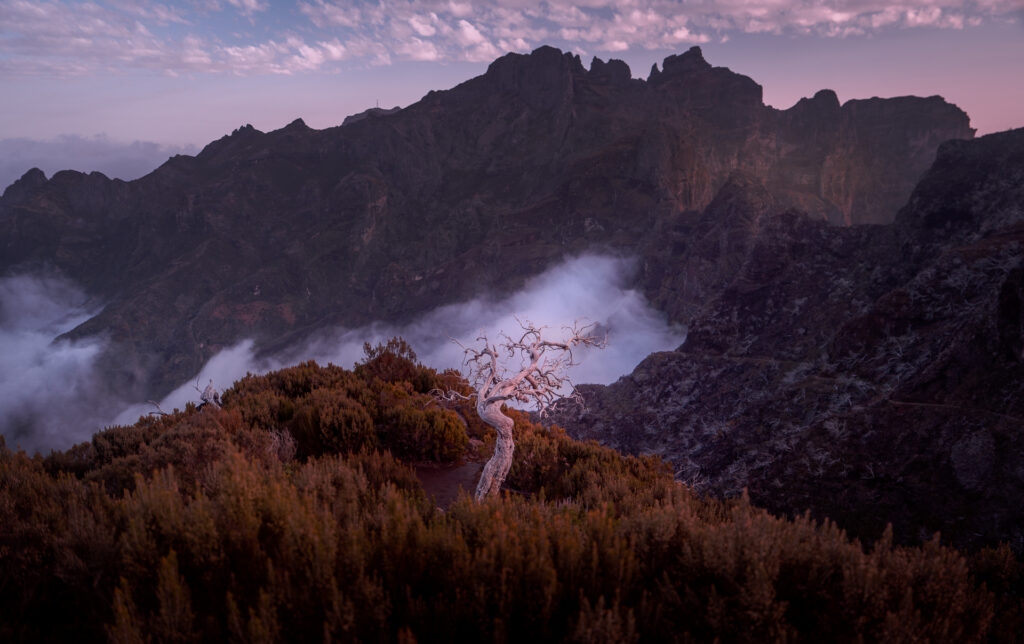
The high mountains of Madeira are among the island’s most iconic photography locations. Pico do Arieiro (1,818 m) and Pico Ruivo (1,862 m) offer some of the best cloud inversion photography in Europe.
What makes these locations special:
- Sharp volcanic ridges
- Trails floating above cloud seas
- Strong leading lines
Best time:
- Sunrise and early morning
- Autumn, winter, and spring for clouds
Photography tips:
- Expect strong winds
- Dress in layers
- Use a sturdy tripod
- Shoot panoramas when clouds are moving
These locations are covered in more detail in my sunrise and viewpoint articles on www.frewaphoto.com.
Forest Photography: Laurisilva & Fanal Forest
Laurisilva Forest (UNESCO World Heritage)
The Laurisilva forest is one of the last remaining laurel forests in the world. It’s dense, humid, and incredibly atmospheric — perfect for moody nature photography.
What to photograph:
- Moss-covered branches
- Fern layers
- Natural frames
- Soft, directional light
Best conditions:
- Light rain
- Fog or mist
- Overcast skies
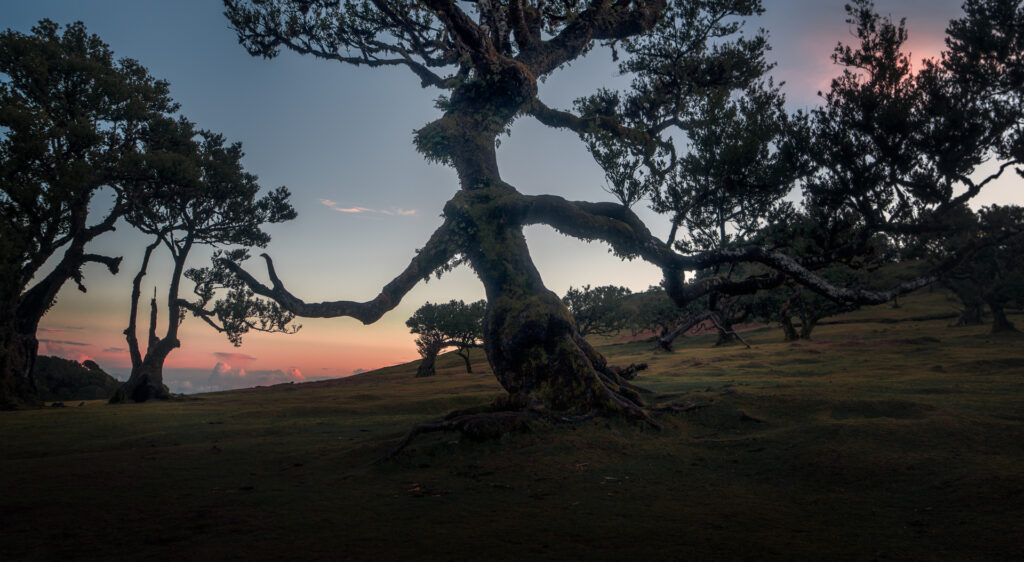
Fanal Forest
Fanal Forest is one of Madeira’s most famous photography locations — and also one of the most misunderstood. It’s not always foggy, and that’s okay.
Why Fanal works:
- Ancient, twisted trees
- Open fields for clean compositions
- Minimal elevation gain
Photography tips:
- Visit multiple times
- Rain enhances textures
- Wide-angle lenses work best
Some of my favorite forest images from Madeira came on mornings without fog — don’t give up too quickly.
Waterfall Photography in Madeira
Madeira is one of Europe’s best destinations for waterfall photography, especially outside of summer.
Best Waterfalls for Photography
- Caldeirão Verde
- Risco Waterfall
- Véu da Noiva
- Levada do Furado waterfalls
Why waterfalls work so well here:
- Consistent water flow
- Lush green surroundings
- Easy access via levadas
Best time:
- January to April
Photography tips:
- ND filters are essential
- Watch for spray on lenses
- Long exposures work best in overcast light
Levada Walks: The Backbone of Madeira Nature Photography
Levadas are irrigation channels that double as some of the best nature photography trails in Europe.
Why levadas are ideal for photographers:
- Gentle terrain
- Constant water elements
- Dense vegetation
- Natural leading lines
Best levadas for photography:
- PR9 Levada do Caldeirão Verde
- PR10 Levada do Furado
- PR11 Levada dos Balcões
Start early to avoid crowds and bring a headlamp — tunnels are part of the experience.
Coastal Nature Photography in Madeira
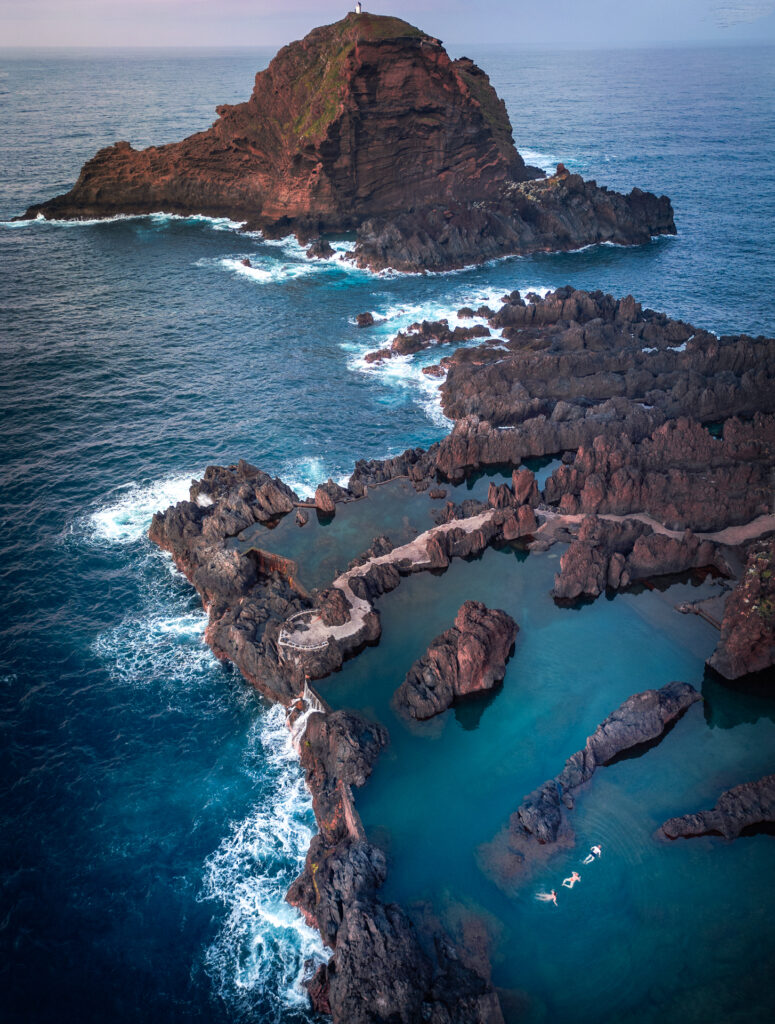
Madeira’s coastline is raw and dramatic, especially on the north coast.
Cliff & Viewpoint Photography
The island’s steep cliffs plunge straight into the Atlantic, creating powerful compositions.
Best conditions:
- Windy days
- Stormy weather
- Late afternoon light
Top coastal photography areas:
- Ribeira da Janela
- Seixal
- Ponta de São Lourenço
Winter offers the most dramatic seas, but summer sunrises are more predictable.
Beach & Seascape Photography
Madeira excels in volcanic seascapes rather than sandy beaches.
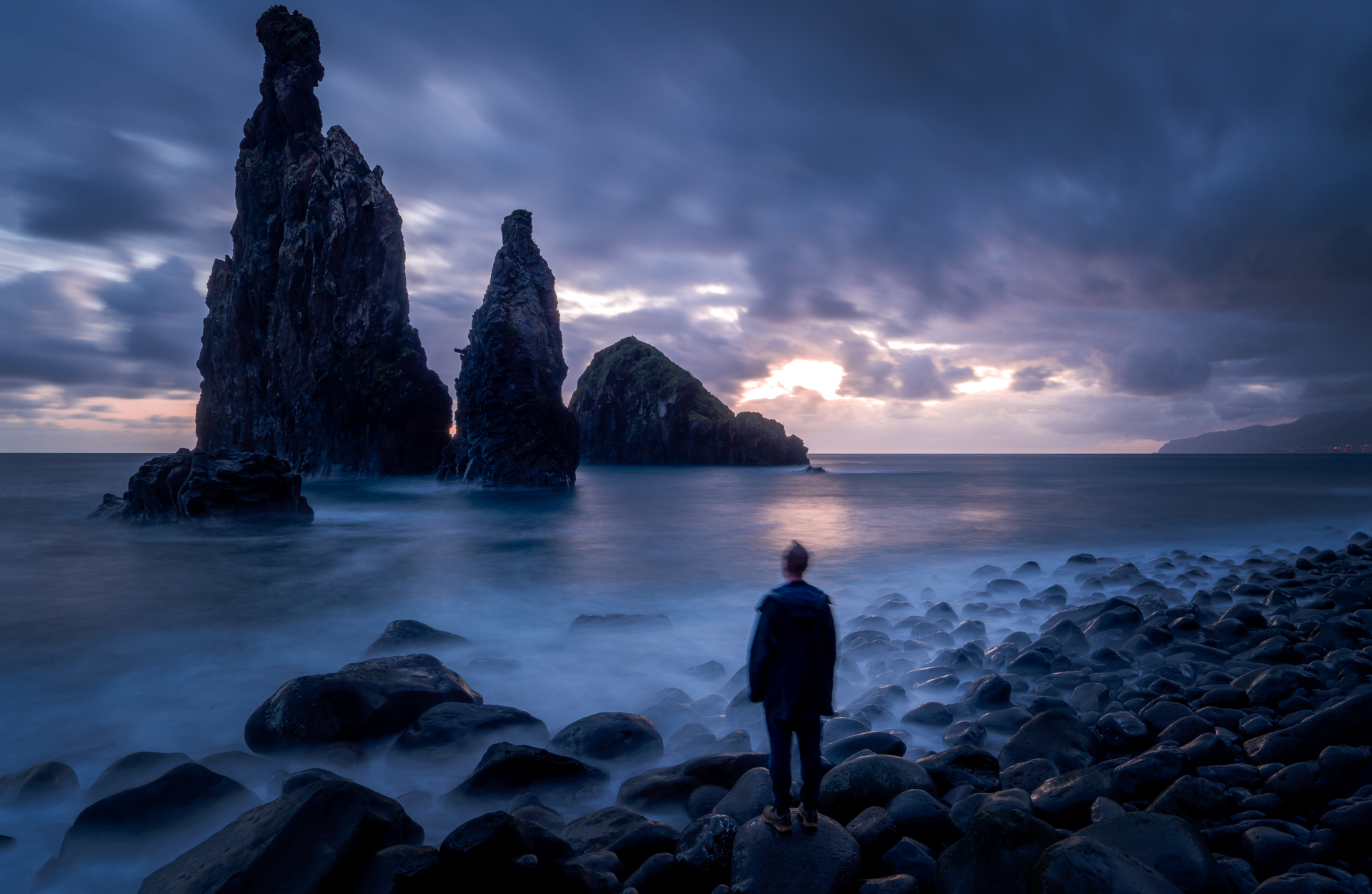
Ribeira da Janela
One of the best locations for long-exposure photography.
Why it works:
- Sea stacks
- Dynamic wave action
- Strong foregrounds
Tips:
- Use a tripod
- Watch wave patterns
- Shoot multiple mornings
Gardens as Nature Photography Subjects
Madeira’s gardens blend cultivated and wild nature beautifully.
Monte Palace Tropical Garden
An excellent location when weather is bad in the mountains.
Photograph:
- Exotic plants
- Reflections
- Textures and details
Overcast days work especially well here.
Best Time of Year for Nature Photography in Madeira
- Spring: Lush landscapes, waterfalls, flowers
- Summer: Stable weather, coastlines, sunrises
- Autumn: Moody skies, fewer tourists
- Winter: Dramatic clouds and waterfalls
If I had to choose one season for a first visit, March to May offers the best balance.
Gear Recommendations for Madeira Nature Photography
Essential:
- Wide-angle lens (16–35mm)
- Mid-range zoom
- Tripod
- ND filters
- Rain protection
Optional:
- Drone (check local regulations)
- Telephoto lens for compression
Bring more batteries than you think — cold and long exposures drain them quickly.
Practical Planning Tips for Madeira Photographers
- Rent a car
- Build flexible days
- Revisit locations
- Shoot early and late
- Respect trails and nature
Madeira is not about ticking boxes — it’s about working with what the island gives you.
Internal Links: Related Photography Guides on Frewa Photo
For deeper planning and location-specific advice, read these related guides on www.frewaphoto.com:
- Madeira Sunrise Photography Guide
- Best Viewpoints in Madeira for Photography
- Madeira Waterfall Photography Guide
- Levada Walks in Madeira for Photographers
- Best Time of Year to Photograph Madeira
These articles pair perfectly with this nature photography guide.
FAQs for Madeira Nature Photography Guide
Is Madeira good for nature photography year-round?
Yes, every season offers different moods and subjects.
Do I need a car for nature photography in Madeira?
Yes, it’s essential for flexibility.
Are levada walks safe for photographers?
Generally yes, but they can be wet and narrow.
Is Madeira suitable for beginner photographers?
Absolutely — many locations are easily accessible.
What lens should I bring?
A wide-angle and mid-range zoom cover most scenes.
Is drone photography allowed?
Yes, with restrictions — always check current rules.
When are waterfalls strongest?
Winter and early spring.
Is Fanal Forest always foggy?
No, fog is unpredictable.
How crowded is Madeira for photography?
Popular spots get busy, but early mornings help.
How many days should I plan?
7–10 days minimum.
Can I photograph Madeira without hiking?
Yes, many viewpoints are roadside.
Is Madeira good for long-exposure photography?
Excellent, especially waterfalls and seascapes.
What time is best for photography?
Sunrise and late afternoon.
Does rain ruin photography in Madeira?
No — rain often improves conditions.
Is Madeira good for drone beginners?
Yes, in calm summer conditions.
Are tripods allowed everywhere?
Yes, but be mindful in narrow paths.
What’s the biggest photography mistake in Madeira?
Not adapting to weather.
Should I revisit locations?
Absolutely — conditions change fast.
Is Madeira windy?
Yes, especially at altitude.
Is Madeira worth returning to?
Without question.
External Resources for Madeira Nature Photography
These official and practical resources will help you plan photography trips in Madeira, check conditions, and stay compliant with local rules:
- Madeira Tourism Official Website
https://visitmadeira.com
Best source for general travel info, attractions, and seasonal highlights. - Instituto das Florestas e Conservação da Natureza (IFCN)
https://ifcn.madeira.gov.pt
Official authority for Madeira’s protected forests, levadas, and natural areas. - Madeira Live Webcams (Mountains & Coast)
https://www.netmadeira.com/webcams-madeira
Essential for checking cloud levels, fog, wind, and light before driving. - Official PR Walking Trails in Madeira
https://visitmadeira.com/en/what-to-do/activities/walking-routes/
Up-to-date information on levada walks, distances, and closures. - ANAC – Portugal Drone Regulations
https://www.anac.pt
Official aviation authority for drone rules in Portugal and Madeira.
Conclusion: Madeira Is a Nature Photographer’s Playground
Madeira offers something rare in Europe: accessible wilderness with constant variety. It’s a destination where patience, flexibility, and curiosity are rewarded with powerful images.
Whether you’re chasing fog in ancient forests, photographing waterfalls deep in the Laurisilva, or standing above the clouds at sunrise, Madeira delivers again and again — often when you least expect it.
If nature and landscape photography are your passion, Madeira deserves a place at the top of your list — and more than one visit.