
Madeira is one of Europe’s most rewarding photography destinations — not because of one single landmark, but because of how much variety the island offers in a very small area. In one week, you can photograph cloud inversions in the mountains, ancient laurel forests, waterfalls, volcanic coastlines, and dramatic Atlantic seascapes.
This 7-day itinerary is designed for photographers, not rushed tourists. It follows light, weather patterns, and driving logic, allowing flexibility when conditions change — which they will in Madeira.
Before You Go — Photography Planning Tips
• Rent a car (essential for photography)
• Base yourself centrally (Funchal, Câmara de Lobos, or Ribeira Brava)
• Be ready to change plans based on clouds and wind
• Sunrise and sunset are critical
• Expect four seasons in one day
Day 1 — Arrival & Coastal Warm-Up (Funchal & Câmara de Lobos)
Focus: Easy access locations, scouting, golden hour
After arrival, avoid rushing into long hikes. Use the day to settle in and read the light.
Best Photography Locations
Funchal Harbor – Reflections, boats, sunrise color
Câmara de Lobos – Colorful fishing boats, coastal village life
Why This Day Works
• No long drives
• Flexible timing
• Great warm-up compositions
Best Time to Shoot
Late afternoon into sunset
Day 2 — Sunrise Above the Clouds (Pico do Arieiro & PR1)
Focus: Mountain drama, cloud inversions, scale
Start early and drive up to Pico do Arieiro before sunrise. On many mornings, you’ll rise above the clouds.
Best Photography Locations
Pico do Arieiro viewpoints – Sunrise over cloud seas
PR1 trail sections – Ridge lines, depth, hikers for scale
Why This Day Works
• Sunrise light is essential
• Morning clouds often burn off later
• Iconic Madeira imagery
Best Time to Shoot
Sunrise to mid-morning
Backup plan: If clouds cover the peaks, switch to forests (Ribeiro Frio).
Day 3 — Laurel Forest & Levada Photography (Fanal & Ribeiro Frio)
Focus: Atmosphere, mist, textures
Head to the Laurisilva forest, a UNESCO World Heritage Site.
Best Photography Locations
Fanal Forest – Lone trees, fog, grazing cattle
Ribeiro Frio & Balcões viewpoint – Forest layers and valleys
Why This Day Works
• Mist enhances forest scenes
• Soft light all day
• Perfect for slower photography
Best Time to Shoot
Morning and late afternoon
Day 4 — Waterfalls & Long Exposures (25 Fontes & Caldeirão Verde)
Focus: Movement, lush greens, storytelling
Spring and wetter months make this day exceptional.
Best Photography Locations
Risco Waterfall – Tall, dramatic drop
25 Fontes – Cascading water in dense forest
Caldeirão Verde – Waterfall amphitheater
Why This Day Works
• Water flow is strongest
• Overcast light is ideal
• Levada paths add leading lines
Best Time to Shoot
Mid-morning to afternoon
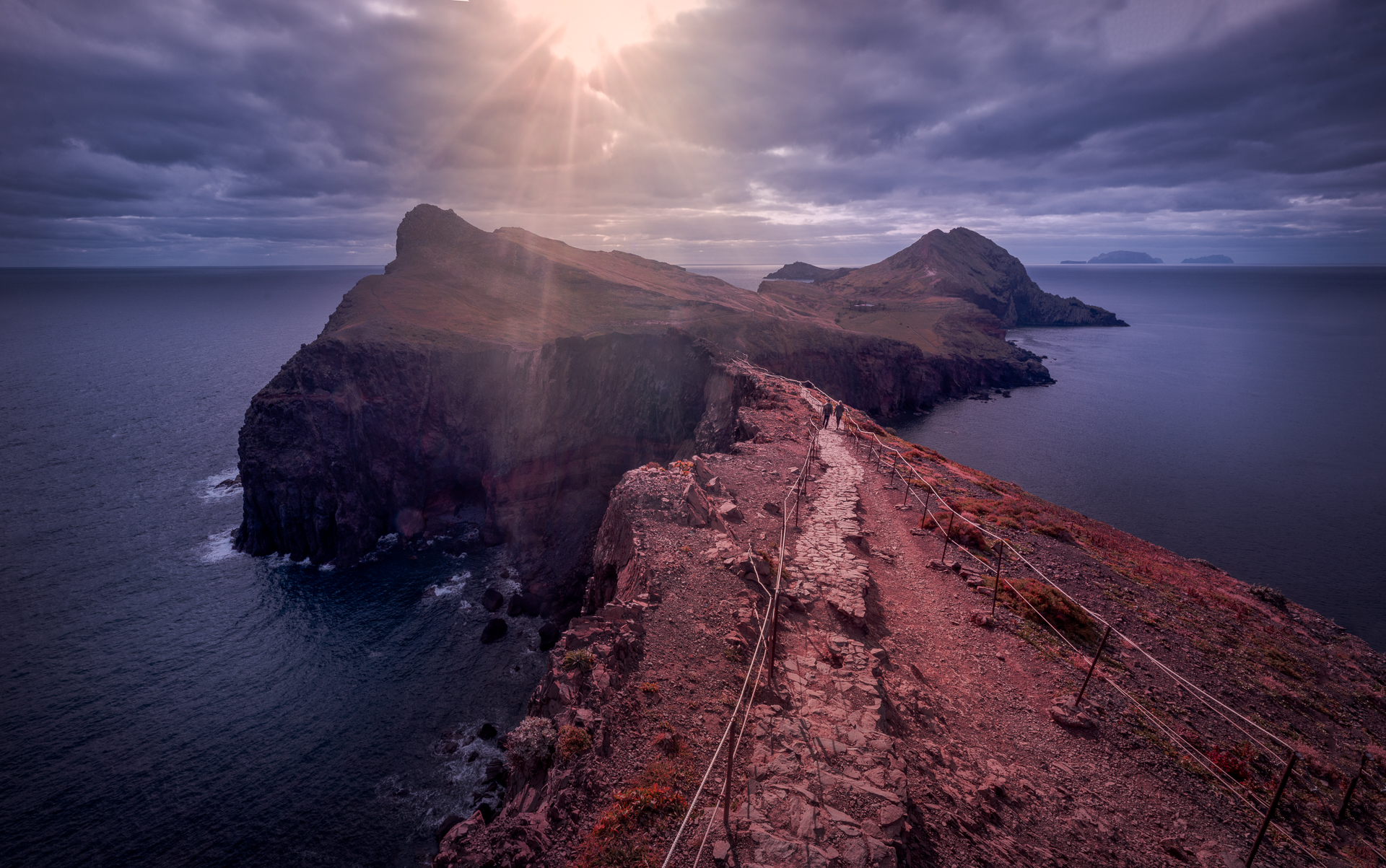
Day 5 — Dramatic Coastlines (Ponta de São Lourenço)
Focus: Contrast, texture, wind, wide angles
The eastern tip of Madeira offers a completely different look.
Best Photography Locations
Ponta de São Lourenço trail – Volcanic ridges
Viewpoints over turquoise water – Strong color contrast
Why This Day Works
• Dry landscape contrasts forest days
• Wind adds drama
• Great wide-angle compositions
Best Time to Shoot
Morning for softer light, sunset if skies cooperate
Day 6 — Northern Coast & Natural Pools (Seixal & Porto Moniz)
Focus: Seascapes, motion, power of the Atlantic
Head north where the island feels wilder.
Best Photography Locations
Seixal Natural Pools – Mountains + ocean
Porto Moniz – Lava pools and wave action
Why This Day Works
• Atlantic swells create energy
• Strong foregrounds
• Excellent for long exposures
Best Time to Shoot
Late afternoon to sunset
Day 7 — Flexible Finale (Clouds, Return Visits & Sunset)
Focus: Adaptation and refinement
Use your final day to return to the location that had the best conditions earlier in the week.
Suggested Options
• Repeat Pico do Arieiro if clouds were poor
• Forest photography if mist appears
• Cabo Girão for sunset scale shots
Why This Day Works
• Weather-driven flexibility
• Strongest images often come last
Best Lenses for Madeira Photography
• Wide-angle (14–24mm) — landscapes, ridges
• Standard zoom (24–70mm) — flexibility
• Telephoto (70–200mm) — compression, layers
• Tripod essential for waterfalls and low light
Related travel blogs
• Ultimate Guide to Visiting Madeira
https://frewaphoto.com/ultimate-guide-visit-madeira/
• Best Winter Sun Photography Destinations
https://frewaphoto.com/winter-sun-photography-destinations/
• Early Spring Destinations in Europe
https://frewaphoto.com/early-spring-destinations-europe/
• Best Destinations to Visit in March for Photography
https://frewaphoto.com/best-destinations-march-photography/
FAQ — Madeira Photography Itinerary
1. Is one week enough for Madeira photography?
Yes, if you focus on key areas and stay flexible.
2. Do I need a car?
Absolutely — public transport limits photography access.
3. What is the best month?
April–May and October are ideal.
4. Is Madeira good for beginners?
Yes — many viewpoints are road-accessible.
5. Are levada walks safe?
Yes, when open and weather is stable.
6. Is drone photography allowed?
Restricted — check local regulations carefully.
7. What weather should I expect?
Highly variable — embrace it.
8. Is Madeira crowded?
Less than mainland Europe, especially outside summer.
Conclusion
A week in Madeira offers one of the most complete photography experiences in Europe. The key is not chasing everything, but following the light, clouds, and conditions. Slow down, revisit locations, and let Madeira’s changing moods shape your images — that’s where the island truly shines.