
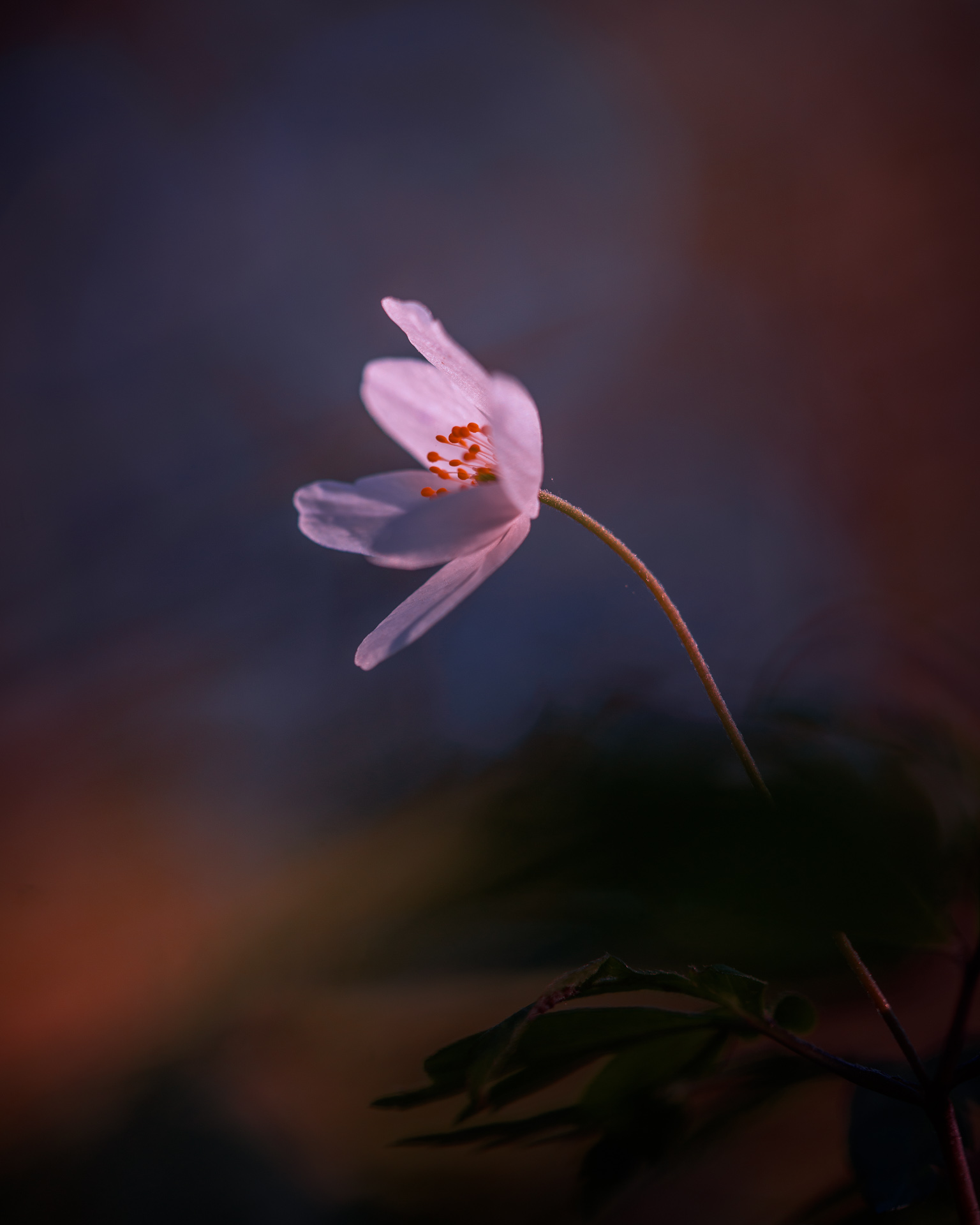
Wood anemones are one of the quiet stars of early spring.
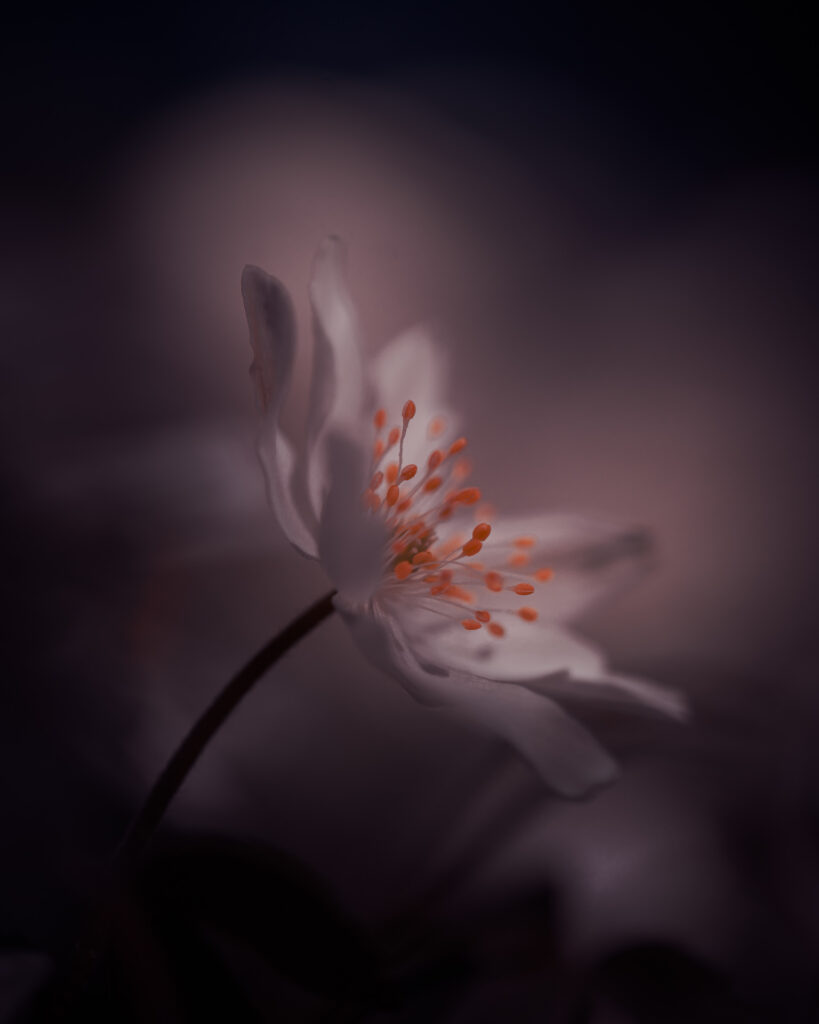
They don’t bloom loudly. They don’t tower above the forest floor. Instead, they form delicate white carpets beneath bare trees, catching soft light before the canopy closes. If you’ve ever walked through a woodland in April and seen thousands of small star-shaped flowers glowing in filtered sunlight — you’ve likely found them.
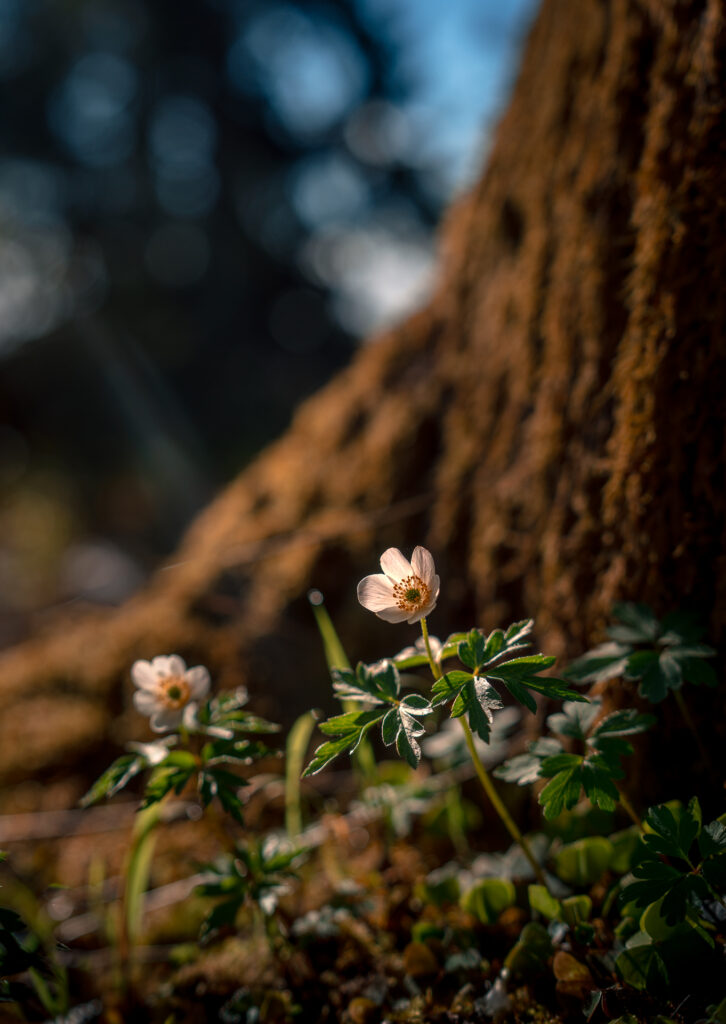
As a travel and garden photographer, wood anemones are some of my favorite seasonal subjects. They demand patience, reward careful composition, and offer a brief but magical shooting window.
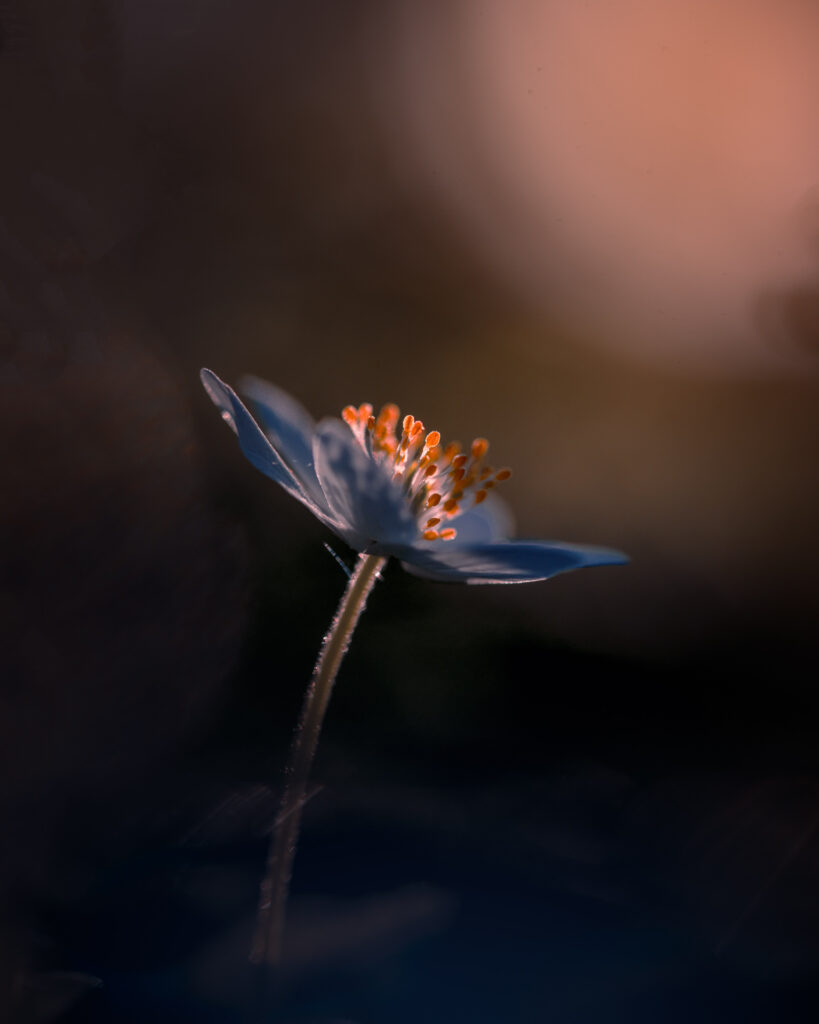
This guide covers everything you need to know about photographing wood anemones — from finding them to mastering light, composition, and gear choices.
Where to Find Wood Anemones?
Wood anemones (Anemone nemorosa) thrive in ancient woodlands across Europe. They are strong indicators of long-established forests, often spreading slowly over decades.
In and around Paris, you’re more likely to find them in larger forested areas rather than formal gardens. Good places to search include:
- Bois de Vincennes
- Bois de Boulogne
- Forêt de Fontainebleau
- Parc de Sceaux
Across Europe, look for:
- Deciduous woodlands
- Shaded forest floors
- Slightly sloped terrain
- Moist but well-drained soil
They prefer partial shade and bloom before trees leaf out fully — meaning you’ll find them in early spring when the forest still feels open and airy.
Pro Tip
Search for patches where the forest floor is lightly mossy or covered in last year’s leaves. Wood anemones often grow in dense drifts that photograph beautifully when layered.
When to Photograph Wood Anemones?
Wood anemones bloom slightly later than snowdrops, typically between late March and April depending on the region.
Bloom Window
- Late March: Early blooms in milder climates
- Early–Mid April: Peak bloom in northern France and the UK
- Late April: Blooming shifts further north
In woodland areas near Paris, early to mid-April is usually ideal.
Because they rely on early spring sunlight before the tree canopy fills in, their flowering season is short — often just 2–3 weeks at peak condition.
Best Time of Day
Morning is best.
Why?
- Calm wind conditions
- Dew on petals
- Soft directional light
- Fewer walkers in popular forests
Wood anemones are sensitive to light — they open fully in sunshine and partially close in dim conditions. A bright but gentle morning sun can create stunning results.
Late afternoon can also work beautifully when sunlight filters through trees at a low angle.
Best Weather and Conditions to Photograph Wood Anemones?
Wood anemones respond dramatically to weather and light.
Bright but Soft Sunlight
Unlike snowdrops, wood anemones often benefit from gentle sunlight because they open fully in brighter conditions.
Look for:
- Filtered sunlight through bare branches
- Soft rays hitting patches of flowers
- Light beams in misty woodland
This creates dynamic, layered images.
Overcast Skies
Overcast conditions provide:
- Even exposure
- Reduced shadow contrast
- Soft white petal detail
Perfect for macro and close-up photography.
Misty Mornings
Magical.
Light mist in woodland adds:
- Depth
- Atmosphere
- Soft background separation
Shoot toward light filtering through fog for ethereal results.
Avoid Windy Conditions
Wood anemones sit on thin stems and move easily.
Early mornings typically offer calmer air. If wind picks up:
- Increase shutter speed
- Shield flowers gently with your body (without touching them)
- Move deeper into sheltered woodland
How to Photograph Wood Anemones?
Wood anemones grow low to the ground and often in dense patches. Your shooting approach should reflect that.
Step 1: Choose Your Story
Are you capturing:
- A single bloom?
- A small cluster?
- A vast woodland carpet?
Each requires a different lens and perspective.
Step 2: Get Low — Always
Standing above wood anemones flattens them visually.
Instead:
- Kneel or lie down
- Use a tilting screen
- Shoot at eye level
Low angles create intimacy and help separate subjects from background clutter.
Step 3: Use Natural Framing
Woodlands offer organic framing elements:
- Tree trunks
- Fallen branches
- Moss-covered logs
- Fern fronds
Use these to add structure to what can otherwise feel like a chaotic forest floor.
Photography Composition
Wood anemones offer incredible compositional flexibility.
Carpet Compositions
When shooting large drifts:
- Elevate slightly on slopes
- Use leading lines formed by tree trunks
- Let flowers guide the viewer’s eye into the frame
Avoid cluttered backgrounds — simplify wherever possible.
Isolated Bloom Portraits
For single-flower images:
- Use wide apertures (f/2.8–f/4)
- Position darker woodland behind the subject
- Focus on clean petal detail
A dark tree trunk behind a white bloom creates striking contrast.
Layered Depth
One of the most beautiful ways to shoot wood anemones is layering:
- Sharp subject in foreground
- Soft mid-ground flowers
- Blurred tree trunks behind
Telephoto lenses (70–200mm) are excellent for this compression effect.
Diagonal Flow
Because wood anemones often grow unevenly, diagonal compositions work beautifully.
Shift your position slightly until clusters form natural lines through your frame.
Light for Wood Anemone Photography
Light defines these flowers more than almost any other spring bloom.
Backlighting
Place the sun behind the flowers.
This creates:
- Translucent petals
- Visible veining
- Glowing edges
Slightly underexpose to preserve highlight detail.
Side Lighting
Side light enhances texture and gives dimension to petals.
Best achieved in early morning when the sun sits low.
Dappled Woodland Light
This can be tricky but powerful.
Wait for:
- Soft light patches
- Balanced contrast
- No harsh hot spots
If contrast is too strong, reposition or wait for clouds to diffuse the light.
Golden Hour
Late-day golden light through woodland can create:
- Warm highlights
- Long shadows
- Romantic atmosphere
Be careful not to over-warm white petals in editing.
Background Control
In woodland photography, background control is critical.
Use Distance
The further your background is from your subject, the smoother your bokeh.
Look for:
- Open space behind flowers
- Gaps between tree trunks
Avoid Bright Distractions
Bright leaves or patches of sky can pull attention away.
Adjust position until backgrounds are clean and cohesive.
Use Dark Woodland Contrast
Dark tree trunks make white petals stand out dramatically.
Position yourself so trunks fall behind your subject.
Equipment Guide
You don’t need heavy gear — but thoughtful choices help.
Camera
Any DSLR or mirrorless with strong dynamic range performs well in high-contrast woodland scenes.
Lenses
Macro (90–105mm)
Best for detailed bloom portraits.
50mm Prime
Great for environmental storytelling.
70–200mm Telephoto
Perfect for layered woodland compression.
Tripod
Highly recommended in low-light woodland conditions.
Benefits:
- Lower ISO
- Precise framing
- Stability for focus stacking
Accessories
- Knee pads or ground mat
- Lens cloth (woodlands can be damp)
- Polarizer to reduce leaf glare
- Small reflector (optional)
Avoid flash — woodland atmosphere should feel natural.
Technical Settings
Aperture
- f/2.8–f/4 for dreamy isolation
- f/5.6–f/8 for small clusters
- f/11 for environmental context
ISO
Keep between 100–400 where possible.
Raise slightly in low woodland light if necessary.
Shutter Speed
Minimum 1/200 handheld.
Increase if flowers move in wind.
Location Guide
If planning a dedicated wood anemone photography trip, prioritize:
Ancient Woodlands
These provide the most dramatic carpets and mature tree backdrops.
Large Urban Forests
Near Paris:
- Bois de Vincennes
- Bois de Boulogne
Regional Forests
- Forêt de Fontainebleau
These offer varied terrain and less controlled environments for natural compositions.
Common Mistakes to Avoid
- Shooting from above
- Ignoring background clutter
- Overexposing white petals
- Using too much clarity in editing
- Stepping off marked paths
Wood anemones are delicate woodland flowers — tread lightly.
Creative Ideas to Try
- Shoot through foreground blooms
- Capture sunlight beams through trees
- Create shallow-focus abstracts
- Experiment with black & white
- Focus on petal translucency
Wood anemones may be small, but they offer expansive creative opportunity — especially when paired with thoughtful light and woodland atmosphere.
FAQs
When is peak wood anemone season?
In most of northern France and the UK, peak bloom falls between early and mid-April. Around Paris, early April is often the sweet spot, depending on winter temperatures.
Because they bloom before the tree canopy fully develops, the window is short — usually 2–3 weeks.
Why are my wood anemones closed?
Wood anemones respond to light. They open in brighter conditions and partially close in low light or cold weather.
If they’re closed:
- Wait for sunshine
- Return later in the morning
- Try again the next day
They’re highly sensitive to environmental changes.
Is sunlight or overcast better?
Both work — but for different results.
- Soft sunlight highlights petal translucency.
- Overcast skies provide even exposure and gentle contrast.
If you want glowing petals, choose filtered morning sun.
Do I need a macro lens?
A macro lens (90–105mm) gives you control and detail for single blooms. However:
- A 50mm prime works beautifully for environmental shots.
- A 70–200mm telephoto is excellent for layering woodland scenes.
The lens matters less than your angle and background control.
How do I avoid blown-out white petals?
Wood anemones are bright and reflective.
To preserve detail:
- Slightly underexpose (-0.3 to -1 EV)
- Check your histogram
- Avoid harsh midday sun
- Shoot in RAW
White flowers require highlight discipline.
What aperture is best?
- f/2.8–f/4 for isolated blooms
- f/5.6–f/8 for small clusters
- f/11 for full woodland context
Choose based on storytelling intention, not habit.
Can I photograph wood anemones handheld?
Yes — especially in brighter conditions.
However, woodland light is often dim. A tripod helps with:
- Lower ISO
- Cleaner files
- Precise framing
- Focus stacking
Are wood anemones good for beginners?
Absolutely.
They teach:
- Background awareness
- Light control
- Patience
- Low-angle composition
They’re ideal for building strong foundational botanical skills.
Is it okay to move leaves or flowers?
No.
Do not bend, pick, or rearrange flowers. Stay on marked paths in locations like:
- Bois de Vincennes
- Bois de Boulogne
- Forêt de Fontainebleau
Respect preserves the woodland ecosystem and future photography opportunities.
Do wood anemones work in black & white?
Yes — especially in high-contrast woodland.
Their white petals against dark trunks create elegant tonal separation.
How do I photograph large carpets without clutter?
Simplify:
- Shoot at a slightly elevated angle on a slope
- Use tree trunks as vertical anchors
- Avoid bright sky patches
- Compress layers with a telephoto lens
Less chaos, more cohesion.
What editing style works best?
Keep it refined.
- Reduce highlights gently
- Add subtle warmth if shooting at golden hour
- Avoid heavy clarity
- Keep greens natural
Woodland spring tones should feel soft, not saturated.
Conclusion
Wood anemones are fleeting.
They bloom quietly, transform the forest floor for a few luminous weeks, and then disappear beneath emerging leaves. Photographing them is about more than capturing flowers — it’s about capturing transition.
From soft backlit petals in ancient woodland to layered forest carpets near Paris, wood anemones offer a rare blend of intimacy and scale.
Success comes down to:
- Shooting low
- Watching your highlights
- Controlling your background
- Embracing early morning light
They reward photographers who slow down, observe carefully, and let the woodland atmosphere shape the frame.
In a portfolio, wood anemones bring subtle elegance — a reminder that quiet subjects often create the strongest images.
Related Internal Pages
To deepen your flower and garden photography skills, explore:
- Ultimate Guide to Garden Photography in Paris
- Best Time to Visit Paris for Photography
- Ultimate Guide to Photographing Snowdrops
- One Week in Paris Photography Guide
- Paris Slow Travel Guide
- Macro Photography Tips for Travel Photographers
These guides will help you build seasonal depth and visual consistency across your portfolio.
External Links
For bloom updates and botanical insight:
- Royal Horticultural Society (RHS) – Wood Anemone growing guide
- Kew Gardens – Anemone nemorosa species information
- Meteo France – Local weather forecasts
- National Office of Forests (ONF France) – Woodland access and updates
Always check local bloom reports before planning a dedicated photography session.