
Introduction
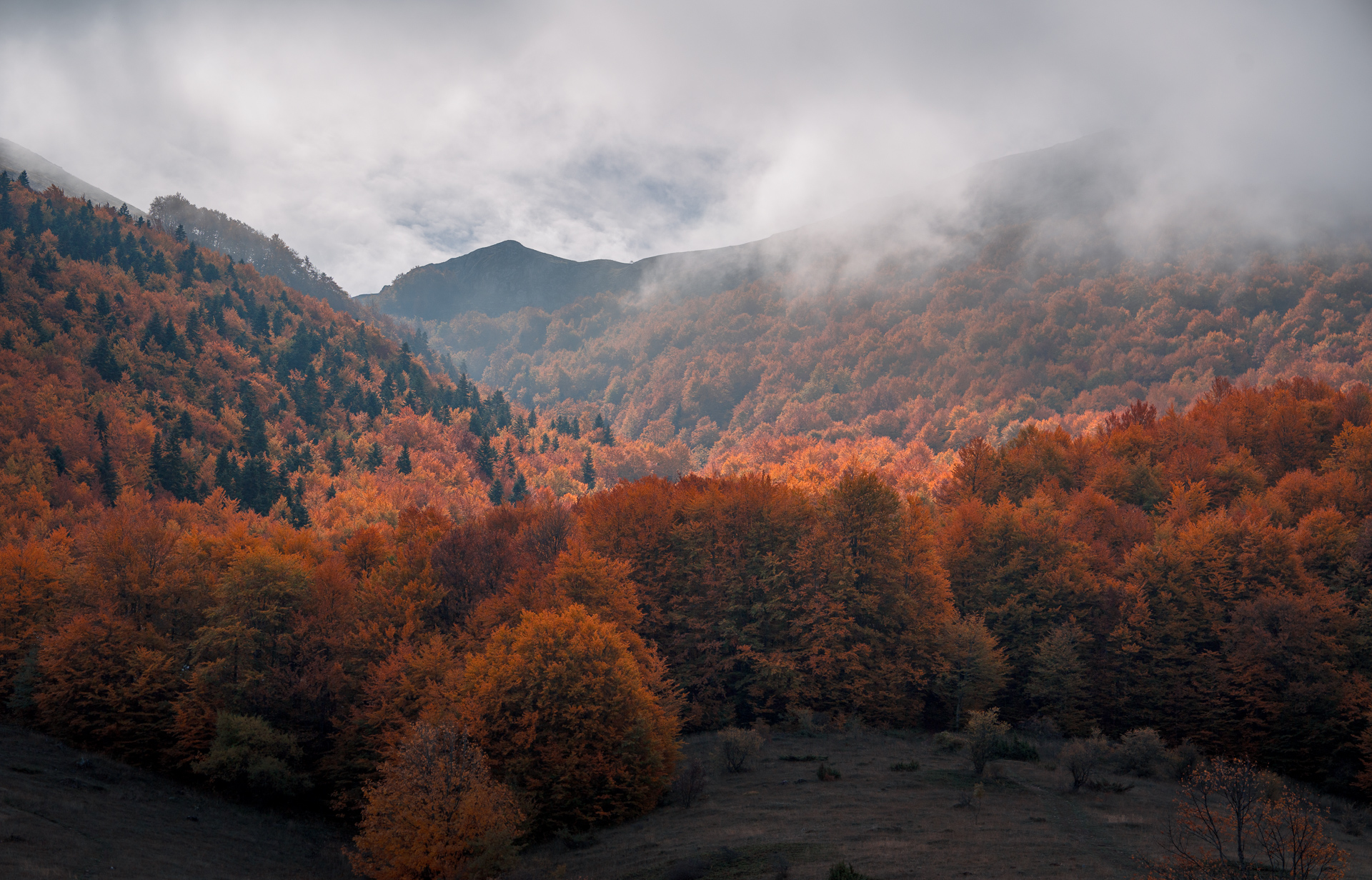
Pelister National Park, located near Bitola in southern North Macedonia, is the country’s oldest national park, established in 1948. It covers the dramatic Baba Mountain massif, whose highest peak, Pelister (2,601 m), dominates the horizon.
As a photographer, Pelister offers a rare mix of pristine alpine landscapes, unique biodiversity, and historical depth. From the legendary Pelister Eyes glacial lakes to vast Molika pine forests and panoramic views across three countries, this is a destination where every season brings new creative opportunities.
Whether you’re drawn to dramatic mountain summits, still alpine waters, forest details, or cultural connections, Pelister is a park that rewards both patience and exploration. Here’s your ultimate guide to the best photo spots in Pelister National Park and how to capture them at their best.
Pelister Peak (2,601 m)
The roof of Pelister offers one of the most expansive panoramas in the Balkans. From here, you can see Lake Prespa, Lake Ohrid, the Šar Mountains, and even Mount Olympus in Greece on a clear day.
What to photograph:
- Sunrise over the Pelagonia Plain.
- Layers of mountain ridges fading into the horizon.
- Climbers silhouetted against the sky.
Best seasons:
- Summer (June–September): Clear skies and accessible trails.
- Winter: Dramatic snow scenes (experienced hikers only).
Photography tips:
- Sunrise is unbeatable: use a tripod and bracketing for high dynamic range.
- A telephoto lens compresses distant peaks into painterly layers.
- Include hikers in wide shots to give scale.
Pelister Peak is a must for landscape photographers chasing epic vistas.
The Pelister Eyes (Big and Small Lakes)
These two glacial lakes, known as the Pelister Eyes, sit high in the mountains and are among the most photogenic alpine landscapes in North Macedonia.
What to photograph:
- Mirror-like reflections of surrounding peaks.
- Wildflowers framing the lakes in summer.
- Ice and snow patterns in early spring.
Best seasons:
- Summer: Clear reflections and accessible trails.
- Autumn: Golden tones reflected in still waters.
Photography tips:
- For reflections, arrive early in the morning when the water is calm.
- A polarizer helps deepen colors but remove it if you want mirror effects.
- Use leading lines of trails or rocks to guide the viewer’s eye.
The Pelister Eyes are the soul of the park, perfect for both wide landscapes and intimate nature shots.
Molika Pine Forests
Pelister is famous for its ancient Molika pines (Pinus peuce), found only in a few places in the Balkans. These towering evergreens create atmospheric woodland scenes.
What to photograph:
- Tall, straight trunks catching golden light.
- Forest trails disappearing into mist.
- Macro details of moss, cones, and forest textures.
Best seasons:
- Autumn: Golden forest floors and glowing tree trunks.
- Winter: Snow transforms the Molika forest into a fairytale.
Photography tips:
- Overcast days are ideal for forest photography (soft, even light).
- Use a wide-angle lens pointing upward for dramatic tree perspectives.
- Experiment with long exposures for foggy, mysterious moods.
Walking through the Molika forests feels like stepping into another world — mystical, timeless, and deeply photogenic.
Kopanki Mountain Hut
The Kopanki Hut is one of the oldest mountain huts in the Balkans and a beloved symbol for hikers in Pelister.
What to photograph:
- The stone-and-wood hut framed by mountains.
- Hikers resting on the terrace.
- Nighttime shots with the hut glowing under the stars.
Best seasons:
- Year-round: Each season offers a different atmosphere.
Photography tips:
- Shoot the hut with wide landscapes during golden hour.
- For astrophotography, capture star trails with the hut as foreground.
- Use warm lights from inside the hut to contrast cool twilight skies.
The hut is more than a shelter — it’s a photographic subject full of character.
Pelagonia Plain Views
From various points on Baba Mountain, you get sweeping views over the Pelagonia Plain, one of the largest valleys in the Balkans.
What to photograph:
- Sunset light painting the fields in golden tones.
- Patchwork agricultural landscapes.
- Aerial perspectives if you have a drone.
Best seasons:
- Spring: Fresh green fields.
- Autumn: Warm harvest colors.
Photography tips:
- Use a telephoto lens to compress patterns in the plain.
- A drone reveals geometric field patterns.
- Sunset offers the most dramatic light across the valley.
These views are a reminder of how diverse Pelister is — mountain wilderness above, fertile plains below.
Bitola from Above
The nearby city of Bitola lies just outside the park and looks incredible from higher elevations.
What to photograph:
- A sea of red-roofed houses with mountains behind.
- Nighttime city lights glowing below.
- Seasonal contrasts: snowy rooftops in winter, vibrant colors in summer.
Best seasons:
- Spring and autumn: Clear air makes for sharp cityscapes.
Photography tips:
- Blue hour is ideal for balanced city-light exposures.
- Use a telephoto lens to isolate details of Bitola’s old town.
- Wide shots work well with mountains as background.
Bitola adds cultural contrast to Pelister’s wild landscapes.
Fauna: Bears, Wolves, and Eagles
Pelister is home to brown bears, wolves, lynx, and eagles — making it a hotspot for wildlife photographers.
What to photograph:
- Birds of prey soaring over mountain ridges.
- Bears or wolves (with patience and guides).
- Macro shots of alpine flora in spring.
Best seasons:
- Spring & summer: Active wildlife and blooming flora.
Photography tips:
- Always maintain a safe distance (use telephoto lenses).
- Go with a local guide for ethical, safe wildlife encounters.
- Patience is everything: be ready with fast shutter speeds.
Wildlife photography here is challenging but deeply rewarding.
Historical Relics from WWI
Pelister was a frontline during World War I, and you can still find trenches, bunkers, and memorials scattered across the mountain.
What to photograph:
- Weathered bunkers overtaken by nature.
- Remnants of trenches silhouetted at sunset.
- Juxtapositions of history and wilderness.
Best seasons:
- All year: Relics are scattered but accessible.
Photography tips:
- Use low angles to emphasize size and decay.
- Black and white photography works beautifully here.
- Capture contrasts between stone relics and living forests.
These remnants add a human story to Pelister’s wild beauty.
Winter Wonderland
Like Mavrovo, Pelister is magical in winter. Snow transforms the mountains into minimalistic, high-contrast landscapes.
What to photograph:
- Frozen lakes and snow-covered forests.
- Skiers or hikers trekking across white expanses.
- Animal tracks in fresh snow.
Best seasons:
- December–March.
Photography tips:
- Overexpose slightly so snow stays white.
- Look for contrasts (dark trees, bright snow).
- Experiment with aerial shots for abstract patterns.
Night Skies
Pelister’s altitude and low light pollution make it excellent for astrophotography.
What to photograph:
- The Milky Way reflected in the Pelister Eyes.
- Star trails above the Molika forests.
- Campfires or huts glowing under the stars.
Best seasons:
- Summer & autumn for clear skies.
Photography tips:
- Wide lens (14–24mm, f/2.8 or faster) both for huge vistas and astro photography.
- Include mountains or trees as foreground for depth.
Gear Checklist
- Wide-angle lens (16–35mm): For peaks, lakes, and forests.
- Telephoto (70–200mm): For wildlife and compressed landscapes.
- Tripod: Essential for night and long exposures.
- Drone: For lakes, plains, and forest canopies.
- Polarizer filter: Enhances colors in lakes and skies.
- ND filter: For silky waterfall or lake shots.
Conclusion
Pelister National Park is a paradise for photographers who love wild mountains, reflective lakes, and ancient forests. From the sweeping views at Pelister Peak to the tranquil Pelister Eyes, from mystical Molika pine woods to historic relics of war, this park offers endless subjects to capture in every season.
If you want to feel the mix of Balkan wilderness, history, and culture, Pelister is the place to bring your camera — and plenty of memory cards.