
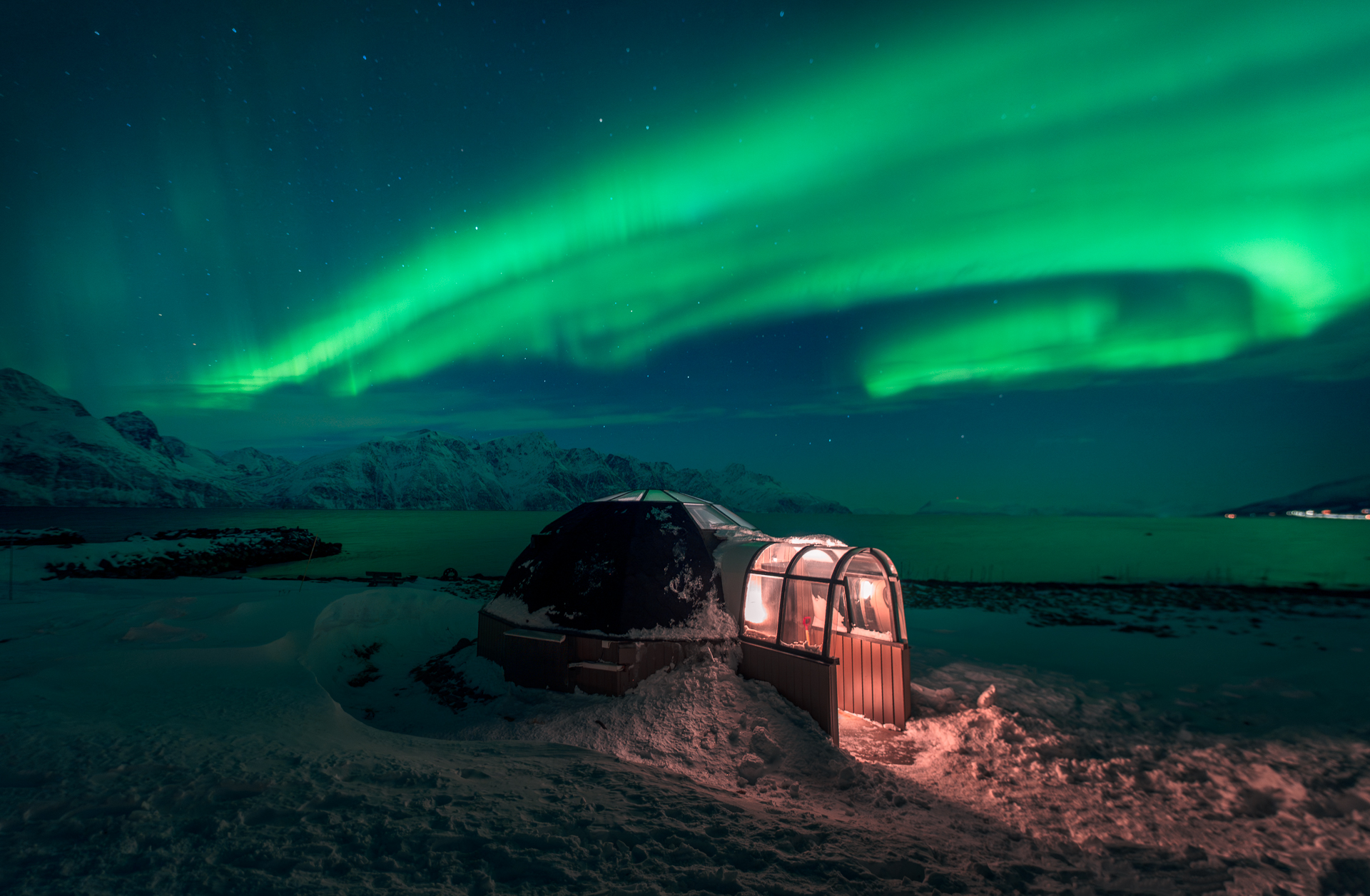
Tromsø is one of the best places on Earth to photograph the Aurora Borealis. Located above the Arctic Circle at 69°N, the city sits directly under the auroral oval, giving photographers access to frequent, bright, and dynamic Northern Lights displays from September through early April. With reliable infrastructure, easy transport, fjord-side landscapes, and nearby mountains, Tromsø is a rare combination of world-class aurora conditions and accessibility.
This guide covers everything you need to plan, shoot, and master aurora photography in Tromsø: where to go, how to shoot, when to visit, gear, settings, composition, safety, conditions, and local tips only photographers usually know.
Why Tromsø Is One of the Best Aurora Destinations in the World
1. Located directly under the auroral oval
Tromsø lies in the region where auroras occur most frequently. Even low KP nights (KP 0–2) often show activity.
2. Mild climate for the Arctic
Thanks to the Gulf Stream, Tromsø has comparatively mild winters, making long nights in the field more manageable.
3. Dramatic landscapes
The area is surrounded by fjords, mountains, beaches, islands, and snowy forests—ideal foregrounds for aurora compositions.
4. Easy to reach
With direct flights from major hubs and short transfers to aurora locations, it is one of the most accessible Arctic photography destinations.
5. Long aurora season
Northern Lights are visible from mid-September to early April.
Best Time to Photograph Auroras in Tromsø
Aurora Season
Mid-September – Early April
Peak months: December – March
Best Time of Night
21:00 – 02:00 (but activity can occur anytime when it’s dark)
Weather Considerations
Tromsø often has coastal cloud cover. Clear skies are more common:
• On Kvaløya (outer coast)
• In the Lyngen Alps (mountain region)
• Around Skibotn (known for clear inland conditions)
Best Locations for Aurora Photography in Tromsø
Below are the strongest and most reliable locations for photography, including landscapes ideal for foregrounds.
1. Ersfjordbotn
One of the most iconic fjords in Norway, only 20–25 minutes from central Tromsø. The steep mountain walls and reflective water make it perfect for dramatic aurora compositions.
Why it’s great:
• Tall peaks frame the sky
• Good visibility to the north
• Excellent reflections on calm nights
Best photo spot:
The fjord shore near the small pier and waterfront cabins.
External info link:
https://www.visittromso.no
2. Sommarøy
A coastal island with white beaches, turquoise water, and open northern views. Ideal for minimalistic aurora compositions.
Why it’s great:
• Very little light pollution
• Wide-open sky
• Beaches, rocks, and dunes as foreground
Best photo spot:
Hillesøya Bridge viewpoint and nearby beaches.
External info link:
https://www.nordnorge.com
3. Kvaløya Island (Multiple Spots)
Kvaløya is a goldmine of photography locations: fjords, mountain passes, lakes, and quiet coastal stretches.
Why it’s great:
• Easy access from Tromsø
• Many backup locations
• Good chance of finding clear skies
Best photo spot:
The area around Kaldfjord and the viewpoint toward Store Blåmann mountain.
External info link:
https://www.visittromso.no
4. Lyngen Alps
A breathtaking mountain range offering sharp peaks and dramatic, high-contrast winter landscapes. Best visited with a car or guided tour.
Why it’s great:
• A photographer’s dream foreground
• Stable inland climate
• Deep fjords and snowy slopes
Best photo spot:
The fjord shoreline near Lyngseidet overlooking the jagged peaks.
External info link:
https://www.visit-lyngenfjord.com
5. Skibotn Valley
Known for unusually clear skies due to local microclimate. If Tromsø is cloudy, many photographers drive here.
Why it’s great:
• High chance of clear skies
• Open valley with unobstructed views
• Ideal emergency backup spot
Best photo spot:
The lakeside and riverbank areas within the valley.
External info link:
https://www.nordnorge.com
6. Tromsø Bridge and City Views
Auroras above the city create a unique contrast between urban life and Arctic night skies.
Why it’s great:
• Easy access
• Works well when you have limited time
• Great for mixing cityscapes and auroras
Best photo spot:
From Prestvannet Lake or Tromsø Bridge facing the cathedral.
External info link:
https://www.visittromso.no
Camera Gear for Aurora Photography in Tromsø
Camera
• Full-frame mirrorless recommended
• Good high-ISO performance
• Strong battery efficiency in cold weather
Lenses
• Wide-angle 14–24mm
• Aperture f/1.4–f/2.8
• Prime lenses are excellent for sharp aurora edges
Tripod
Sturdy and cold-resistant. Avoid aluminum if possible—carbon fiber handles cold better.
Accessories
• Spare batteries (keep warm)
• Lens heater or hand warmers (to prevent frost)
• Remote shutter release
• Headlamp with red mode
• Microfiber cloths for ice and moisture
Camera Settings for Tromsø Auroras
Standard Aurora Settings
• Mode: Manual
• Aperture: f/1.4–f/2.8
• Shutter: 1–10 seconds
• ISO: 800–3200
• WB: 3500–4000K
• Focus: Manual, set on stars
Fast Auroras
• Shutter: 0.5–1 sec
• ISO: 3200–6400
Slow, Dim Auroras
• Shutter: 8–12 sec
• ISO: 1000–2500
Moonlit Auroras
• Lower ISO (800–1600)
• Shorter shutter times (1–4 sec)
• Cleaner foregrounds
Composition Techniques for Tromsø Landscapes
Use mountains as leading lines
Tromsø’s peaks help create strong directional depth.
Include water for reflections
Fjords and beaches often provide mirror-like surfaces.
Shoot auroras behind ridgelines
Auroras drifting behind mountain silhouettes add drama and scale.
Look for foreground shapes
Boathouses, cabins, coastal rocks, and piers add storytelling elements.
Avoid empty sky shots
Always anchor your composition with a meaningful foreground.
Tips for Finding Clear Skies in Tromsø
Tromsø’s coastal climate can be unpredictable, but these strategies help maximize your success:
1. Check multiple weather sources
• Yr.no
• Meteorologisk institutt
• Windy
• Local aurora tour operators’ updates
2. Drive west or inland
A short drive often leads to clear skies over:
• Ersfjord
• Sommarøy
• Skibotn
• Lyngen
3. Follow real-time satellite cloud maps
4. Stay flexible
Aurora photography in Tromsø often means chasing breaks in the clouds.
Safety Tips for Shooting at Night in the Arctic
• Dress in multiple thermal layers
• Wear traction devices for icy surfaces
• Beware of fast-changing coastal weather
• Keep batteries warm in inner pockets
• Protect gear from condensation when returning indoors
• Bring a power bank for phones, GPS, and cameras
• Avoid photographing too close to coastline waves in the dark
Aurora Tours and Local Resources
Visit Tromsø
https://www.visittromso.no
Northern Norway Official Travel Guide
https://www.nordnorge.com
Lyngenfjord Region
https://www.visit-lyngenfjord.com
Norwegian Meteorological Institute (Weather)
https://www.met.no
Internal Links (frewaphoto.com)
• Swedish Lapland Photography Guide
https://frewaphoto.com/swedish-lapland-photography-guide/
• Ultimate Guide to Winter Photography in Sweden
https://frewaphoto.com/ultimate-guide-to-winter-photography-sweden/
• Ultimate Guide to Nordic Light Photography
https://frewaphoto.com/nordic-light-photography/
• Winter Macro Photography Guide
https://frewaphoto.com/winter-macro-photography-guide/
FAQ: Aurora Photography in Tromsø
1. When is the best month to photograph auroras in Tromsø?
February and March offer very reliable weather and strong auroras.
2. Do you need a car for aurora photography?
Highly recommended. It allows you to chase clear skies around Kvaløya and Lyngen.
3. Is Tromsø good for beginners?
Yes. Many accessible foregrounds and tour options make it ideal.
4. Can you see the Northern Lights in Tromsø city?
Yes, especially on strong activity nights (KP 3+), though it’s best to go outside the city.
5. What lens is best?
A fast wide-angle lens like 14–24mm f/2.8 or brighter.
6. How cold does it get?
Typically –5°C to –15°C, but can drop below –20°C inland.
7. Is Tromsø safe at night for photographers?
Yes. It’s one of the safest areas in the Arctic.
8. What’s the biggest mistake photographers make?
Not checking cloud forecasts across different regions around Tromsø.
9. Do auroras really move fast?
Sometimes extremely fast, requiring shutter speeds under 1 second.
10. How long do auroras last?
Anywhere from a few minutes to several hours.