
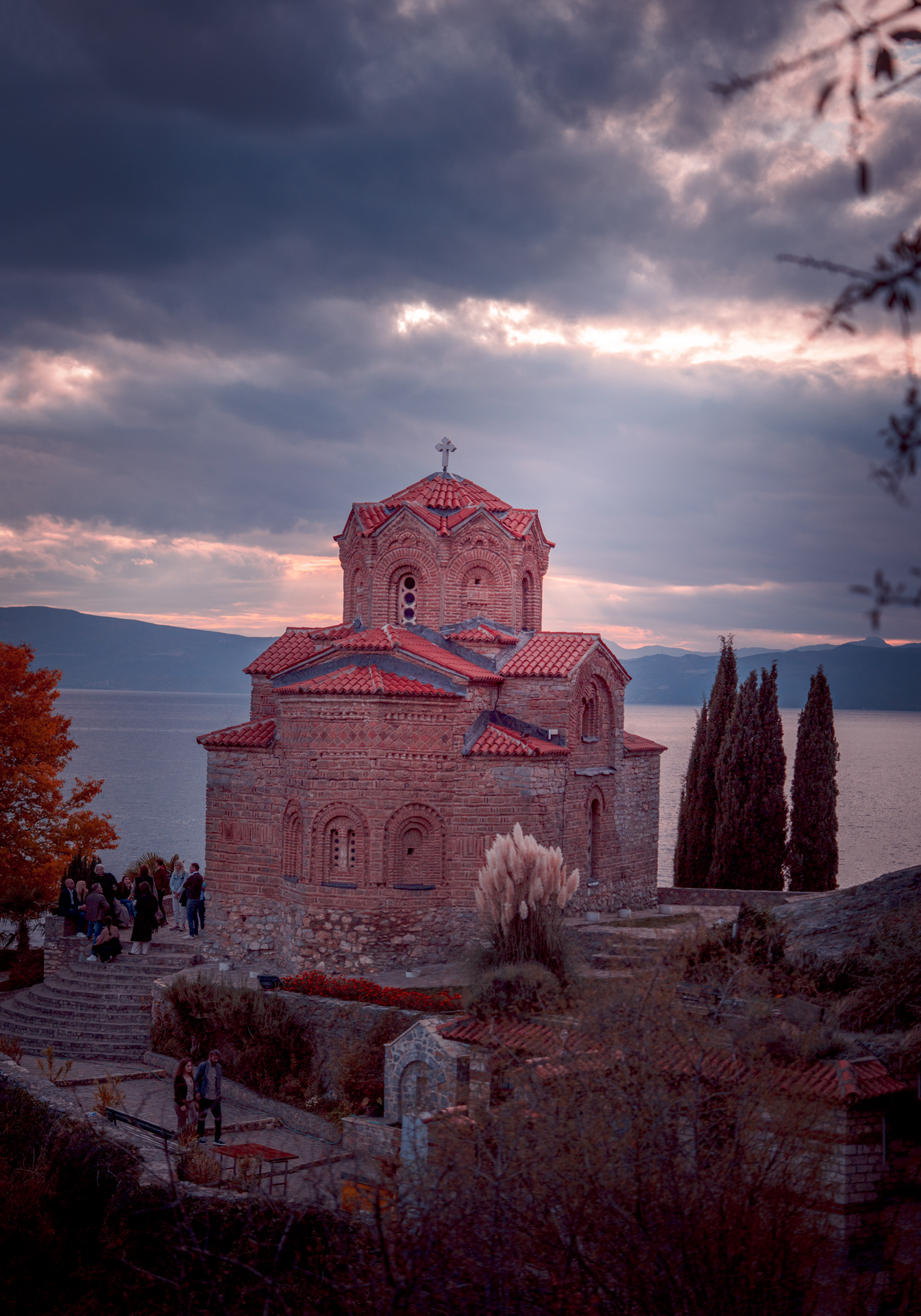
The Church of the Virgin Mary Peribleptos, built in 1295, is one of Ohrid’s most celebrated medieval churches and a masterpiece of Byzantine architecture. Known for its breathtaking frescoes painted by the artists Michael and Eutychios, this UNESCO-recognized treasure is both a cultural gem and an irresistible subject for photographers. Whether you’re drawn to architectural detail, sacred interiors, or the peaceful surrounding setting, Peribleptos offers countless ways to capture unforgettable images.
In this ultimate guide, I’ll cover everything you need to know before photographing this historic site — from the best times of day, to specific compositions worth trying, to the gear that will help you bring out its finest details.
What to Know Before You Go
- Location: Ohrid, North Macedonia, inside the historic Old Town.
- Opening hours: Usually open daily, 9 AM – 5 PM (seasonal variations). Always check locally.
- Entry fee: A small admission fee (around 100–200 MKD).
- Dress code: Modest clothing is recommended inside as it is still a sacred site.
- Photography rules: Photography without flash is generally permitted, but always confirm with the staff before shooting indoors.
Orientation
The church sits on a small plateau in Ohrid’s upper town, surrounded by cobbled lanes and stone houses. Its location makes it easy to combine with other landmarks such as the Ancient Theatre of Ohrid and the Samuel’s Fortress. The church grounds are small but intimate, with great angles from the courtyard, entrance path, and nearby elevated viewpoints.
Best Times to Photograph
- Morning (8–10 AM): Soft light illuminates the eastern façade, with fewer visitors. Perfect for exterior shots.
- Midday (11 AM–2 PM): Strong light can create harsh shadows, but works well for close-ups of carved details and textures. Inside, the natural window light is strongest.
- Golden Hour (5–7 PM in summer): Warm light enhances the reddish tones of the brickwork. This is the most atmospheric time for exteriors.
- Blue Hour (just after sunset): Tripod shots of the softly lit church against a blue sky create a magical mood.
What to Pack
- Wide-angle lens (16–35mm): To capture full exteriors and tight interiors.
- Standard zoom (24–70mm): Great for balanced compositions and frescoes.
- Prime lens (50mm): For detail shots and shallow depth of field.
- Tripod: Essential for interior low-light shots and evening exteriors.
- Polarizing filter: Helps reduce glare on windows and brings out the sky behind the church.
- Extra batteries & memory cards: Long exposures and repeated shots will drain your gear quickly.
What to Photograph at the Church of the Virgin Mary Peribleptos
Let’s break down the main compositions and photographic opportunities here.
The Exterior Façade
The church’s exterior is a striking blend of stone and brickwork in a cross-in-square plan, typical of Byzantine architecture. Photograph the main entrance from a slightly off-center angle to highlight depth and symmetry. Morning light brings out the textures in the walls, while evening light warms the tones. Use a wide-angle lens to include the courtyard and surrounding greenery.
Pro tip: Step back and frame the church with tree branches or foreground stones for added depth.
The Dome and Roofline
The church’s dome rises elegantly above the square structure, making for a beautiful composition from lower vantage points. Use a zoom lens to isolate the dome against the sky, especially during golden hour when the light outlines its shape. A polarizer helps deepen the blue of the sky for contrast.
The Interior Frescoes
The frescoes of Peribleptos are among the finest in Byzantine art, painted in 1295 by Michael and Eutychios. They depict scenes from the life of Christ, the Virgin Mary, and various saints with a remarkable sense of realism and movement. These are low-light conditions, so a tripod or fast lens (f/1.8–2.8) is essential.
Best approach: Use a wide lens for ceiling frescoes and arches, and a standard zoom for mid-level details. Capture the dramatic expressions of figures for storytelling shots.
The Iconostasis
The carved wooden iconostasis (icon screen) is another highlight inside the church. Intricate details of saints, gilded icons, and woodwork make for intimate close-up shots. Focus on textures, colors, and contrast with the darker interior space.
Pro tip: Side lighting from windows enhances the texture and creates a dramatic mood.
The Courtyard
The church courtyard is charming in its simplicity, with stone paths, greenery, and views of the surrounding old town. Use the courtyard as a foreground element for wide shots, or focus on details like doorways and window frames. The courtyard is also a great place for candid shots of visitors exploring.
Night Photography
If you can, return in the evening when the church is softly illuminated. A long exposure captures the warm glow against the twilight sky. Place your tripod in the courtyard or nearby lane for stability and experiment with starburst effects on the lights by stopping down your aperture (f/11–16).
Surrounding Photo Opportunities
- Ancient Theatre of Ohrid: Just a few minutes’ walk, offering elevated views of the area.
- Traditional Ohrid houses: Stone-and-wood homes near the church make great storytelling backgrounds.
- Lake Ohrid: Combine shots of the church visit with landscapes of the lake for variety.
Suggested Itinerary for Photographers
- Morning: Arrive at opening, photograph exteriors with soft light.
- Late morning: Capture interiors while natural light is still strong.
- Afternoon: Explore surrounding old town for street photography.
- Golden Hour: Return for warm exterior shots.
- Evening: Tripod shots of the illuminated church at blue hour.
Best Photo Angles to Try
- Low angle wide shot: To emphasize the church’s height.
- Framed composition: Use archways or trees to frame the church.
- Detail close-ups: Focus on fresco expressions or carved wood.
- Symmetry shot: Straight-on view of the main entrance.
- Night long exposure: Capture glowing lights with blurred visitor movement.
Related Photography Tips
- Always turn off your flash indoors — it damages frescoes and ruins atmosphere.
- Respect worshippers and avoid intrusive shots during prayer.
- Arrive early to avoid crowds and get cleaner compositions.
- Shoot in RAW to handle low-light interiors with better post-processing.
FAQs – Photographing the Church of the Virgin Mary Peribleptos
Can I use a tripod inside the church?
Tripods are often allowed if you’re discreet, but confirm with staff. Otherwise, use a fast lens or high ISO.
What’s the best time of year to photograph?
Spring and autumn offer the best balance of light, colors, and fewer crowds.
Is drone photography allowed?
Drones are not permitted directly over the church but can be flown legally outside Ohrid Old Town for aerial perspectives.
How long should I spend here as a photographer?
At least 1–2 hours to capture both interior and exterior shots.
What lens is best for frescoes?
A 24–70mm zoom works best for flexibility, but a fast 35mm prime gives great results in low light.
Related Reads on FrewaPhoto.com
- [Ultimate Guide to Visit Lake Ohrid]
- [Best Photo Spots in Ohrid]
- [Ultimate Guide to Photograph Fog]
- [Best Sunrise Spots in North Macedonia]
- [Ultimate Guide to Visit Skopje]