
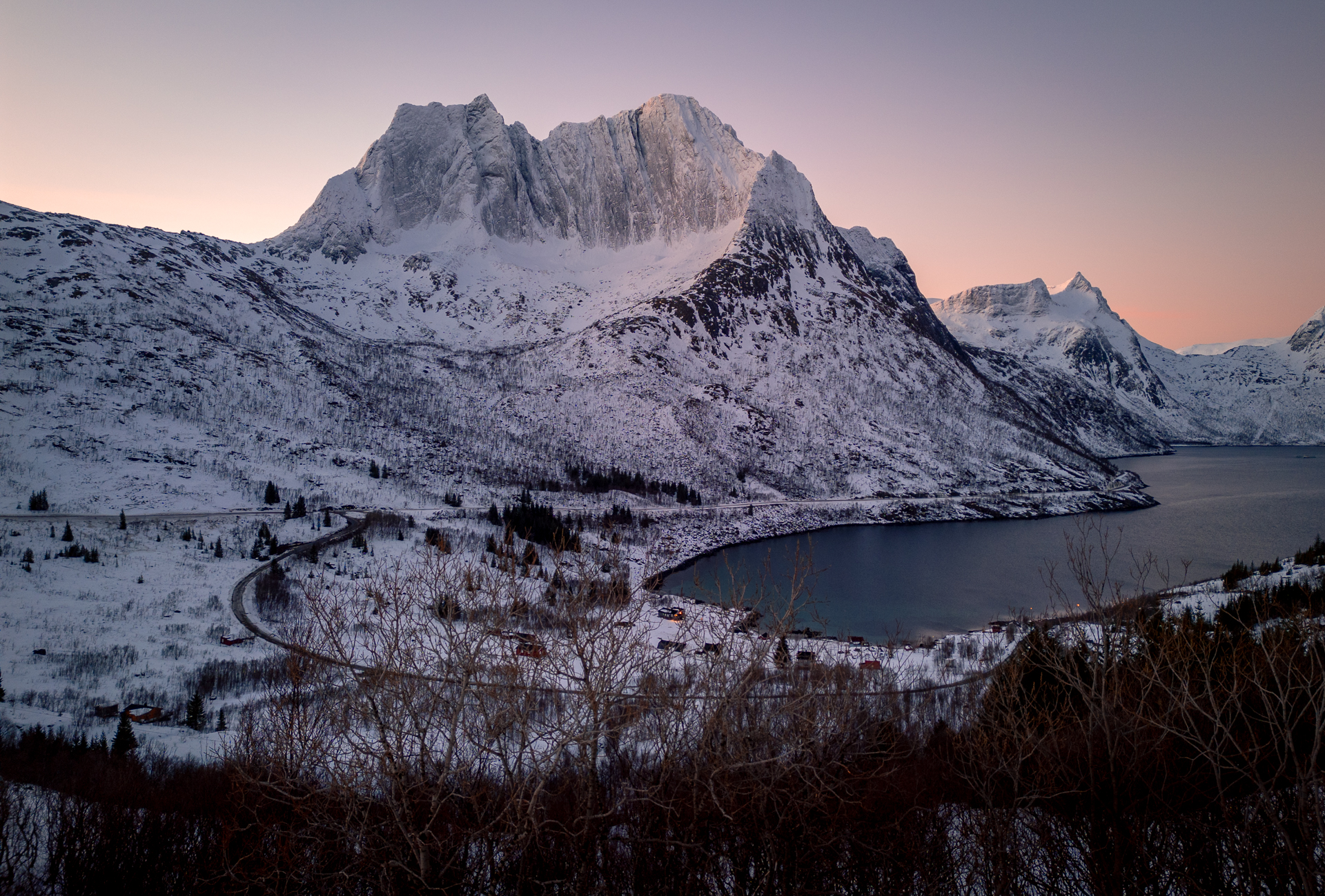
One of Europe’s Most Dramatic Coastal Drives
The Scenic Route Senja (Nasjonal turistveg Senja) is one of Norway’s most visually striking road journeys. Winding along rugged coastlines, steep mountains, fjords, white-sand beaches, and small fishing villages, this route delivers some of the most powerful landscapes in Northern Europe — often with far fewer crowds than the Lofoten Islands.
For photographers, road trippers, and nature lovers, Senja offers raw, dramatic scenery in every direction, changing character completely with the seasons. This ultimate guide covers everything you need to know: where the scenic route goes, the best stops, when to visit, photography tips, and how to plan your journey.
What Is the Scenic Route Senja?
The Scenic Route Senja is part of Norway’s official National Tourist Routes, designed to highlight the country’s most spectacular landscapes with carefully placed viewpoints, rest areas, and architectural elements.
- Length: Approx. 102 km
- Location: Western and northern Senja island
- Route sections: From Gryllefjord to Botnhamn
- Driving time: 3–4 hours without stops (but you’ll want a full day)
The route is not about speed — it’s about slow travel, frequent stops, and experiencing nature up close.
Why Senja’s Scenic Route Is Special
Senja is often called “Norway in miniature” because it compresses so many landscapes into one island.
Along the scenic route you’ll find:
- Sharp alpine peaks rising straight from the sea
- Narrow fjords and wide ocean views
- Beaches that feel Arctic and tropical at once
- Fishing villages nestled beneath towering cliffs
Unlike Lofoten, Senja still feels wild and less commercial, making it ideal for photographers and travelers seeking authenticity.
Best Time to Drive the Scenic Route Senja
Summer (June–August)
- Midnight sun
- Open roads and ferries
- Lush green landscapes
- Long photography days
Best for: Road trips, hiking, landscape photography
Autumn (September–October)
- Dramatic weather
- Golden tundra tones
- Fewer visitors
Best for: Moody photography, storms, contrast
Winter (November–March)
- Snow-covered peaks
- Northern Lights
- Frozen waterfalls
Best for: Arctic landscapes, aurora photography
Note: Some sections can be challenging in winter conditions.
Spring (April–May)
- Melting snow and waterfalls
- Quiet roads
- Rapidly changing light
Best for: Dynamic landscapes and fewer crowds
The Scenic Route Senja – Section by Section
Gryllefjord to Torsken
This southern section introduces Senja’s dramatic scale.
What to expect
- Steep mountains rising from fjords
- Quiet fishing villages
- Calm water reflections on still days
Photography tips
- Early morning for reflections
- Use villages for scale against mountains
Torsken to Bergsbotn
One of the most visually impressive parts of the route.

Bergsbotn Viewpoint
A cantilevered platform extending over the landscape, offering a sweeping view of Bergsfjord and surrounding peaks.
Why it’s special
- Elevated perspective
- Strong leading lines
- Works in all seasons
Best light
- Late afternoon to sunset
- Winter blue hour is exceptional
This is one of the signature stops of the Scenic Route Senja.
Bergsbotn to Skaland
This stretch alternates between fjords and open coastlines.
Highlights
- Changing light conditions
- Small harbors and rocky shores
- Excellent storm photography opportunities
Photography tips
- Watch the sky — weather changes fast
- Include foreground rocks for depth
Skaland to Ersfjordstranda
This is where Senja’s landscape becomes iconic.
Ersfjordstranda Beach
A wide Arctic beach framed by steep mountains and open sea.
Why it’s special
- Powerful mountain-to-sea compositions
- Northern Lights reflections in winter
- Midnight sun glow in summer
Best time
- Sunrise or sunset
- Aurora season on clear winter nights
Ersfjordstranda to Tungeneset
Perhaps the most famous stretch of the scenic route.
Tungeneset Viewpoint
A wooden walkway leading toward the jagged peaks of Okshornan, often called “The Devil’s Teeth”.
Why it’s special
- Strong minimalist design
- Direct alignment with dramatic peaks
- Excellent for long exposures
Best conditions
- Overcast or stormy weather
- Winter snow adds graphic contrast
This is one of the most photographed locations on Senja, yet it never feels overcrowded.
Tungeneset to Mefjordvær
Mefjordvær Fishing Village
A classic Norwegian village set beneath towering peaks.
Why it’s special
- Red rorbuer cabins
- Dramatic vertical landscape
- Strong sense of place
Photography tips
- Use cabins as foreground elements
- Shoot during low clouds for mood
Mefjordvær to Husøy
A quieter stretch with deep fjords and narrow roads.
Husøy Village
A remote fishing village connected by a narrow causeway.
Why it’s special
- Isolation and atmosphere
- Layered fjord views
- Excellent winter light
Best time
- Blue hour and twilight
- Calm winter evenings
Husøy to Botnhamn
The northern end of the scenic route.
What to expect
- More open fjords
- Fewer dramatic peaks
- Strong sense of remoteness
This section is ideal for slow driving and reflection, especially in winter.
Photography Tips for the Scenic Route Senja
Lenses
- Wide-angle (14–24mm or equivalent)
- Standard zoom for villages and details
Tripod
Essential year-round due to:
- Low light
- Long exposures
- Aurora photography
Weather Strategy
- Don’t avoid clouds — embrace them
- Storms often produce the best light
- Be patient and flexible
Driving Tips for Scenic Route Senja
- Roads are narrow — drive cautiously
- Watch for sheep and reindeer
- Winter tires are mandatory in winter
- Fuel up early — stations are limited
Allow far more time than the distance suggests.
Where to Stay Along the Route
- Gryllefjord or Torsken (south)
- Mefjordvær (central)
- Skaland (good base for multiple days)
Staying along the route allows you to revisit locations in different light.
Related Travel Guides
- Ultimate Guide to Visit Senja in Winter
https://frewaphoto.com/ultimate-guide-senja-winter/ - Best Photo Spots in Senja
https://frewaphoto.com/best-photo-spots-senja/ - Ultimate Guide to Visit Segla
https://frewaphoto.com/ultimate-guide-segla/ - Best Day Trips from Tromsø
https://frewaphoto.com/best-day-trips-from-tromso/
FAQ – Scenic Route Senja
Is the scenic route open year-round?
Yes, but winter conditions may cause temporary closures.
How long does the scenic route take?
3–4 hours driving, but a full day is recommended.
Is Senja suitable for beginners driving in winter?
Only with winter driving experience and proper tires.
Is Senja less crowded than Lofoten?
Yes, significantly.
Can I photograph Northern Lights along the route?
Absolutely — many locations are excellent aurora foregrounds.
Do I need a 4WD vehicle?
Helpful in winter, but not mandatory with good tires.
Conclusion
The Scenic Route Senja is one of Norway’s most rewarding road journeys — a place where mountains crash into the sea, weather shapes the mood, and every bend reveals a new composition. Whether you visit under the midnight sun or chasing aurora beneath snowy peaks, this route offers a depth of experience that few places in Europe can match. Slow down, follow the light, and let Senja unfold at its own pace.