
Pristina may not be the first city that comes to mind when planning a trip to the Balkans, but it should be. Kosovo’s lively capital is a fascinating blend of history, culture, and youthful energy. Its streets buzz with cafés, students, and street art. The city has Ottoman heritage, communist-era architecture, and a contemporary vibe that makes it a rewarding destination — especially for travelers looking for something off the beaten path.
In this ultimate guide, I’ll share everything you need to know to plan your trip to Pristina: how to get there, what to see and do, where to stay, what to eat and drink, and my best tips as a travel photographer to capture the city at its most beautiful.
What to Know Before You Go
Pristina is compact, walkable, and very affordable. You don’t need weeks here — a couple of days is perfect for most travelers — but the city makes a great base for exploring Kosovo’s countryside, monasteries, and cultural sites.
It’s also one of Europe’s youngest capitals — not just historically, but demographically. Nearly half of Kosovo’s population is under 25, which gives Pristina a fun, vibrant, and creative energy.
Orientation
Pristina’s city center is easy to navigate. The main pedestrian boulevard, Mother Teresa Square (Sheshi Nënë Tereza), runs through the heart of town and is lined with cafés, shops, and public buildings. Many of the main attractions — the National Library, the Newborn Monument, and Skanderbeg Square — are within walking distance.
Language
The official language is Albanian. You’ll also see some Serbian signage and hear Serbian in certain areas. English is widely spoken among young people, so communication is easy.
Currency and Payment
Kosovo uses the Euro (EUR), even though it’s not part of the Eurozone. Credit cards are accepted in hotels, restaurants, and larger cafés, but always carry some cash for small purchases, taxis, and street food.
What to Pack
- Comfortable shoes: You’ll be walking a lot.
- Layered clothing: Weather can change quickly, especially in spring and autumn.
- Camera gear: A wide-angle lens is perfect for architecture, while a 50mm prime is great for portraits and street scenes.
- Scarf or shawl: Useful if you visit religious sites.
- Portable power bank: For a full day of exploring and photographing.
When to Go
- Spring (April–June): Ideal weather for walking and outdoor cafés. The city feels alive with events and festivals.
- Autumn (September–October): Warm days, cool nights, and beautiful light for photography.
- Winter: Can be cold and gray, but the festive season has charm.
- Summer: Hot and dry; streets can be quieter during the hottest part of the day.
How Long to Stay
Two full days is perfect to see the main sights, explore the café culture, and take a day trip to the nearby Gračanica Monastery or Bear Sanctuary Prishtina.
How to Get There
- By air: Fly into Pristina International Airport (PRN). It’s about 20 minutes by taxi to the city center.
- By bus: Frequent buses run from Skopje, Tirana, and other Balkan cities. The bus station is a short taxi ride from downtown.
- By car: Roads have improved a lot in recent years; renting a car gives you flexibility to explore Kosovo’s countryside.
What to Do
Newborn Monument
A symbol of Kosovo’s independence (declared in 2008), the Newborn Monument is repainted every year with a new theme. It’s a must-see and a great photo stop.
National Library of Kosovo
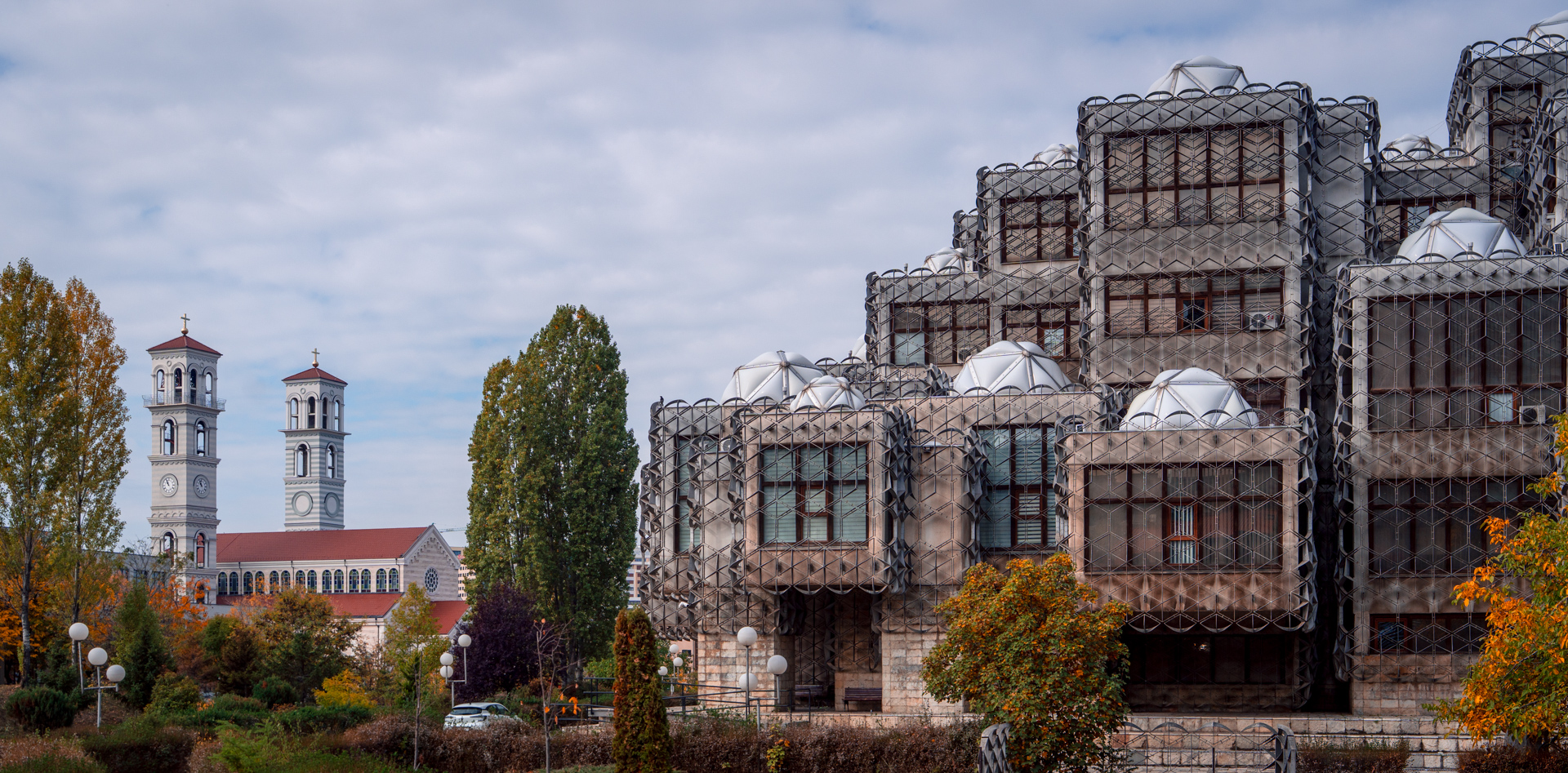
One of the most unique buildings in Europe — covered with 99 domes and wrapped in a metal net. Its brutalist design makes it a favorite for architecture photographers.
Mother Teresa Cathedral
Climb the bell tower for one of the best views over Pristina. Sunset from here is stunning.
Skanderbeg Square
The central square with the equestrian statue of Albanian national hero Skanderbeg. A great spot for street photography and people-watching.
Bazaar Area
Explore the local market and grab a photo of stalls filled with fresh produce, spices, and everyday life.
Imperial Mosque (Xhamia e Mbretit)
Dating back to the 15th century, this Ottoman-era mosque is peaceful and photogenic.
Gračanica Monastery (Day Trip)
A UNESCO World Heritage Site just outside Pristina, famous for its frescoes and peaceful gardens.
Bear Sanctuary Prishtina (Day Trip)
A wonderful ethical project rescuing bears from captivity. Great for families.
Best Tours
- Walking tours: Join a local guide for a half-day walking tour of Pristina’s main sights.
- Food tours: Sample Kosovo cuisine with a guided tasting.
- Day trips: Combine Gračanica, Ulpiana archaeological site, and Gadime Cave in one day.
What to Eat and Drink
Kosovo has a delicious mix of Ottoman and Balkan flavors.
Where to Eat
- Home Restaurant: Modern twist on traditional dishes.
- Tiffany: Cozy restaurant serving hearty local food.
- Liburnia: A favorite for its authentic atmosphere.
Where to Drink
- Dit’ e Nat’: Café, bookstore, and cultural hub.
- MIQT Pub: For craft beer lovers.
- Half & Half: Popular with locals for drinks in the evening.
Where to Stay
- Swiss Diamond Hotel: For luxury and spa lovers.
- Hotel Sirius: Central, comfortable, great for business travelers.
- Hostel Han: Budget-friendly and social.
How to Get Around
- Walking: The city center is very walkable.
- Public transport: Buses are cheap but routes can be confusing.
- Taxi: Affordable, but use a reputable company or ride-hailing app.
- Car rental: Best if you want to explore rural Kosovo.
What to Buy
- Filigree jewelry: Traditional handcrafted silver pieces.
- Rakia (local brandy): A typical Balkan souvenir.
- Coffee sets: Copper coffee pots and cups make great gifts.
Best Photo Spots
- Newborn Monument
- National Library (best at sunset)
- Mother Teresa Cathedral bell tower
- Skanderbeg Square during golden hour
- Gračanica Monastery frescoes
Types of Trips
- Girls’ Weekend: Café-hopping, wine bars, shopping.
- Couple Getaway: Romantic sunset at the bell tower, dinner at Liburnia.
- Family Trip: Bear Sanctuary, parks, relaxed walking tours.
How Much Does It Cost?
- Getting there: Flights from Europe are often €50–100 return.
- Sleeping: Budget hostels from €15, mid-range hotels €40–60, luxury €100+.
- Activities: Most museums are free or under €3.
- Getting around: Taxis within the city cost €3–5.
- Eating & drinking: Meals from €5–15, coffee under €2.
What a Trip Here Will Give You
Pristina gives you insight into Europe’s youngest nation, a chance to see history being made, and an authentic Balkan city vibe without the heavy tourism crowds.
Should You Go?
Absolutely — especially if you like discovering places before they’re mainstream.
Why Go?
Pristina is vibrant, affordable, photogenic, and full of friendly people. It’s a perfect stop on a Balkan road trip or a weekend destination from Skopje or Tirana.
FAQs about Visiting Pristina
Q: Is Pristina safe?
A: Yes, it’s one of the safest capitals in the Balkans.
Q: How many days do you need?
A: Two full days are perfect for the city itself, longer if you want day trips.
Q: Do I need a visa?
A: Most Western travelers do not need a visa for stays under 90 days.
Q: Is it expensive?
A: No, Pristina is one of Europe’s most affordable capitals.
Q: Is there good nightlife?
A: Yes! Bars, pubs, and live music spots are lively — especially on weekends.
More Information
- Kosovo Tourism Board
- Pristina Airport Info
- UNESCO: Gračanica Monastery
- Lonely Planet Guide to Kosovo
- Travel Advisory Kosovo – EU
Related Reads on FrewaPhoto.com
- Ultimate Guide to Visit Prizren
- Ultimate Guide to National Parks in Kosovo
- Best Photo Spots in Pristina
- Balkan Road Trip: 10-Day Itinerary