
Pristina might not be as famous as Dubrovnik or Istanbul, but for travel photographers, this city is a goldmine. Its mix of Ottoman architecture, brutalist landmarks, street art, and vibrant café life makes it perfect for storytelling through images.
I’ve spent days walking its streets, photographing its markets, its monuments, and its people. This guide will take you through the very best photo spots in Pristina, with my tips for when to go, how to shoot, and how to make your images stand out.
Newborn Monument
Why it’s iconic:
Unveiled the day Kosovo declared independence in 2008, this constantly repainted monument is one of the city’s most photographed symbols.
What to photograph:
Capture wide shots that include the whole word “NEWBORN,” but also focus on close-ups of its annual artwork or graffiti — it’s a living canvas that changes every year.
Best time to go:
Morning or late afternoon when the light is softer. Golden hour is great if you want warm tones on the letters.
Photo tip:
Get low and use a wide-angle lens to make the letters feel big and bold in the frame. If you visit at sunrise, you can get the letters with almost no people around.
National Library of Kosovo
Why it’s a must-shoot:
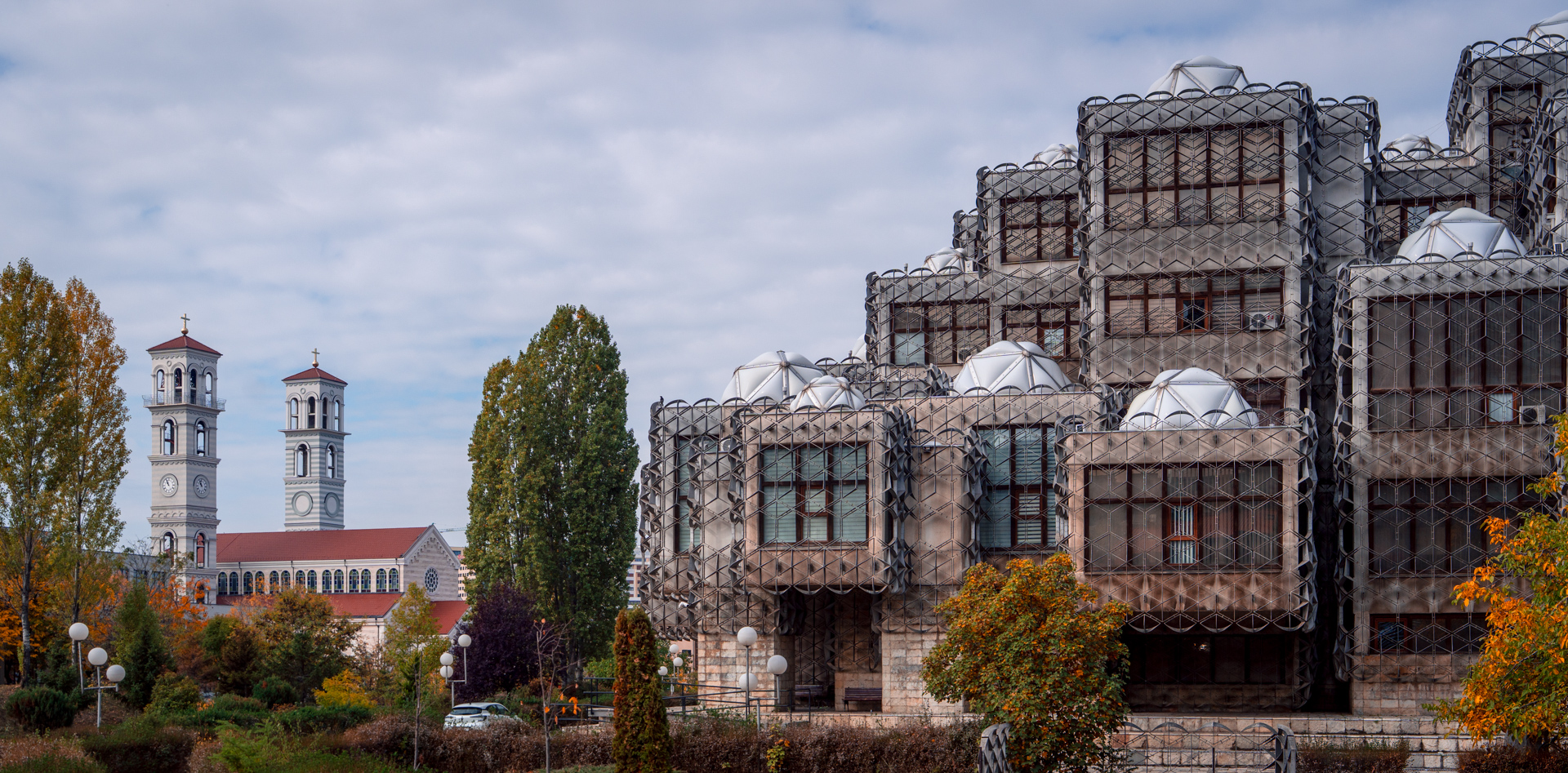
This is one of the most unusual buildings in Europe — 99 domes, wrapped in a lattice of metal.
What to photograph:
The entire building from the park in front, details of the geometric patterns, and architectural abstracts. Inside, the reading rooms are incredible if you’re allowed to photograph.
Best time to go:
Golden hour or blue hour, when the building catches the last light or starts to glow with interior lighting.
Photo tip:
Symmetry works beautifully here. Stand in the central path and frame the library dead center. A tilt-shift lens is ideal if you have one, but a wide-angle zoom works fine.
Mother Teresa Cathedral and Bell Tower
Why it’s special:
This is the best viewpoint in the city. The bell tower gives a 360° panorama over Pristina and beyond.
What to photograph:
The church’s interior stained glass windows, then climb the tower for skyline shots — try capturing the National Library from above.
Best time to go:
Sunset is unbeatable. The city lights start coming on as the sun sets behind the hills.
Photo tip:
Bring a zoom lens to compress the view and pick out details in the cityscape. Use a tripod if allowed to shoot long exposures at blue hour.
Skanderbeg Square
Why it’s great:
This is Pristina’s main square and a hub of daily life. The equestrian statue of Skanderbeg is the focal point.
What to photograph:
Street scenes, kids playing, vendors, the statue with people passing by, and the contrast between modern buildings and traditional elements.
Best time to go:
Late afternoon for golden light, or at night when the square is lit up.
Photo tip:
Experiment with motion blur — slow your shutter to capture people walking past while keeping the statue sharp.
Bazaar Area (Old Market)
Why you’ll love it:
This is the place to capture authentic Pristina life — stalls of fresh vegetables, spices, and local characters.
What to photograph:
Colorful produce, portraits of vendors (ask permission!), candid moments of bargaining, and the textures of baskets and wooden stalls.
Best time to go:
Early morning when the market is busiest and light is soft.
Photo tip:
Switch to a 35mm or 50mm prime lens to get intimate shots without distortion. Shoot at f/2.8 or wider to separate subjects from the busy background.
Imperial Mosque (Xhamia e Mbretit)
Why it’s photogenic:
Built in the 15th century, this Ottoman mosque has a beautiful interior with painted ceilings and a peaceful courtyard.
What to photograph:
The minaret against the sky, interior prayer rugs, and calligraphy details.
Best time to go:
Morning for quietness, or late afternoon when light streams in through the windows.
Photo tip:
Use a wide-angle lens to capture the entire prayer hall but keep your camera level to avoid distortion. Respect worshippers and avoid photographing people during prayer.
Street Art Walls
Why they matter:
Pristina has a growing street art scene. Murals often carry political or social messages and add vibrant color to the city.
What to photograph:
Full murals, but also details — textures, hands, faces.
Best time to go:
Cloudy days are perfect for even lighting.
Photo tip:
Shoot straight on (parallel to the wall) to avoid perspective distortion, unless you want an artistic angled composition.
Gračanica Monastery (Short Trip from Pristina)
Why include it:
Just 15 minutes outside the city, this UNESCO World Heritage site is one of the most beautiful Serbian Orthodox monasteries in the Balkans.
What to photograph:
Exterior with its red-and-white stone pattern, frescoes inside (if photography is permitted), and the peaceful gardens.
Best time to go:
Morning when light is soft and there are fewer visitors.
Photo tip:
Focus on capturing symmetry and include leading lines of pathways or arches in your composition.
Bear Sanctuary Prishtina (Day Trip)
Why it’s special:
An ethical wildlife sanctuary giving rescued bears a safe home. Great for wildlife photographers.
What to photograph:
Close-ups of bears foraging, wide shots of them roaming natural enclosures, and interpretive signs for storytelling.
Best time to go:
Morning when bears are most active.
Photo tip:
Bring a telephoto lens (200mm+) to photograph animals without disturbing them.
Additional Photo Gems
- Germia Park: A mix of city views and nature trails. Best for sunrise photography.
- Ulpiana Archaeological Site: Ancient ruins, perfect for moody early morning shots.
- Fadil Vokrri Stadium area: Great for urban sports/street photography.
Final Tips for Photographing Pristina
- Golden Hour: Use early morning and late afternoon light for the most flattering shots.
- Ask Permission: Especially when photographing people in markets or religious sites.
- Include People: Pristina is full of life — candid portraits tell a more powerful story than empty streets.
- Bring Extra Batteries: Cold weather drains batteries fast in winter.
📸 Frequently Asked Questions (FAQ)
Q: What is the best time of day to photograph Pristina?
A: Early morning and late afternoon offer the best light — soft tones, long shadows, and golden-hour glow that make Pristina’s architecture and street scenes come alive. Sunset from the Cathedral of Saint Mother Teresa’s viewing tower is especially stunning for city panoramas.
Q: Do I need special equipment to get great shots in Pristina?
A: Not necessarily. A versatile zoom lens (like a 24–70 mm) and a fast prime (35 mm or 50 mm) will cover most scenes — from urban details to portraits. For night photography or panoramic shots, bring a lightweight travel tripod and a wide-angle lens to elevate your results.
Q: Are there any photography rules or permits I should know about?
A: Generally, you can photograph freely in public spaces. However, always respect locals and private property. Some religious sites, government buildings, or museums may restrict tripod or flash use — ask permission when in doubt.
Q: Is Pristina safe for photographers?
A: Yes, Pristina is considered safe for travelers and photographers. Exercise the same common-sense precautions as in any city: watch your gear, avoid isolated areas late at night, and keep valuables secure while shooting in crowds or markets.
Q: What are the best photo locations in Pristina?
A: Must-visit spots include:
- NEWBORN Monument – a symbol of independence and vibrant creativity.
- National Library of Kosovo – iconic, futuristic architecture for abstract compositions.
- Cathedral of Saint Mother Teresa Tower – for panoramic city views.
- Bill Clinton Boulevard & Mother Teresa Square – full of local energy and everyday street scenes.
- Street art alleys and local markets – perfect for candid and colorful photography.
Q: How long should I stay to capture the best of Pristina?
A: Two days is enough to cover the main city spots. If you plan to explore nearby landscapes or cultural villages, stay three to four days to photograph at different times of day and under varied lighting.
Q: Do I need a car to reach the best photography locations?
A: Most top photo spots are within walking distance in central Pristina. For day trips or countryside photography (like monasteries or nearby mountains), renting a car or joining a guided tour gives more flexibility.
Q: What’s the best season for photography in Pristina?
A: Spring (April–June) and autumn (September–October) offer mild temperatures, clear light, and vibrant colors. Summer brings long daylight hours but harsher midday light, while winter provides atmospheric scenes and unique snowy cityscapes for creative compositions.