
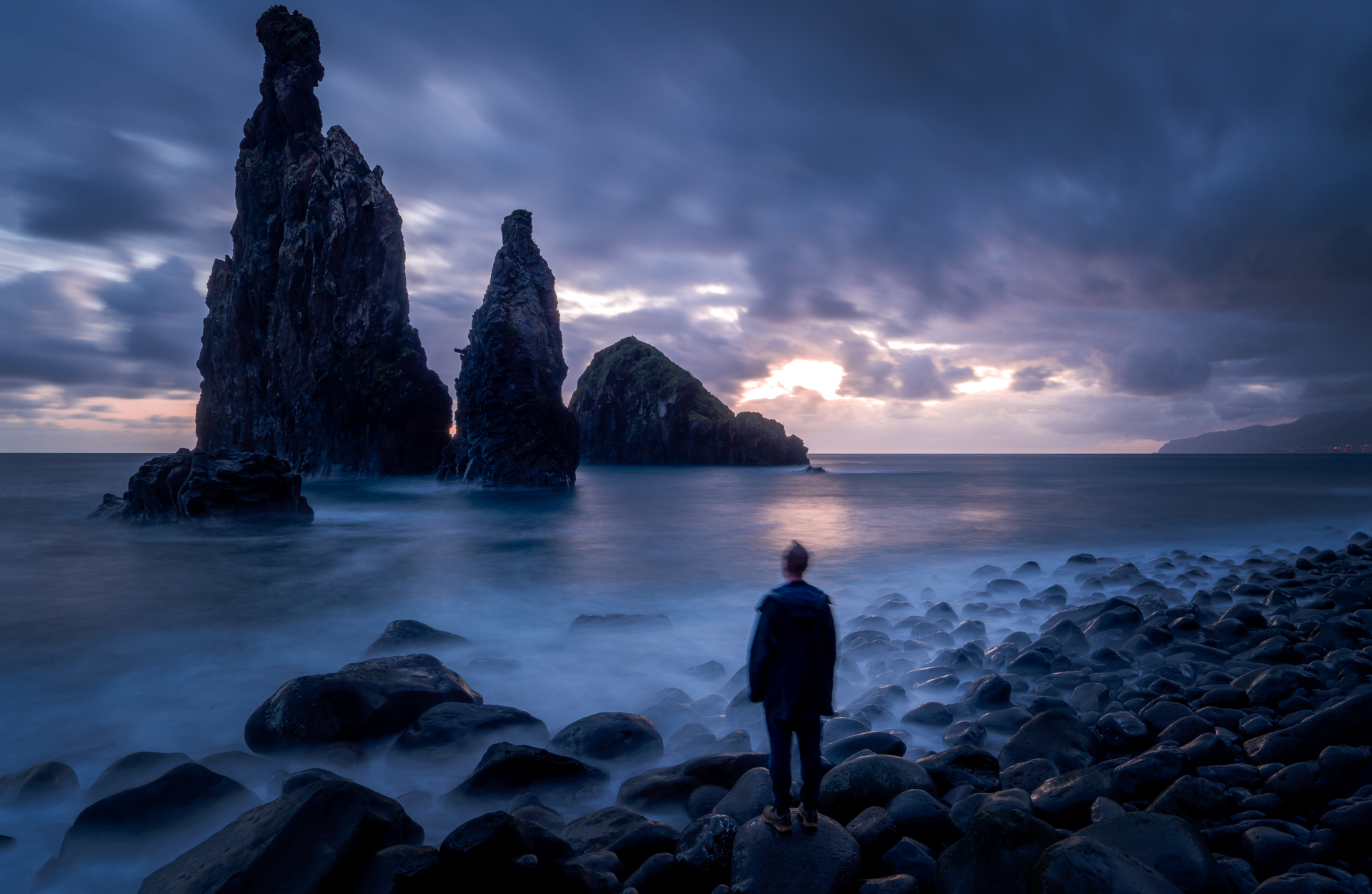
Praia de Ribeira da Janela is one of Madeira’s most dramatic coastal photography locations. Wild Atlantic waves, monumental sea stacks, and constantly changing light make this beach a dream for photographers who love mood, motion, and raw nature. I visited multiple mornings here, and each session felt completely different depending on wind, swell, and clouds.
Below are the best photo spots, plus when to shoot, how to compose, and what gear works best.
1. The Twin Sea Stacks – Iconic Ribeira da Janela View
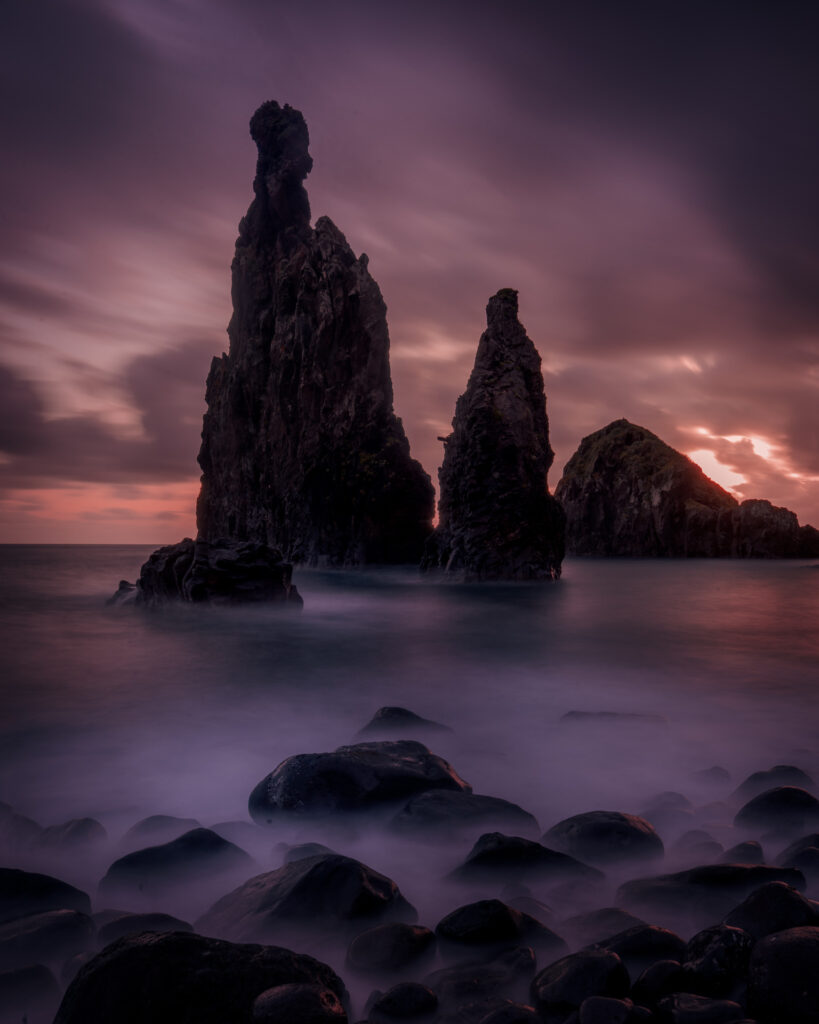
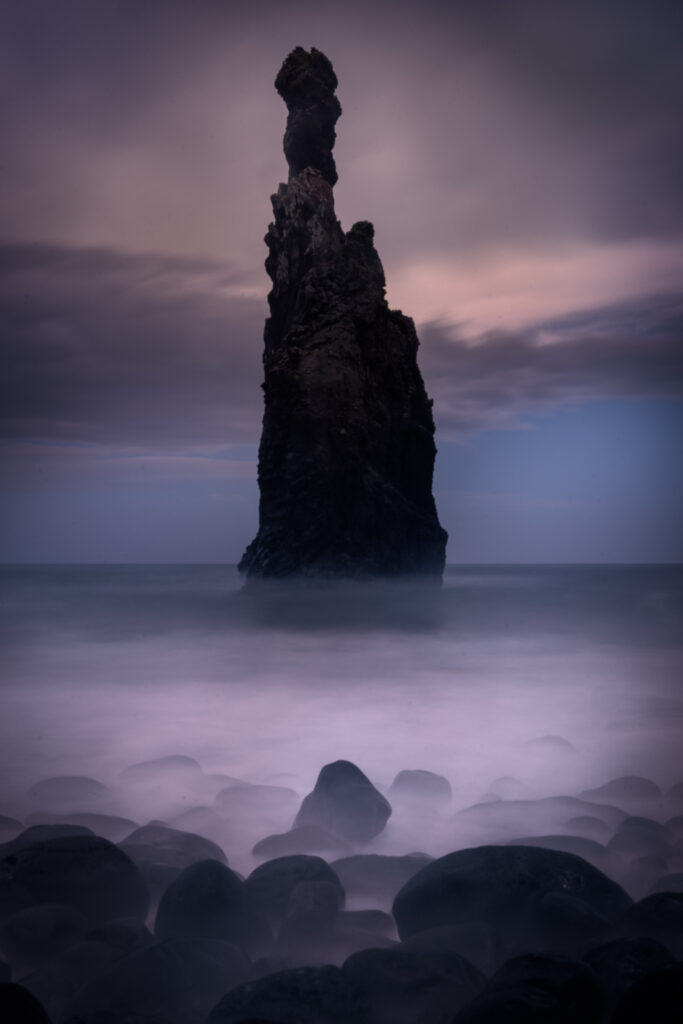
The most recognizable feature of Praia de Ribeira da Janela is the pair of towering rock stacks rising straight out of the ocean. This is the classic Madeira north coast shot, and for good reason.
Why this spot works
- Strong vertical elements for composition
- Constant wave action for long exposures
- Excellent silhouette potential at sunrise
- Scale contrast between rocks and ocean
Best time to shoot
- Sunrise for side-light and softer contrast
- Early morning often brings calmer winds
- Overcast days add drama and texture
Photography tips
- Use a wide-angle lens (14–24mm) to include foreground stones
- Try 5–20 second exposures to soften waves
- Watch the tide — rising water adds motion, low tide reveals textures
2. Foreground Boulder Fields – Long Exposure Heaven
Scattered across the beach are large, dark volcanic boulders that make perfect foreground anchors for long-exposure shots.
Why photographers love it
- Adds depth and scale
- Creates leading lines toward sea stacks
- Allows endless compositional variation
Best conditions
- Medium swell with consistent waves
- Cloudy or broken skies
- Early morning before footprints appear
Pro tip
Get low. Very low. Let the stones dominate the foreground while the sea melts into mist behind them.
3. River Mouth and Reflections
At the eastern side of the beach, Ribeira da Janela’s river reaches the ocean. After rain, this area becomes especially interesting.
What makes it special
- Calm water reflections
- Natural leading lines
- Contrast between still river and wild ocean
Best light
- Sunrise or post-storm calm
- Soft morning light works best
This is an underrated spot that offers a calmer alternative to the exposed shoreline.
4. Elevated Viewpoint from the Road
Just above the beach, the road offers a higher perspective that’s perfect for storytelling shots.
Why shoot from above
- Shows coastline context
- Great for compressed telephoto shots
- Works well in dramatic weather
Lens choice
- 70–200mm for isolating wave crashes
- 24–70mm for environmental scenes
This is also a good option when waves are too strong to safely shoot from the beach.
5. Wave Impact Zone – Motion and Power
On windy days with strong swell, Ribeira da Janela turns into a wave photography playground.
What to look for
- Waves wrapping around rocks
- Explosive impacts against sea stacks
- Spray catching early light
Safety note
Never turn your back to the ocean here. Rogue waves are real.
Best Time of Day to Photograph Ribeira da Janela
Sunrise (Highly Recommended)
- Softer contrast
- Fewer people
- Better control over exposure
- Calm, atmospheric mood
Sunset
- Can work, but light direction is less ideal
- Often harsher contrast
- Wind tends to pick up
If you can only visit once, sunrise wins every time.
Best Weather Conditions for Photography
- Light to medium clouds add drama
- Overcast skies enhance long exposures
- Windy days increase wave power
- After rain, textures and reflections improve
Clear blue skies are actually the least interesting here.
Camera Gear I Recommend
- Wide-angle lens (14–24mm or 16–35mm)
- Mid-range zoom (24–70mm)
- Telephoto (70–200mm)
- Solid tripod
- ND filters (6–10 stop)
- Microfiber cloth (sea spray is constant)
Drone Photography at Ribeira da Janela
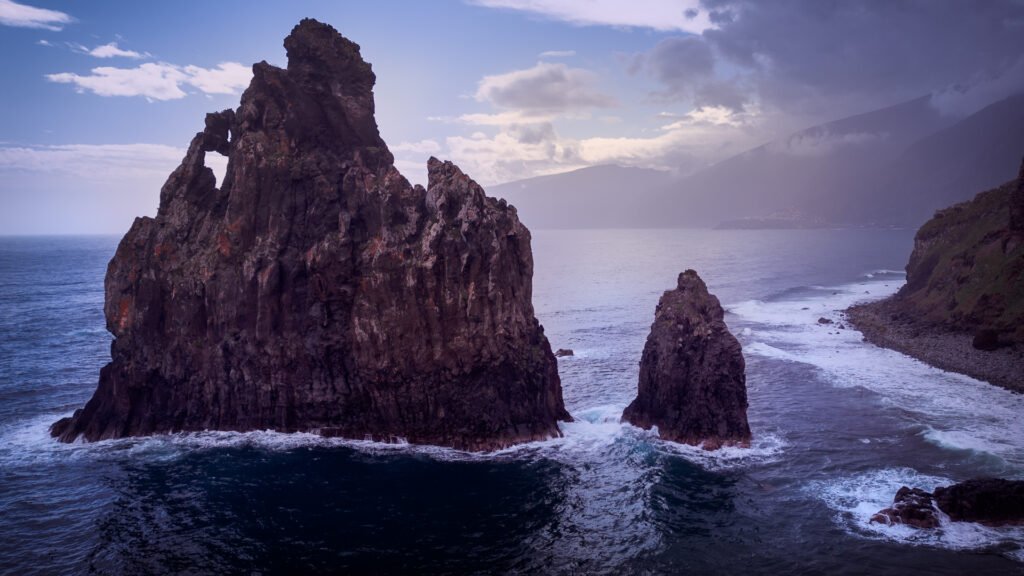
This beach is fantastic for drone photography, especially early in the morning.
What works well from above
- Rock formations and wave patterns
- Scale of sea stacks
- Leading lines created by surf
Tips
- Fly low for wave texture
- Shoot straight down for abstract patterns
- Be cautious of strong coastal winds
Always follow Portuguese drone regulations.
Practical Info for Visiting
- Easy roadside access
- Small parking area near the beach
- Slippery rocks — wear proper footwear
- No facilities on site
Combine this stop with nearby Seixal, Miradouro do Véu da Noiva, or Porto Moniz for a full north-coast photography day.
Common Mistakes to Avoid
- Shooting only wide — try tighter compositions
- Ignoring foreground elements
- Visiting only once — conditions change everything
- Standing too close to waves without awareness
Final Photography Tips
Ribeira da Janela rewards patience and repeat visits. The best images here come from waiting, observing wave cycles, and adapting to the mood of the ocean. Some mornings are calm and reflective; others are wild and cinematic.
It’s not about ticking off a shot — it’s about letting the scene unfold.
FAQs – Praia de Ribeira da Janela Photography
Is Ribeira da Janela good for sunrise photography?
Yes — it’s one of the best sunrise beaches on Madeira.
Is it safe to photograph here?
Yes, but waves can be unpredictable. Always stay alert.
Can beginners shoot here?
Absolutely. Just start simple and build compositions slowly.
Is it crowded?
Early mornings are quiet. Midday can be busy in summer.
Can I shoot here year-round?
Yes, but winter brings more dramatic seas.
Do I need ND filters?
Highly recommended for long exposures.
Is drone photography worth it?
Very much so, especially in calm wind conditions.
How long should I plan to stay?
At least 1–2 hours, more if conditions are good.
Are there nearby cafés or facilities?
No — bring everything you need.
Is this beach family-friendly?
For photography yes, for swimming no — currents are strong.