
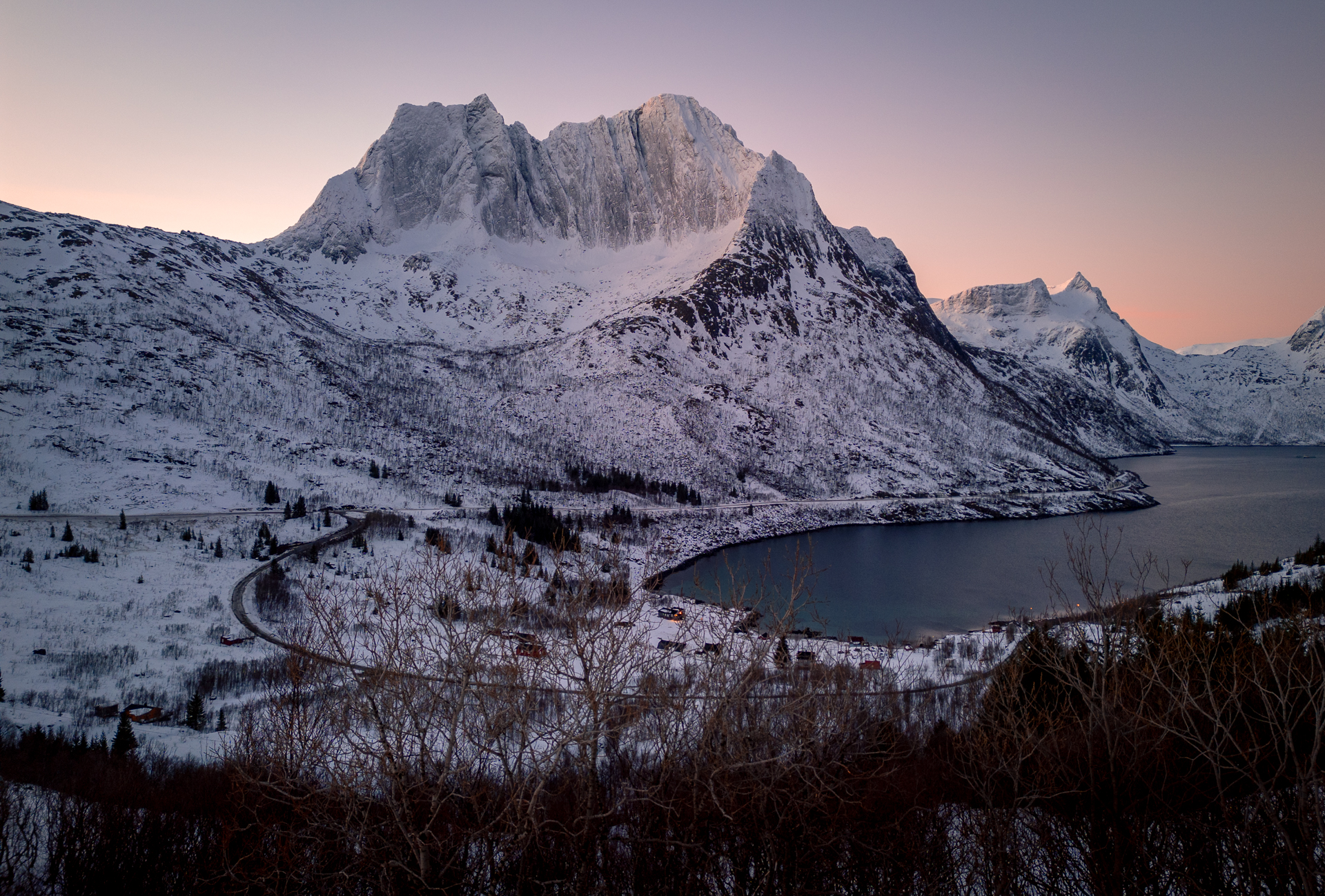
Senja is one of Norway’s most visually dramatic islands and a dream destination for landscape and travel photographers. Often described as “Norway in miniature”, Senja compresses alpine peaks, fjords, white sand beaches, fishing villages, forests, and Arctic coastline into a single island — all within short driving distances.
What makes Senja especially appealing for photography is not just the variety, but the accessibility of world-class photo spots directly from the road, combined with far fewer crowds than Lofoten. Whether you visit in winter for Northern Lights and snow-covered peaks, or in summer for midnight sun and lush green landscapes, Senja offers exceptional photographic potential year-round.
This guide covers the best photo spots in Senja, with detailed information on why each place is special, what to photograph, when to go, and how to approach each location from a photographer’s perspective.
Why Senja Is a Top Photography Destination
- Dramatic mountain-to-sea landscapes
- Iconic viewpoints with minimal hiking required
- Excellent light quality in both winter and summer
- Strong seasonal variation (snow, autumn colors, midnight sun)
- Fewer tourists compared to Lofoten
- Excellent Northern Lights potential
Senja rewards photographers who are patient, flexible, and willing to revisit locations under different light and weather conditions.
Best Time for Photography in Senja
Winter (November–March)
- Snow-covered landscapes
- Northern Lights photography
- Long blue hours and dramatic skies
- Minimal crowds
Spring (April–May)
- Snow remains in mountains
- Fresh greens at lower elevations
- Waterfalls at peak flow
Summer (June–August)
- Midnight sun
- Lush vegetation
- Easier hiking access
Autumn (September–October)
- Autumn colors
- First snow on peaks
- Increasing aurora activity
Best Photo Spots in Senja
1. Tungeneset Viewpoint
Tungeneset is one of the most photographed locations in Senja — and for good reason. A wooden boardwalk stretches across coastal rocks toward the jagged Okshornan peaks, creating strong leading lines and depth in compositions.
What to photograph
- Mountain silhouettes
- Leading lines from the boardwalk
- Northern Lights over the peaks
- Stormy seas and dramatic skies
Best time to shoot
- Blue hour
- Sunset and twilight
- Aurora nights
Photography tips
Use a wide-angle lens and position the boardwalk diagonally through the frame to guide the viewer’s eye toward the mountains.
2. Bergsbotn Viewpoint
Bergsbotn offers a high, panoramic view over a fjord framed by steep mountains. A modern viewing platform extends outward, providing clean foreground lines and unobstructed views.
What to photograph
- Fjord panoramas
- Layered mountain ridges
- Winter reflections on frozen water
- Twilight color gradients
Best time to shoot
- Sunrise
- Blue hour
- Calm winter mornings
Photography tips
Panoramic stitching works exceptionally well here. A telephoto lens can also isolate distant ridgelines.
3. Ersfjordstranda (Ersfjord Beach)
Ersfjordstranda is one of Senja’s most photogenic beaches. White sand, turquoise water, and towering mountains create a surreal Arctic beach scene — especially striking in winter when snow covers the shoreline.
What to photograph
- Beach and mountain reflections
- Aurora over the fjord
- Minimalist winter compositions
Best time to shoot
- Calm evenings
- Aurora nights
- Early morning in summer
Photography tips
Look for reflections in shallow water or snow patterns in winter for foreground interest.
4. Fjordgård Village
Fjordgård sits at the end of a fjord surrounded by steep peaks, making it one of Senja’s most dramatic villages. It offers excellent opportunities for both landscape and documentary photography.
What to photograph
- Fishing village life
- Mountains rising straight from the fjord
- Aurora above village lights
- Winter snowfall scenes
Best time to shoot
- Blue hour
- Night photography
- Overcast winter days
Photography tips
Use village elements such as roads, boats, or buildings to add scale to the surrounding mountains.
5. Mefjordvær
Mefjordvær is a classic Norwegian fishing village and one of the most atmospheric locations on Senja. Red cabins, a sheltered harbor, and dramatic peaks create endless composition possibilities.
What to photograph
- Harbor reflections
- Fishing boats
- Snow-covered cabins
- Stormy coastal conditions
Best time to shoot
- Early morning
- Blue hour
- During snowfall or storms
Photography tips
Reflections in the harbor are strongest during calm conditions — revisit multiple times.
6. Husøy Fishing Village
Husøy is a working fishing village located on a small island connected by bridge. It offers authentic Arctic life and strong storytelling opportunities.
What to photograph
- Harbor scenes
- Fishing activity
- Colorful houses against snow
- Weather-driven atmospheres
Best time to shoot
- Overcast winter days
- Blue hour
- Snowfall
Photography tips
Respect local activity and avoid blocking working areas. Longer focal lengths work well for candid details.
7. Segla (Viewed from Fjordgård Area)
Segla is Senja’s most famous peak. While the summit hike is popular in summer, winter photography should focus on photographing Segla from below rather than attempting the ascent.
What to photograph
- Iconic peak shape
- Mountain reflections in the fjord
- Aurora compositions with Segla silhouette
Best time to shoot
- Sunrise and sunset
- Blue hour
- Aurora nights
Photography tips
Scout viewpoints along the road around Fjordgård to find compositions without needing to hike.
8. Ånderdalen National Park
Ånderdalen offers a completely different photographic environment: forests, rivers, and quiet valleys. It’s especially rewarding in winter and autumn.
What to photograph
- Snow-covered forests
- Frozen streams
- Autumn foliage
- Intimate landscape details
Best time to shoot
- Winter mornings
- Autumn peak color
- Soft overcast light
Photography tips
Use shorter focal lengths to isolate details like snow on branches or frozen water textures.
9. Senja National Scenic Route (Roadside Spots)
Many of Senja’s best photo opportunities are found directly from the road along the National Scenic Route.
What to photograph
- Fjords and coastal curves
- Road leading lines
- Sudden light breaks after storms
Best time to shoot
- Anytime light changes
- After storms
- Golden and blue hour
Photography tips
Stop frequently and scout — some of the best compositions are unmarked.
10. Gryllefjord Area
Gryllefjord is often overlooked but offers dramatic winter light, harbor scenes, and fjord compositions.
What to photograph
- Harbor reflections
- Mountain backdrops
- Winter light gradients
Best time to shoot
- Sunrise
- Blue hour
- Calm winter days
Photography Gear Recommendations for Senja
- Wide-angle lens (14–24mm)
- Standard zoom (24–70mm)
- Telephoto (70–200mm or longer)
- Sturdy tripod
- Weather-sealed camera body
- Spare batteries (cold drains power quickly)
Practical Photography Tips for Senja
- Revisit locations in different light
- Use weather creatively — storms add drama
- Always scout during daylight for night photography
- Respect local communities and nature
- Avoid risky winter hiking without proper training
FAQ – Photography in Senja
Is Senja good for beginner photographers?
Yes. Many iconic spots are accessible directly from the road.
Is Senja better than Lofoten for photography?
For fewer crowds and a wilder feel, many photographers prefer Senja.
Do I need a guide?
Not necessary, but helpful for winter and aurora photography.
Can I photograph Northern Lights from villages?
Yes, many villages have minimal light pollution.
Is winter photography difficult?
It requires preparation, but conditions are manageable with proper gear.
Conclusion
Senja is one of Norway’s most rewarding photography destinations. From iconic viewpoints like Tungeneset and Bergsbotn to quiet fishing villages and untouched forests, the island offers endless opportunities for compelling images in every season. Whether you focus on winter landscapes, Northern Lights, or coastal storytelling, Senja delivers powerful visual experiences with far fewer crowds than Norway’s more famous regions.