
Introduction
There’s something magical about autumn in Bosnia and Herzegovina. The summer crowds are gone, the air is crisp, and the forests and mountains glow in hues of red, gold, and orange. Cobblestoned towns like Mostar and Sarajevo feel even more atmospheric, while the countryside turns into a photographer’s dream.
As a travel photographer, I believe autumn is the perfect time to explore this Balkan gem. In this ultimate guide, I’ll share tips on when to go, what to pack, the best things to do, and, of course, the most Instagram-worthy spots.
What to Know Before You Go
- Autumn (September–November) is shoulder season: fewer tourists and better prices.
- Temperatures vary: Sarajevo can be chilly while Herzegovina stays warmer.
- Festivals abound, from wine harvests to film screenings.
Orientation
Bosnia and Herzegovina is divided into two main regions:
- Bosnia (the northern, mountainous area with Sarajevo at its heart)
- Herzegovina (the southern, Mediterranean-influenced region with Mostar)
The country blends Ottoman, Austro-Hungarian, and Slavic influences, which you’ll see in the architecture, food, and traditions.
Language
Bosnian, Croatian, and Serbian are spoken here, often abbreviated as BCS. English is common in tourist areas. Learn a few phrases:
- Hello: Zdravo
- Thank you: Hvala
- Cheers: Živjeli!
Currency and Payment
The official currency is the Bosnian Convertible Mark (BAM). Euros are sometimes accepted, but BAM gives you the best value. Cash is widely used, especially in small towns and markets, though ATMs are easy to find.
What to Pack
- Layers: mornings and evenings can be cold, but days may still be warm
- Waterproof jacket (autumn showers are frequent)
- Hiking boots for exploring trails and waterfalls
- A scarf for visiting mosques
- Camera with extra batteries — autumn light is magical!
When to Go
- Early autumn (September): Warm weather, vineyard harvests, cultural festivals.
- Mid-autumn (October): Forests and hills are drenched in fiery colors.
- Late autumn (November): Quiet, cheaper, but colder — especially in the mountains.
How Long to Stay
A 7–10 day trip is ideal. You can combine Sarajevo, Mostar, and a couple of day trips to places like Kravice Waterfalls, Blagaj, and Jajce.
How to Get There
- By air: Sarajevo International Airport (SJJ) is the main hub.
- By train: Limited, but the Sarajevo–Mostar line is breathtaking.
- By bus: The most reliable way to get around the country.
- By car: Renting a car gives flexibility to explore autumn landscapes.
What to Do
- Stroll Sarajevo’s Baščaršija bazaar under falling leaves.
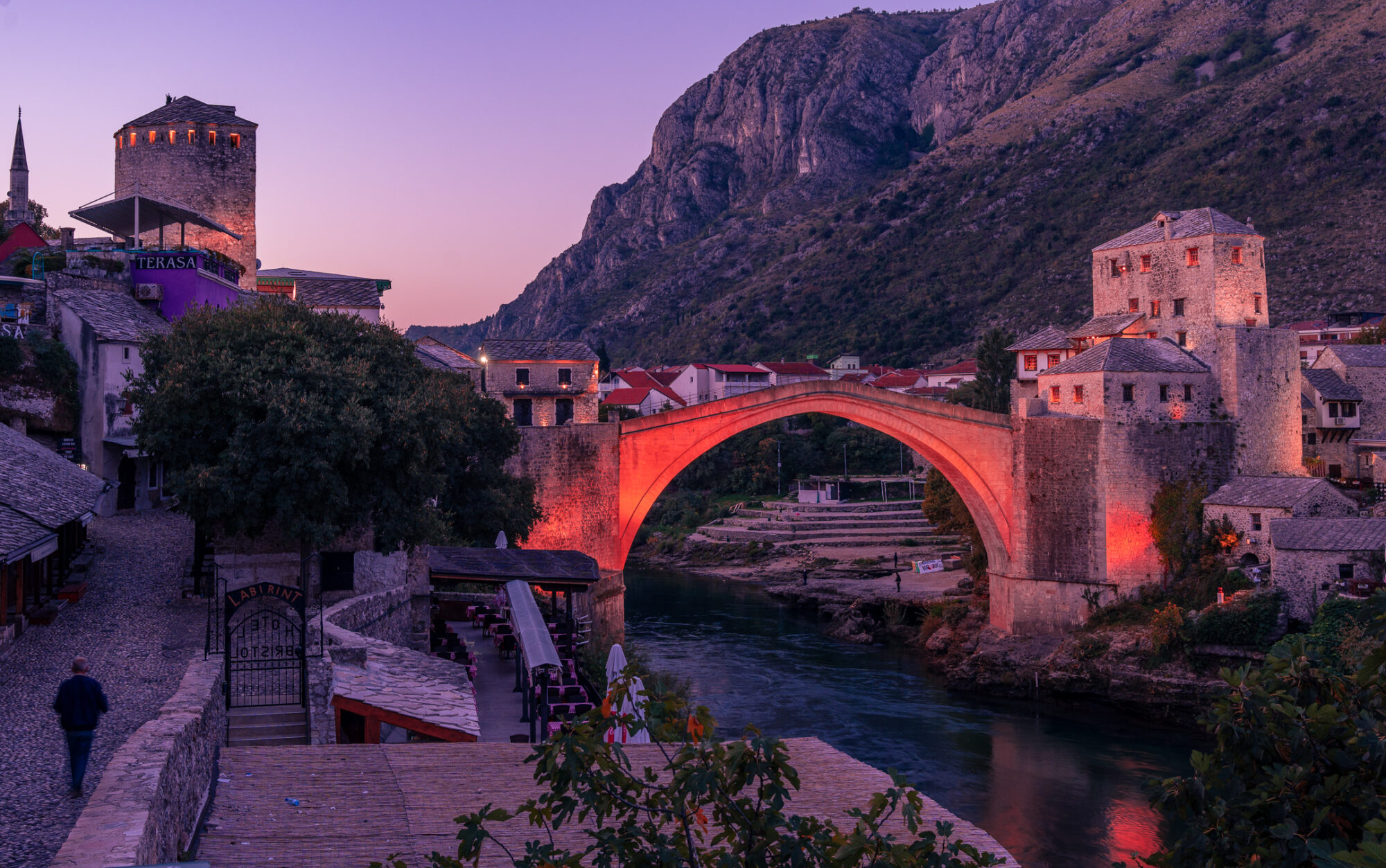
- Visit Mostar’s Stari Most bridge when the crowds are gone.
- Hike in Sutjeska National Park — home to pristine forests.
- Chase waterfalls at Kravice, especially dramatic after autumn rains.
- Explore Jajce, with its stunning waterfall in the city center.
Best Tours
- Sarajevo walking tour for history and culture
- Mostar day trip with Blagaj and Počitelj
- Herzegovina wine tours during harvest season
- Hiking tours in Sutjeska National Park
What to Eat and Drink
Bosnian cuisine is hearty — perfect for cooler autumn days.
- Ćevapi: Grilled minced meat with flatbread
- Begova Čorba: Rich chicken soup, great in cold weather
- Sogan-Dolma: Onions stuffed with minced meat
- Baklava: Sticky sweet treat for your coffee break
- Bosnian coffee: Served in a copper pot, with Turkish influence
- Herzegovina wines: Try local Žilavka (white) and Blatina (red)
Where to Eat
- In Sarajevo: Inat Kuća — traditional Bosnian fare with a story
- In Mostar: Hindin Han — riverside views and autumn menus
- In Blagaj: Local restaurants serving fresh trout by the Buna River
Where to Drink
- Sarajevo’s cafés in Baščaršija for Bosnian coffee
- Herzegovina wineries for tastings among vineyards
- Craft beer bars in Sarajevo for a modern vibe
Where to Stay
- Sarajevo: Hotel Europe (luxury), Hotel Old Town (boutique)
- Mostar: Hotel Mepas (modern), Kriva Ćuprija (boutique by the river)
- Countryside: Guesthouses near Blagaj or Trebinje vineyards
How to Get Around
Walking
Best for exploring Sarajevo and Mostar’s old towns.
Public Transport
Buses are the main intercity transport; trains are scenic but limited.
Taxi
Affordable and reliable within cities.
Rent a Car
Highly recommended in autumn to reach nature spots and smaller towns.
Bike
Possible in flat Herzegovina, less so in hilly Sarajevo.
What to Buy
- Copper coffee sets from Sarajevo
- Handmade rugs and textiles
- Local wines and rakija (fruit brandy)
- Autumn harvest goods: honey, walnuts, pomegranates
Best Photo Spots
- Stari Most in Mostar at golden hour
- Baščaršija streets with autumn leaves
- Vrelo Bune spring at Blagaj Monastery
- Kravice Waterfalls framed by fall foliage
- Jajce waterfall with colorful trees around it
- Sutjeska National Park trails glowing in orange and red
Types of Trip
Girls Weekends
Combine shopping in Sarajevo with winery visits in Herzegovina.
Couple Getaways
Sunset over Mostar, wine tasting in Trebinje, cozy riverside stays.
Family Trips
Waterfalls, hikes, and hands-on food experiences make it fun for kids.
How Much Does It Cost?
Getting There
Flights from Europe: €80–200 depending on season.
Sleeping
Budget: €20–30/night.
Mid-range: €50–80.
Luxury: €120+.
Activities
Most attractions cost €2–5. Guided tours €20–50.
Getting Around
Bus Sarajevo–Mostar: ~€10. Car rental: €30–50/day.
Eating and Drinking
Meals €5–15. Coffee €1–2. Wine tasting €10–20.
What a Trip Here Will Give You
- A rich mix of cultures and traditions
- Stunning autumn photography opportunities
- Warm hospitality and authentic experiences
- Delicious seasonal food and wine
Should You Go? Why Go?
Yes — autumn is arguably the best time to explore Bosnia and Herzegovina. It’s cooler, cheaper, and more photogenic. If you love culture, history, food, and incredible scenery without the crowds, this is your season.
FAQs for Ultimate Guide to Visit Bosnia and Herzegovina in Autumn
1. Is autumn a good time to visit Bosnia and Herzegovina?
Yes — it’s less crowded, more affordable, and stunningly beautiful.
2. What’s the weather like in autumn?
Warm in September, cooler in October, and cold in November.
3. What should I wear in autumn?
Layers, a waterproof jacket, and comfortable walking shoes.
4. Can I still visit waterfalls in autumn?
Yes — they’re even more powerful after rain.
5. Are wineries open in autumn?
Absolutely — September and October are harvest season, perfect for wine tours.
More Info
- Visit Sarajevo
- Herzegovina Tourism
- Bosnia and Herzegovina Tourism
- Kravice Waterfalls
- Sutjeska National Park