
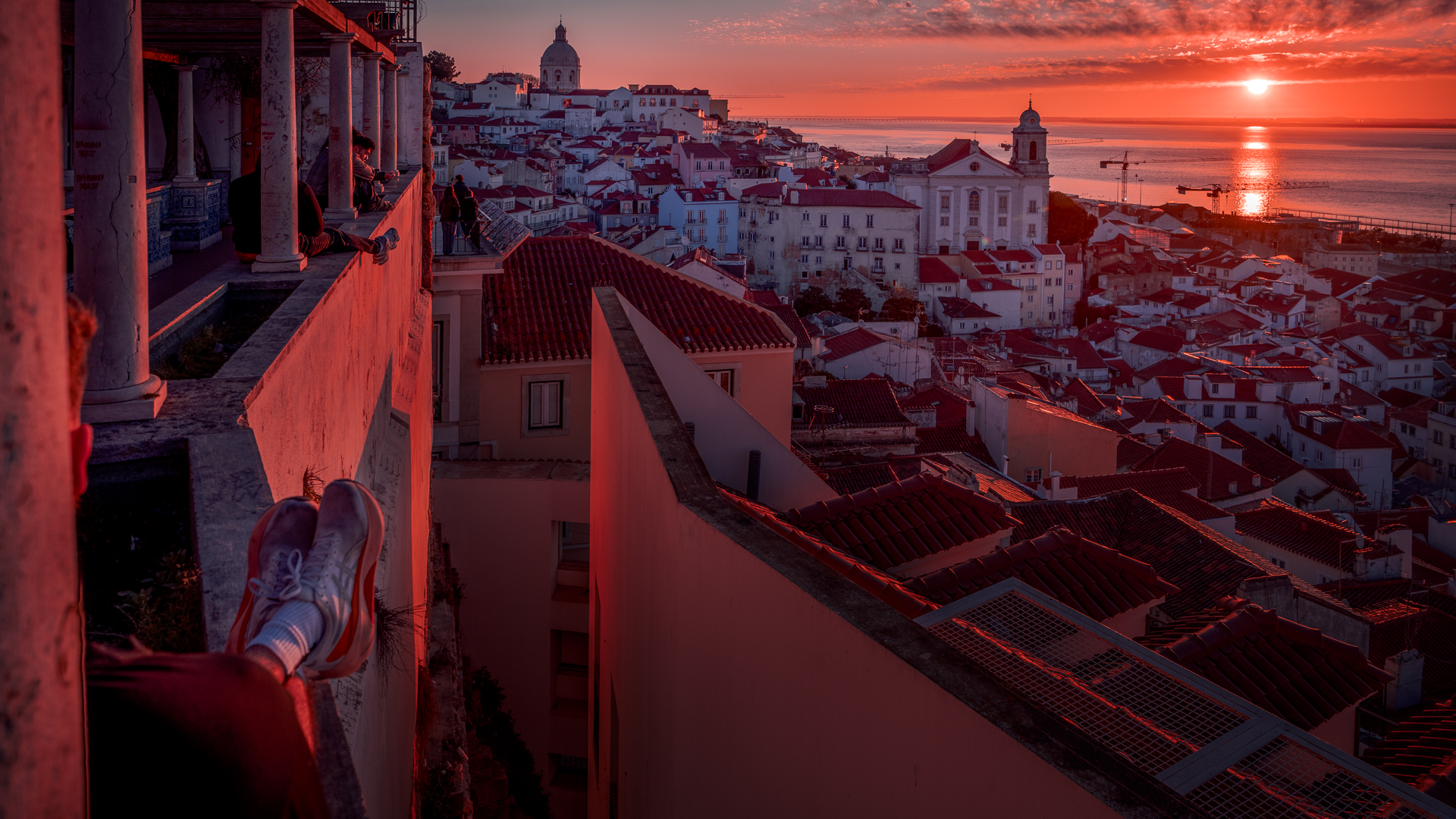
Lisbon is a city of hills, river views, pastel façades, and hidden terraces — and Miradouro de Santa Luzia is one of its most beloved viewpoints. Perched above the Alfama district, it delivers sweeping panoramas of the Tagus River, terracotta rooftops, and iconic city landmarks. Yet unlike some busy viewpoints, Santa Luzia combines historic tiles, shaded seating, shaded gardens, and quiet charm, making it ideal for slow travel, photography, family visits, and culture lovers.
This guide covers everything you need:
- Full history and context
- How to get there
- Best times to visit
- Complete walkthrough of the viewpoint
- Photography advice
- Nearby food and drink
- Hidden gems around Santa Luzia
- Accessibility & practical tips
- External resources for planning
By the end you’ll know why this spot is a must-visit — and exactly how to make the most of your time there.
Where Miradouro de Santa Luzia Fits in Lisbon
Lisbon’s topography makes viewpoints (miradouros) essential stops. From hills and terraces visitors can see layers of red roofs, ancient churches, and the sparkling Tagus River. Miradouro de Santa Luzia sits at the edge of Alfama, Lisbon’s oldest and most characterful neighborhood.
Unlike some viewpoints that are just a ledge and a view, Santa Luzia combines landscape with context — historic azulejos (tiles), garden seating, shaded trees, and a vibe that’s both social and calm.
Nearby you’ll find:
- Alfama’s winding labyrinth streets
- Castelo de São Jorge (São Jorge Castle)
- Largo das Portas do Sol
- Lisbon Cathedral (Sé de Lisboa)
All of these can be linked into a cultural morning or afternoon exploration.
A Brief History of Miradouro de Santa Luzia
The current terrace was developed during major city works in the 1930s and 1940s, when Lisbon invested in public viewpoints to celebrate its skyline. Like many Lisbon landmarks, Santa Luzia reflects multiple eras:
- Medieval Alfama layout
- 20th-century urban planning
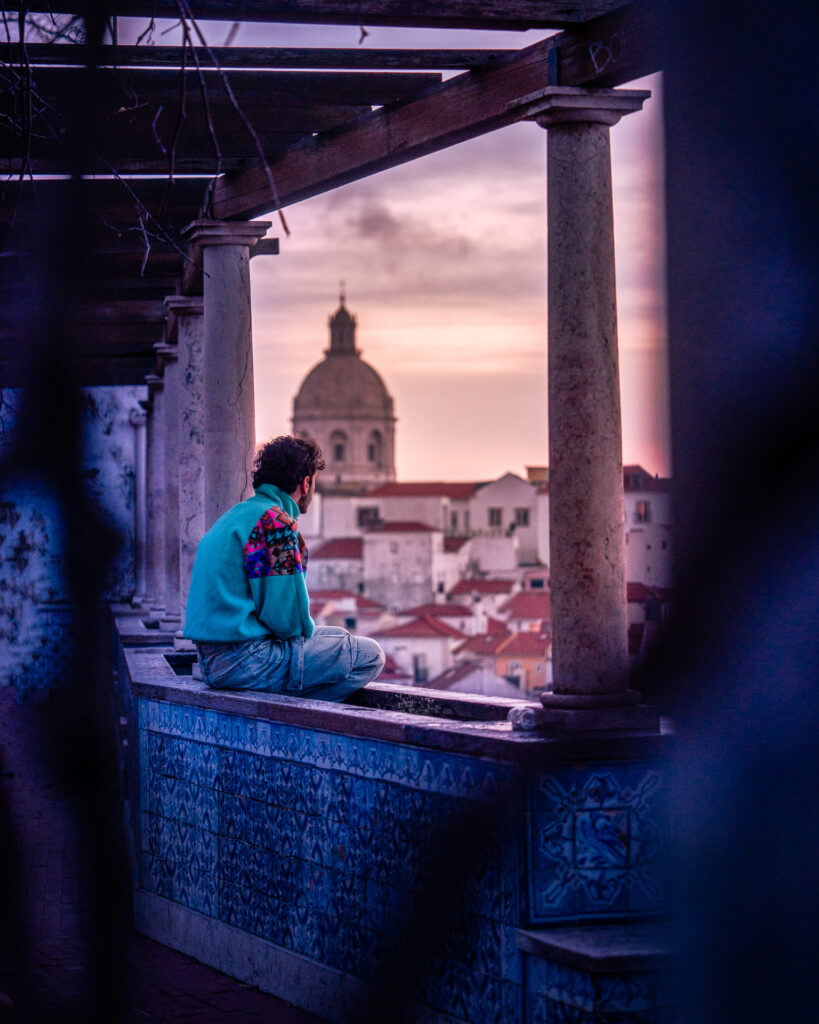
- Historic tile panels depicting local life
The ornate azulejos that line the terrace were installed in 1938, crafted by artist João Câncio and manufactured by the Fábrica Sant’Anna tile factory, a Lisbon institution.
While Santa Luzia has always been geographically elevated, what makes it culturally rich is this layered convergence of old city feel and commissioned public art.
How to Get to Miradouro de Santa Luzia
By Public Transport
Lisbon’s hills are steep, so public transport helps:
- Tram 28 – Popular but can be crowded; get on early to guarantee a seat. Get off near Alfama and walk up.
- Bus 758 – Gentle ride with a convenient stop near the terrace.
- Metro + walk – The nearest metro is Santa Apolónia; from there it’s a 10–15 minute uphill walk.
By Foot
If you’re exploring Alfama, the terrace is a natural destination after winding streets and small squares.
Expect:
- Some steep slopes
- Uneven cobblestones
- Frequent scenic nooks worth stopping for
Comfortable shoes are essential.
By Taxi / Ride-Hailing
Taxis and apps like Bolt or Uber can drop you close to the terrace (e.g., Largo Santa Luzia or Rua do Limoeiro), which saves energy for shooting or exploring.
What You’ll See at Miradouro de Santa Luzia
Sweeping City Views
From the terrace you get:
- Alfama rooftops undulating toward the river
- Blue water of the Tagus beyond red tiles
- Typical Lisbon pastel façades
- Boats and ferries on the river
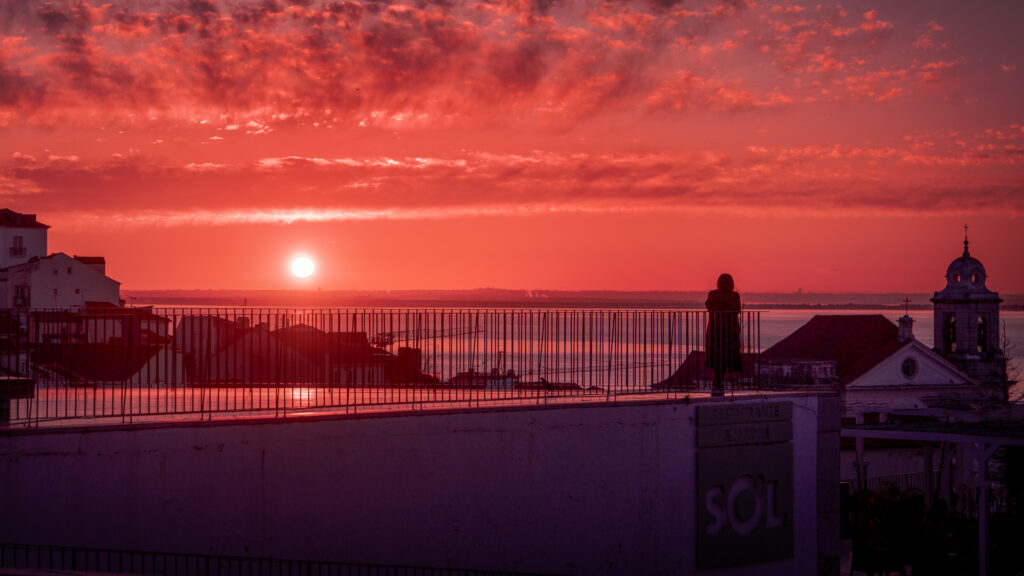
This view changes throughout the day with the light — soft pastels at sunrise, warm amber at sunset, and glowing rooftops at blue hour.
Azulejo Panels
The real visual signature of Santa Luzia is its large tile murals. They depict:
- Lisbon maritime scenes
- Traditional fishing boats
- Life along the Tagus
- Urban moments from earlier centuries
These tiles frame your view and invite close-ups as well as wide compositions.
Seating and Garden Nooks
There are benches and shaded areas tucked behind trees — ideal for:
- Portraits
- Lifestyle photography
- Sketching or relaxation
Unlike some viewpoints that are just walls, Santa Luzia has an inviting atmosphere.
Best Times to Visit
Sunrise
- Soft pastel skies
- Empty terrace for reflection and photography
- Shaded gardens still cool
Late Morning
- Warm light hitting tiles and rooftops
- Cafés nearby start to open
Golden Hour & Sunset
- Warm golden tones
- Long shadows on rooftops
- Best for wide cityscapes and silhouettes
Blue Hour
- City lights start to shimmer
- Sky shifts to deep blue
- Ideal for long exposures
Photography Guide: Best Lenses and Settings
Lenses That Work Well
- Wide Angle (16–35mm) – Great for city panoramas
- Standard Zoom (24–70mm) – Flexible framing
- Telephoto (70–200mm) – Isolates details and distant rooftops
- Phone Ultra-Wide – Works exceptionally well here
Composition Tips
- Foreground + View Combo: Frame the river behind benches or tiles
- Tile Details + Landscape: Capture the azulejo panels as part of a wider frame
- Portrait Mode: People against soft city backgrounds
- Golden Hour: Warm tones on buildings
- Blue Hour: Silhouettes + long exposures of lights
Recommended Camera Settings
- Golden hour: f/8–f/11 for cityscapes
- Blue hour: f/5.6–f/8 + tripod
- Telephoto detail shots: f/4–f/5.6
- ISO 100–400 depending on light
Things to Do Around the Miradouro
Wander Alfama’s Streets
Behind the viewpoint are centuries-old streets with irregular steps, hidden cafés, and local life that’s fun to photograph.
Recommended paths:
- Between Largo Santa Luzia and Rua de São Tomé
- Towards Largo das Portas do Sol
Visit Castelo de São Jorge
A short walk up the hill brings you to the castle and another barrel of dramatic city views.
Combine:
- Santa Luzia sunrise
- Castelo down-view sunset
Stop by Lisbon Cathedral (Sé de Lisboa)
Historic exterior, Gothic interior, and square views — easily combined with a terrace visit.
Nearby Cafés and Places to Eat
After taking in the views, Lisbon’s food scene awaits nearby.
Alfama Cafés
- Taverna Alfama – Casual Portuguese plates
- Pois Café – Chill all-day spot for brunch and coffee
- Café do Teatro – Atmosphere and pastries
Belém Pastel Spot (A Bit Further)
While not right at the terrace, visiting Pastéis de Belém is a pilgrimage after a morning of photography.
External link: https://www.pasteisdebelem.pt
Seasonal Photography Tips
Spring
- Blossoming trees
- Warmer, longer golden hours
- Soft skies
Summer
- Strong pastel colors
- Early sunset golden light around 8–9 pm
Autumn
- Crisp light
- Saturated tones
- Cloudier skies add drama
Winter
- Moody skies
- Mist in the distance some mornings
- Fewer visitors
Accessibility & Practical Info
Terrain
- Uneven cobblestones
- Some steep parts
- Benches and shaded spots available
Best for
- All ages
- Solo travelers and families
- Photographers and slow travelers
Facilities
- Nearby restrooms and cafés
- Public seating
Pairing Santa Luzia With Other Lisbon Photo Routes
For best results, include this viewpoint in a broader exploration like:
Sunrise + Tram 28 Route
Start at sunrise at Santa Luzia, then ride Tram 28 through Alfama.
Castle & Sunset Loop
Photo mornings at Santa Luzia, walk up to Castelo de São Jorge, and catch sunset from there.
Waterfront Walk
After Santa Luzia, make your way down to the river for reflections and blue hour shots.
What to Avoid
- Visiting only at midday (harsh contrast)
- Arriving right at peak crowd times without patience
- Ignoring the tiles — they’re part of the experience
Santa Luzia is best experienced slowly.
FAQs – Visiting Miradouro de Santa Luzia
Is it safe to visit early in the morning?
Yes, it’s a quiet, safe area and used by locals for morning walks.
Do you need a ticket to enter?
No — the terrace is public.
Can you photograph freely?
Yes, it’s ideal for both amateur and professional photography.
Are there toilets nearby?
Yes — in nearby cafés and public areas.
Is it stroller friendly?
Parts are accessible, but cobblestones can be uneven.
Best season for photography?
Spring and autumn offer the best light.
Is it crowded?
Less crowded than other Lisbon viewpoints, but popular at sunset.
Can I visit at night?
Yes — midnight views are beautiful but bring light layers.
Is it good for panoramas?
Excellent — wide views and symmetry.
Is drone photography allowed?
Drone use is restricted in central Lisbon — check local rules before flying.
External Resources (Official & Useful Links)
- Visit Lisboa – Official Tourism
https://www.visitlisboa.com - Metro & Public Transport Info (Metro Lisboa)
https://www.metrolisboa.pt - Portuguese Weather Service (IPMA)
https://www.ipma.pt - São Jorge Castle Ticket Info
https://castelodesaojorge.pt - Pastéis de Belém Official Website
https://www.pasteisdebelem.pt
Why Miradouro de Santa Luzia Is More Than a Viewpoint
Santa Luzia isn’t just about scenery — it’s a place where local life, artistic detail, historic tiles, and genuine atmosphere combine with one of the best urban panoramas in Lisbon. It’s a photography spot, a cultural destination, and a quiet retreat all in one.
If you’re visiting Lisbon for the first time, make room for Santa Luzia on your itinerary. And if you’re coming back, go again at a different time of day — the light, the people, and the mood shift beautifully.