
The Cathedral of St. Clement of Ohrid is one of the most important landmarks in Skopje and the largest cathedral of the Macedonian Orthodox Church. While many visitors focus on the Old Bazaar, Stone Bridge, and Mount Vodno, this impressive cathedral deserves a place on every Skopje itinerary.
Unlike the medieval churches around Ohrid, St. Clement of Ohrid Cathedral is a striking example of modern religious architecture. Its enormous domes, circular design, intricate iconostasis, and impressive interior make it one of the most unique churches in the Balkans.
For photographers, it offers a completely different experience from the historic churches of Ohrid, combining modern architecture with traditional Orthodox artwork.
Why Visit St. Clement of Ohrid Cathedral?
The cathedral is one of Skopje’s most recognizable landmarks and serves as the spiritual center of the Macedonian Orthodox Church. Construction began in 1972 and the cathedral was consecrated in 1990, making it relatively modern compared to many religious sites in the region. (Wikipedia)
Reasons to visit include:
- Largest cathedral in North Macedonia
- Unique modern Orthodox architecture
- Beautiful interior artwork
- Massive wood-carved iconostasis
- Important cultural and religious significance
- Central location in Skopje
- Excellent architectural photography opportunities
History of the Cathedral
The cathedral was designed by renowned Macedonian architect Slavko Brezoski and construction began in 1972. The church was officially consecrated on 12 August 1990, marking the 1,150th anniversary of St. Clement of Ohrid’s birth. (Wikipedia)
St. Clement of Ohrid was one of the most influential figures in Slavic Christianity. A disciple of Saints Cyril and Methodius, he played a major role in spreading Christianity, literacy, and education throughout the region. His legacy remains deeply connected to North Macedonia today. (Wikipedia)
The cathedral can accommodate thousands of worshippers and hosts many of the country’s most important religious ceremonies. (Turism Makedonien)
Architecture
One of the most fascinating aspects of the cathedral is its architecture.
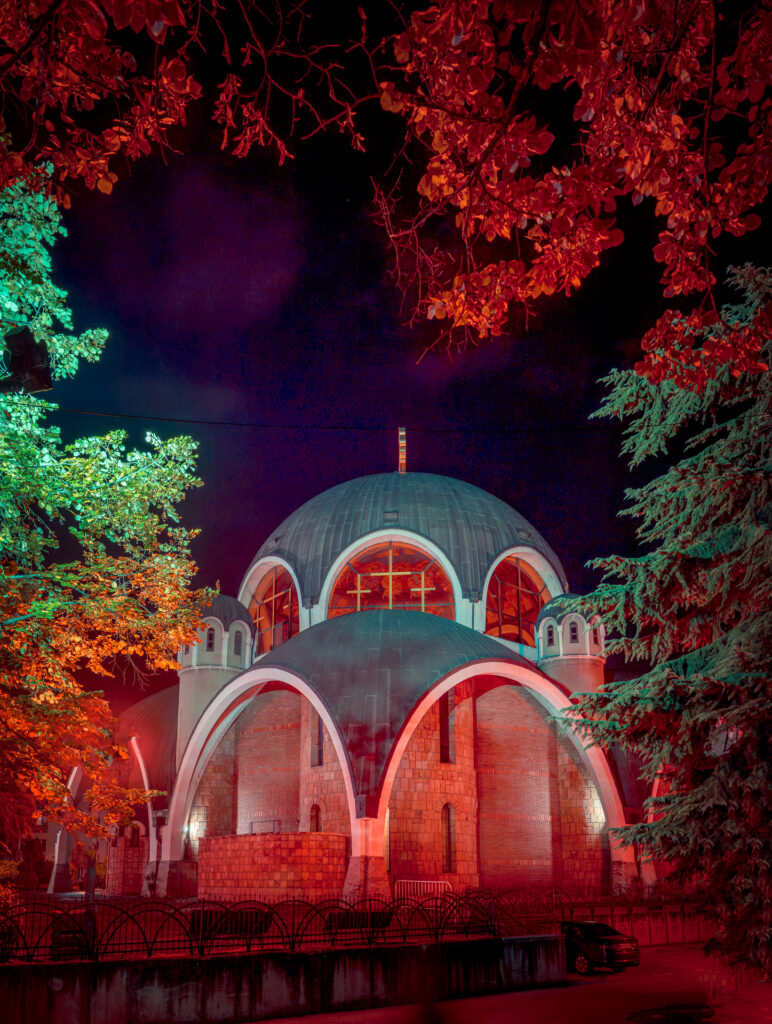
Unlike traditional Orthodox churches that follow medieval designs, this cathedral combines modern engineering with Byzantine influences. The building is characterized by large domes, sweeping arches, and a circular floor plan measuring approximately 36 by 36 meters. (Wikipedia)
The cathedral’s most distinctive features include:
- Large central dome
- Multiple smaller domes
- Circular design
- Massive iconostasis
- Monumental chandeliers
- Traditional Orthodox frescoes
The result is a building that feels both contemporary and timeless.
Where Is St. Clement of Ohrid Cathedral?
The cathedral is located in the Centar district of Skopje, within walking distance of many of the city’s major attractions.
Walking distances:
- Macedonia Square: 10 minutes
- Stone Bridge: 15 minutes
- Old Bazaar: 20 minutes
- Mother Teresa Memorial House: 10 minutes
Because of its central location, it is easy to include in a one-day exploration of Skopje.
Best Time to Visit
Spring (April–May)
Excellent weather and fewer visitors.
Summer (June–August)
Warm temperatures and long daylight hours.
Autumn (September–October)
Often the best balance of:
- Pleasant weather
- Smaller crowds
- Softer photography light
Winter
The cathedral can look particularly impressive when illuminated against winter skies.
Best Time for Photography
Early Morning
Perfect for:
- Empty surroundings
- Clean compositions
- Soft architectural light
Late Afternoon
The cathedral’s exterior often looks best when warm sunlight highlights the domes and facade.
Blue Hour
The cathedral becomes beautifully illuminated after sunset.
This is one of the best times for architectural photography in Skopje.
Best Photography Locations
Main Front Plaza
The classic composition.
From here you can capture:
- Central dome
- Bell tower
- Entire cathedral
Side Perspective
Walking around the cathedral reveals interesting angles that emphasize the circular design.
Bell Tower View
The detached bell tower creates unique framing opportunities.
Night Photography
The illuminated cathedral provides excellent opportunities for:
- Long exposures
- Cityscape photography
- Architectural detail shots
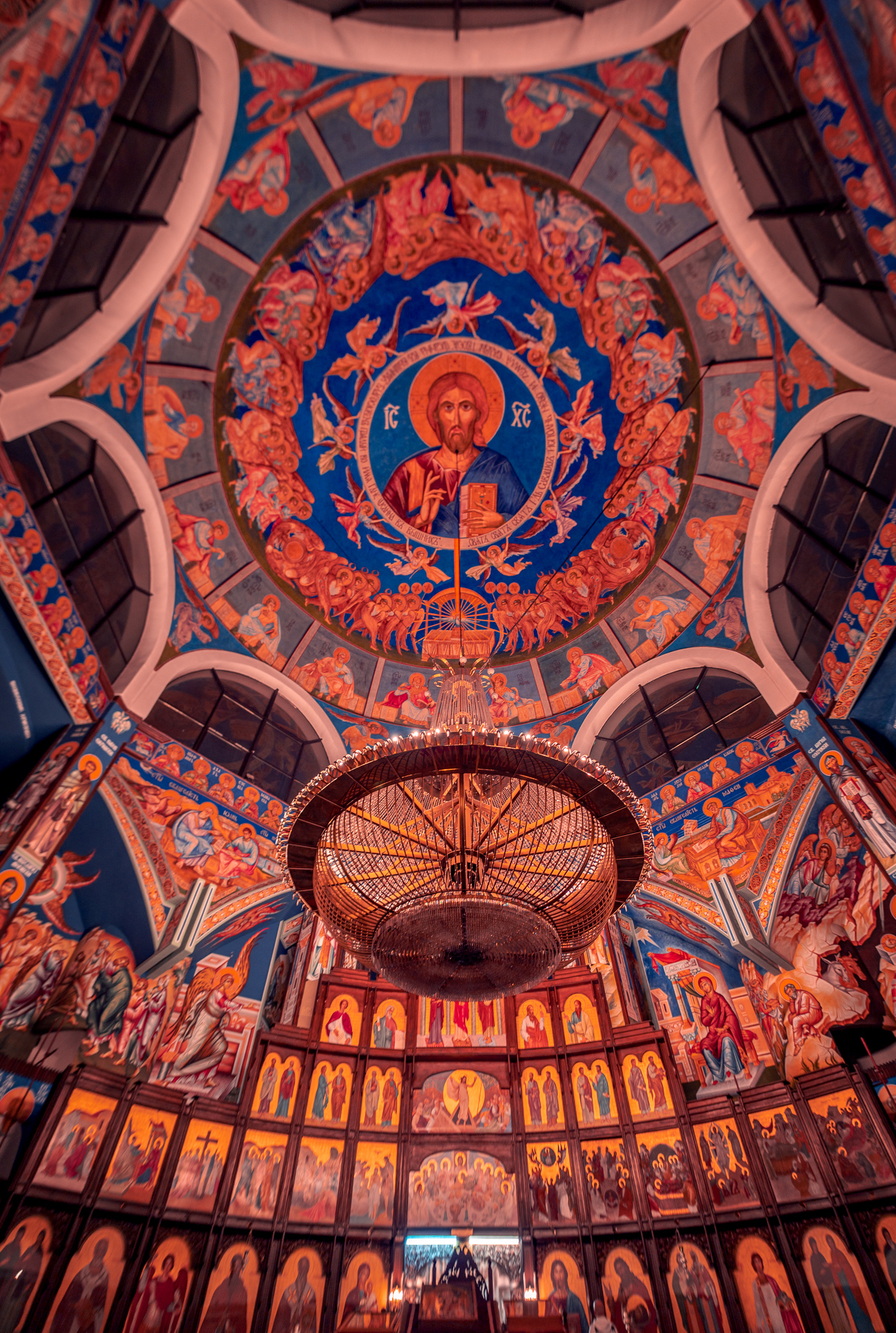
Interior Photography
The interior is just as impressive as the exterior.
Highlights include:
The Iconostasis
The enormous carved wooden iconostasis is one of the cathedral’s standout features and immediately draws attention upon entering. The carvings feature natural motifs such as vines, leaves, and flowers. (Turism Makedonien)
Frescoes
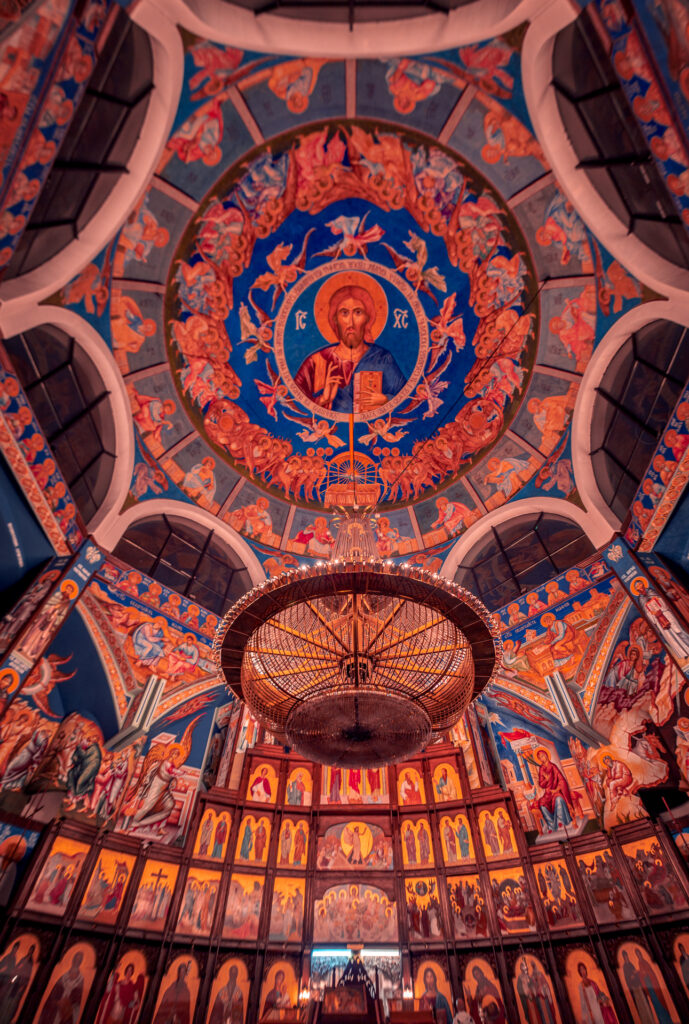
The walls and ceilings are decorated with traditional Orthodox artwork and religious imagery. (Visit Skopje)
Chandeliers
Large chandeliers create dramatic focal points and beautiful interior compositions.
Dome Photography
Looking upward reveals the scale and symmetry of the cathedral’s architecture.
Photography Tips
Arrive Early
Morning provides cleaner images without large groups of visitors.
Explore All Angles
Many visitors photograph only the front facade and miss the dramatic curves and domes visible from the sides.
Visit During Blue Hour
This is arguably the best time for exterior photography.
Look Up Inside
The ceilings, domes, and chandeliers often create stronger images than eye-level compositions.
Can You Visit the Interior?
Yes.
Visitors are generally welcome when services are not taking place. As with all active churches, dress respectfully and remain quiet while inside.
Photography is usually permitted, but always follow any instructions provided by church staff.
Nearby Attractions
One of the advantages of visiting St. Clement of Ohrid Cathedral is its proximity to many of Skopje’s top attractions.
Macedonia Square
The heart of modern Skopje.
Stone Bridge
The city’s most famous historic landmark.
Old Bazaar
One of the largest and best-preserved Ottoman bazaars in the Balkans.
Mother Teresa Memorial House
Dedicated to Skopje’s most famous historical figure.
Mount Vodno
Offers panoramic views over the city.
Suggested Half-Day Itinerary
Morning
- Visit Macedonia Square
- Explore the cathedral
- Photograph the interior
Lunch
Enjoy a meal in central Skopje.
Afternoon
- Visit the Old Bazaar
- Walk across the Stone Bridge
- Explore local streets
Evening
Return to the cathedral for blue-hour photography.
Related Balkans Travel Guides
Continue planning your trip with these guides:
- https://frewaphoto.com/ultimate-balkan-photo-road-trip-for-great-shots/
- https://frewaphoto.com/berat-albania-itinerary-1-2-and-3-days-for-a-great-trip/
- https://frewaphoto.com/best-day-trips-from-berat-albania-complete-guide/
- https://frewaphoto.com/ultimate-guide-to-visit-the-albanian-alps-for-a-great-trip/
FAQ
Is St. Clement of Ohrid Cathedral worth visiting?
Absolutely. It is one of the most important religious landmarks in North Macedonia and one of the most architecturally distinctive Orthodox cathedrals in the Balkans. Its combination of modern design and traditional Orthodox artwork makes it unique among European churches. (Wikipedia)
How long should I spend at the cathedral?
Most visitors spend between 30 minutes and 1 hour exploring the interior and exterior. Photographers may want 1–2 hours, particularly if visiting during sunrise, sunset, or blue hour. (Kupi)
Is there an entrance fee?
The cathedral is generally free to visit, although donations are appreciated to support maintenance and preservation.
What makes the cathedral unique?
Its modern circular architecture sets it apart from traditional Orthodox churches. The large domes, monumental iconostasis, and contemporary design make it one of the most unusual cathedrals in Southeast Europe. (Wikipedia)
Can you photograph inside?
Photography is generally allowed, but visitors should remain respectful and avoid disturbing worshippers or religious services.
What is the best time for photography?
Blue hour and late afternoon usually provide the most attractive light for exterior photography. Early morning is best for avoiding crowds.
Who was St. Clement of Ohrid?
St. Clement was a disciple of Saints Cyril and Methodius and one of the most important figures in Slavic Christianity. He helped spread literacy, education, and Christianity throughout the region and remains one of North Macedonia’s most revered saints. (Wikipedia)
Is the cathedral suitable for visitors who are not religious?
Yes. Many visitors come primarily for the architecture, history, culture, and photography opportunities rather than religious reasons.
Can you combine the cathedral with other Skopje attractions?
Yes. Its central location makes it easy to combine with Macedonia Square, the Stone Bridge, the Old Bazaar, and Mount Vodno in a single day.